Athletic Sock Bulk Order Guide: Technical Specs and RFQ Checklist
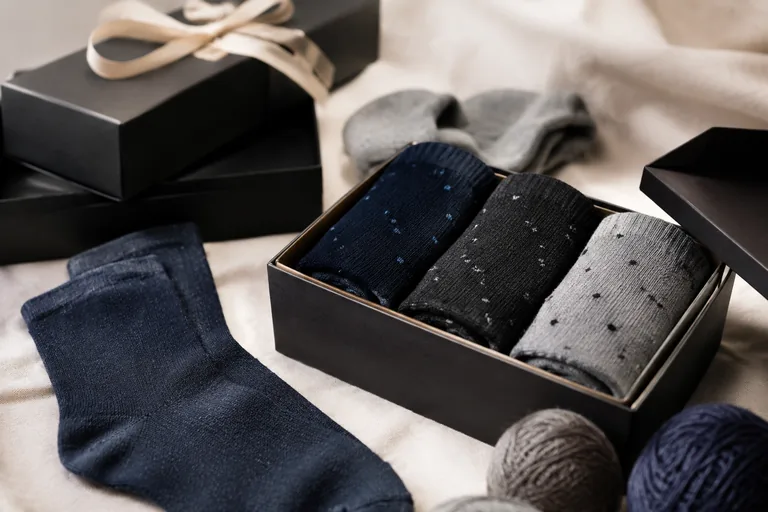
Athletic Sock Bulk Order Guide: Technical Specs and RFQ Checklist
**By Vincent Xi, Editorial Author** Author profile
An **athletic sock bulk order** is easiest to execute when performance requirements, commercial constraints, and quality checks are fixed before suppliers quote. This guide is written for brand buyers, sports merchandisers, team program managers, and retail private-label teams who need technical specifications and a practical RFQ checklist—not consumer shopping language.
What “athletic sock bulk order” means in B2B sourcing
In wholesale practice, buying socks in bulk usually means ordering large quantities of custom or blank pairs. Public B2B education pages commonly describe planning bands of about **100 pairs to 10,000+ pairs** (unit: pairs per order; scope: wholesale/custom bulk programs as described in the cited guide; as-of: figure as published on the source page; source: DeadSoxy B2B bulk guide). The same guide states that volume pricing can reduce per-unit cost by about **30–60% versus retail** (unit: percent reduction in per-pair cost; scope: bulk vs retail comparison in the cited guide; as-of: figure as published on the source page; source: DeadSoxy B2B bulk guide). Actual savings still depend on yarn grade, construction complexity, decoration method, packaging, and logistics.
Corporate-style programs are often framed at about **200 to 5,000 pairs per order** when branding, packaging, and presentation matter (unit: pairs per order; scope: corporate/branded program examples in the cited guide; as-of: figure as published on the source page; source: DeadSoxy B2B bulk guide). Treat those ranges as published market context, not universal factory rules. Minimum order quantities (MOQs), machine setup costs, and dye-lot constraints still vary by supplier and style.
Custom programs also differ by commercial model. OEM typically means the buyer provides design and specifications; ODM means the manufacturer supplies ready styles for branding; private label often means standard constructions with buyer branding and packaging (Goren Socks B2B guide). Athletic programs usually need clearer performance language than fashion crew socks: cushion maps, yarn blends, stretch recovery, seam quality, and durability under repeated wash and wear.
Source context and methodology note
This article synthesizes publicly available B2B sock-sourcing guidance from manufacturer and wholesale education pages, including bulk-order ranges, supplier-evaluation criteria, and custom-manufacturing definitions (DeadSoxy B2B bulk guide; DeadSoxy manufacturer selection guide; Goren Socks B2B guide; Velon Socks knowledge base). Numbers below are restated with unit, scope, as-published context, and source. They are not ZheSock production guarantees, lab results, audited factory capacities, or certified claims. Where a value is an internal planning example, it is labeled as an assumption to verify in the supplier quote.
Limitations / what to verify
Published ranges for order size and price reduction are directional and may change without notice on the source sites. Confirm current MOQ, lead time, yarn availability, gauge capability, test methods, packaging options, Incoterms, and landed cost in each supplier quote. Do not assume a named standard’s requirement equals a factory’s certified practice without a current test report or certificate document. Do not treat marketing terms such as “compression,” “antimicrobial,” or “performance” as verified outcomes unless methods, acceptance criteria, and evidence are specified in the PO package.
Buyer workflow: lock decisions in this order
1. End use and performance priorities 2. Construction, yarn system, and fit 3. Branding, packaging, and size curve 4. Program complexity vs. volume band 5. QC and sampling path 6. Comparable RFQs and supplier scorecard
Incomplete early decisions create quote variance, sample rework, and shipment risk.
Technical specifications to lock before RFQ
Athletic socks are engineered textiles. Define the product in measurable terms before requesting pricing.
1) End use and performance priorities
State the sport or use case and rank priorities:
- Impact cushioning vs. low bulk for shoe fit
- Moisture management vs. hand-feel softness
- Arch support / midfoot hold vs. all-day comfort stretch
- Abrasion resistance at heel/toe vs. lightweight breathability
- Cold-weather insulation vs. warm-weather ventilation
A manufacturer selection framework stresses defining product type and complexity first—basic logo crews are not the same program as performance athletic socks with compression zones, moisture-wicking yarns, and cushioned soles (DeadSoxy manufacturer selection guide).
2) Construction and silhouette
Specify silhouette and functional architecture in tech-pack language:
- Height: no-show, ankle, quarter, crew, over-calf
- Knit structure: plain jersey, mesh/ventilation panels, rib, terry loops, jacquard zones
- Cushion map: sole only, heel-toe, full footbed, or strategic impact pads; note target terry height only as a buyer target if you have one, and require supplier confirmation
- Support features: arch band, ankle lock, graduated hold (describe target feel and measurement points; avoid unverified medical claims)
- Toe closure: hand-linked, overlock/rosso, or other seam method, plus preferred seam placement relative to the toe box
- Cuff design: rib height, elastic placement, and anti-slip expectation for no-show styles
- Optional measurable fields: finished pair weight target with tolerance, cuff relaxed/stretched circumference, footbed length by size, and calf opening for taller styles
If compression language is used, define target zones and measurement method. Do not imply medical compression certification unless a current standard and test report are part of the program.
3) Yarn system and material bill
List fiber content by percentage targets and function:
- Body yarn: cotton, combed cotton, polyester, nylon, wool, or blends
- Plating/reinforcement yarns for heel and toe abrasion
- Elastane/spandex for recovery and fit retention (state cuff, arch, and leg separately if different)
- Specialty yarns only when needed (for example, higher-tenacity nylon in high-wear zones)
Material notes from factory-side knowledge bases treat yarn choice as a commercial and performance tradeoff, not a marketing slogan (Velon Socks knowledge base). Ask suppliers to state whether content is target recipe, finished-goods average, or fiber composition after finishing, and whether percentages are by weight of the pair or by yarn feed position.
4) Gauge, size run, and fit system
Request machine gauge or an equivalent fineness description, plus size range and grading rules. Provide a size curve (pairs by size) rather than a single “one size” assumption when retail or team fit consistency matters. Include preferred last/fit reference if available: foot length range, calf circumference for taller styles, and stretch recovery expectations after wash. Require the supplier to declare which measurements are controlled in production and which are reference only.
5) Color, branding, and decoration method
Separate body color from logo method:
- Yarn-dyed vs. piece-dyed expectations
- Pantone or lab-dip references
- Logo method: knit-in jacquard, embroidery, print, or woven label only
- Placement coordinates and maximum logo size by panel
- Colorfastness expectations for wash and rub (name the test method only if required by your market or customer contract)
Branding method affects MOQ, setup cost, and lead time. Treat decoration choice as an engineering decision, not only a design preference.
6) Packaging and ship-ready presentation
Define unit pack, inner pack, and carton:
- Pair bands, hangtags, polybags, header cards, or retail boxes
- Barcode/label data fields
- Carton quantity, assorted-size packing rules, and master carton marking
- Moisture protection and destination labeling requirements
Packaging often changes unit cost and inspection criteria as much as yarn choice.
Buyer decision table: match program type to bulk order variables
Use the table below to align technical ambition with commercial constraints before sending RFQs.
| Decision factor | Low-complexity bulk athletic program | Mid-complexity branded athletic program | High-complexity performance program | | --- | --- | --- | --- | | Typical product scope | Standard ankle/crew, limited cushion map, simple logo or blank | Custom colorways, defined cushion zones, branded packaging | Multi-zone knit, specialty yarns, tight fit tolerances, advanced packaging | | Spec detail required | Silhouette, basic fiber blend, size run, pack method | Full tech pack, logo placement, lab dips, QC checklist | Full tech pack + measurement chart + wash protocol + agreed inspection plan | | Volume planning signal from public guides | Entry bulk often discussed from about 100 pairs upward | Corporate/branded runs often discussed around 200–5,000 pairs | Larger ongoing replenishment may extend into multi-thousand to 10,000+ pair planning contexts | | Quote sensitivity | Yarn and MOQ driven | Decorations, packaging, and colorways drive variance | Machine capability, sampling rounds, and testing drive variance | | Sampling priority | Fit and hand feel | Color, logo clarity, packaging proof | Construction integrity, recovery, seam comfort, wash durability | | Main risk if under-specified | Inconsistent hand feel across lots | Branding mismatch and delayed packaging | Fit failures, performance shortfalls, costly rework |
Public bulk guides commonly discuss order bands from about **100 pairs** into **10,000+ pairs**, with corporate programs often illustrated at **200–5,000 pairs** (units and scope as stated above; as-of: figures as published on the source page; source: DeadSoxy B2B bulk guide). Use those figures only as planning context. Your supplier’s MOQ and dye-lot rules control the real commercial floor.
Volume, MOQ, and total cost planning
Bulk pricing is not only a unit-price conversation. Ask for cost components that affect landed cost:
1. Yarn and elastane package 2. Knitting and linking/sewing 3. Dyeing/finishing 4. Decorations and labels 5. Packaging 6. Testing (if required) 7. Inland transport, export docs, freight, duties, and insurance
Some market guides highlight near-market logistics advantages in specific regions—for example, Turkey is described as the world’s second-largest sock exporter, with proximity benefits for certain European routes (scope: exporter ranking and logistics context as stated by the cited guide; as-of: claim as published on the source page; source: Goren Socks B2B guide). That is geographic market context from the source, not a recommendation to choose one origin over another without comparing total lead time, compliance needs, and quality capability.
When comparing suppliers, evaluate more than price. A practical selection framework recommends reviewing knitting equipment/gauge capability, yarn sourcing, sample quality, MOQs, lead-time reliability, communication, and QC processes, then validating with a small test order before large production (DeadSoxy manufacturer selection guide). The same guidance suggests comparing about **3–5 manufacturers** on sample quality and reliability rather than unit price alone (unit: number of manufacturers in a comparison shortlist; scope: supplier-selection process described in the cited guide; as-of: figure as published on the source page; source: DeadSoxy manufacturer selection guide).
Example calculation (assumption to verify in supplier quote)
The following is an **example calculation only**, not a market price claim and not a ZheSock offer:
- Assumption A: target order = 3,000 pairs
- Assumption B: quoted ex-works unit price = USD 2.40/pair
- Assumption C: packaging and labels = USD 0.18/pair
- Assumption D: freight + duty allocation = USD 0.35/pair
- Example landed material cost = 2.40 + 0.18 + 0.35 = **USD 2.93/pair** (example math to verify against actual quote lines, currency, Incoterms, and quote date)
Replace every assumption with supplier-stated values, currency, Incoterms, validity date, and cost-line definitions.
Quality control checkpoints for athletic bulk production
Quality systems should be described in the RFQ so quotes are comparable.
Incoming and process controls
Request how the supplier controls:
- Yarn lot identification and shade continuity
- Needle/gauge setup verification at machine start
- In-line checks for holes, dropped stitches, size drift, and cuff tension
- Pair matching and size labeling accuracy
- Final inspection sampling method (for example, an agreed AQL and defect taxonomy) and defect classification
Performance and durability checks (program-dependent)
Define which checks are mandatory for your category:
- Dimensional stability after wash (state cycles and temperature)
- Stretch and recovery at cuff and arch
- Heel/toe abrasion expectation (method if required)
- Colorfastness to washing/rubbing if dark or contrasting logos are used
- Odor-control or antimicrobial claims only if supported by current test evidence you require
Name standards only when your destination market or customer contract requires them, and distinguish a standard’s requirement from any one factory’s practice. Do not treat marketing language as certification.
Sample ladder
A controlled sample path reduces bulk risk:
1. Development sample for construction and fit 2. Color/lab-dip approval 3. Pre-production sample with approved yarns and decorations 4. Size-set or graded samples if multi-size retail 5. Bulk production against sealed sample
Factory-facing knowledge bases for wholesale buyers repeatedly group supplier selection, materials, QC, and private-label planning as linked workstreams rather than isolated price shopping (Velon Socks knowledge base).
Practical RFQ checklist for an athletic sock bulk order
Copy this checklist into your RFQ package. Incomplete items usually create non-comparable quotes.
A. Commercial header
- [ ] Legal buyer entity, bill-to/ship-to, and target delivery window
- [ ] Incoterms and destination port/warehouse
- [ ] Forecast: first order quantity + 12-month planning range
- [ ] Payment terms requested and currency
- [ ] Whether program is OEM, ODM, private label, or blank bulk (Goren Socks B2B guide)
B. Product technical pack
- [ ] Silhouette and height
- [ ] Cushion map and mesh/ventilation zones
- [ ] Fiber content targets by percentage and function
- [ ] Elastane content targets for cuff/arch
- [ ] Gauge or fineness requirement (or open to supplier proposal)
- [ ] Toe seam method and comfort requirement
- [ ] Size run, grading chart, and pairs-per-size curve
- [ ] Target weight per pair (if used internally) with tolerance
- [ ] Color references (Pantone/lab dip) and acceptable shade tolerance
- [ ] Logo/artwork files, placement map, and decoration method
- [ ] Care label content and language set
C. Packaging and identification
- [ ] Pair presentation (band, bag, hangtag, box)
- [ ] UPC/EAN or internal SKU rules
- [ ] Inner pack and carton quantities
- [ ] Assortment packing vs. solid-size packing
- [ ] Carton marking and shipping document requirements
D. Quality, compliance, and sampling
- [ ] Sealed-sample process and approval owners
- [ ] Defect classification list (critical/major/minor)
- [ ] Inspection method and acceptance criteria
- [ ] Required tests, methods, and who pays for testing
- [ ] Restricted substance expectations for your market (if applicable)
- [ ] Country-of-origin and labeling rules
E. Production and logistics controls
- [ ] Requested production lead time after sample approval
- [ ] Capacity confirmation for reorder windows
- [ ] Yarn reservation policy for recurring colorways
- [ ] Partial shipment rules
- [ ] Carton drop-test or transit packaging requirements (if used)
F. Quote format you should demand
- [ ] Unit price by quantity break
- [ ] Separate lines for decoration, packaging, and testing
- [ ] MOQ by colorway and by size run
- [ ] Sample cost and sample lead time
- [ ] Tooling/setup fees, if any
- [ ] Validity date of quote
- [ ] Exclusions (duties, freight, third-party inspection, etc.)
How to run supplier comparison without weak assumptions
After RFQs return, score suppliers on comparable fields:
1. Spec compliance in sample 2. Measurement consistency across sizes 3. Communication clarity and revision control 4. Lead-time realism versus your launch calendar 5. Transparency of cost build-up 6. QC documentation quality 7. Reorder readiness for the same dye lots/color continuity
Manufacturer-selection guidance emphasizes sample quality, lead-time reliability, and responsive account management over headline price, and recommends a small test order before large production commitments (DeadSoxy manufacturer selection guide). For athletic programs, the test order should include your most demanding size and darkest or highest-contrast colorway, because those usually expose fit and shade risks earlier.
RFQ timeline template (planning aid)
This sequence is a planning aid, not a universal factory promise:
1. Internal brief freeze (use case, budget band, launch date) 2. Tech pack and artwork freeze 3. RFQ to shortlisted suppliers 4. Quote review and shortlist 5. Paid development samples 6. Lab dips/color approval 7. Pre-production sample approval 8. Bulk release and inspection plan 9. Ship and incoming QC
Build buffer for artwork corrections, color re-dips, and packaging proofs. Athletic bulk programs often fail on calendar compression rather than knit capability alone.
Editorial takeaways for sourcing teams
- Write the athletic performance need as a measurable construction brief before price shopping.
- Treat public bulk ranges (**about 100 to 10,000+ pairs**) and corporate examples (**about 200 to 5,000 pairs**) as context from published B2B guides, then verify real MOQs (DeadSoxy B2B bulk guide).
- Compare multiple suppliers—guides commonly suggest evaluating roughly **3–5**—on samples and reliability, not unit price alone (DeadSoxy manufacturer selection guide).
- Separate OEM/ODM/private-label expectations so sampling and ownership of design risk are clear (Goren Socks B2B guide).
- Use factory-side materials, QC, and packaging notes as process prompts when building private-label plans (Velon Socks knowledge base).
Final verification list before PO
- Approved sample is sealed and photographically recorded.
- Measurement chart tolerances are agreed in writing.
- Quantity breaks, MOQs, and lead times match the PO line by line.
- Packaging dielines and label copy are final.
- Inspection criteria and nonconformance process are named.
- Any standard or test reference is attached as a current requirement document, not implied by marketing language.
A disciplined athletic sock bulk order is a documentation project first and a production project second. Clear specifications, comparable RFQs, and sealed-sample control reduce the most common causes of delay and quality disputes in B2B sock programs.