Athletic Sock Sourcing Artwork Proofing Signoff for Australia Buyers
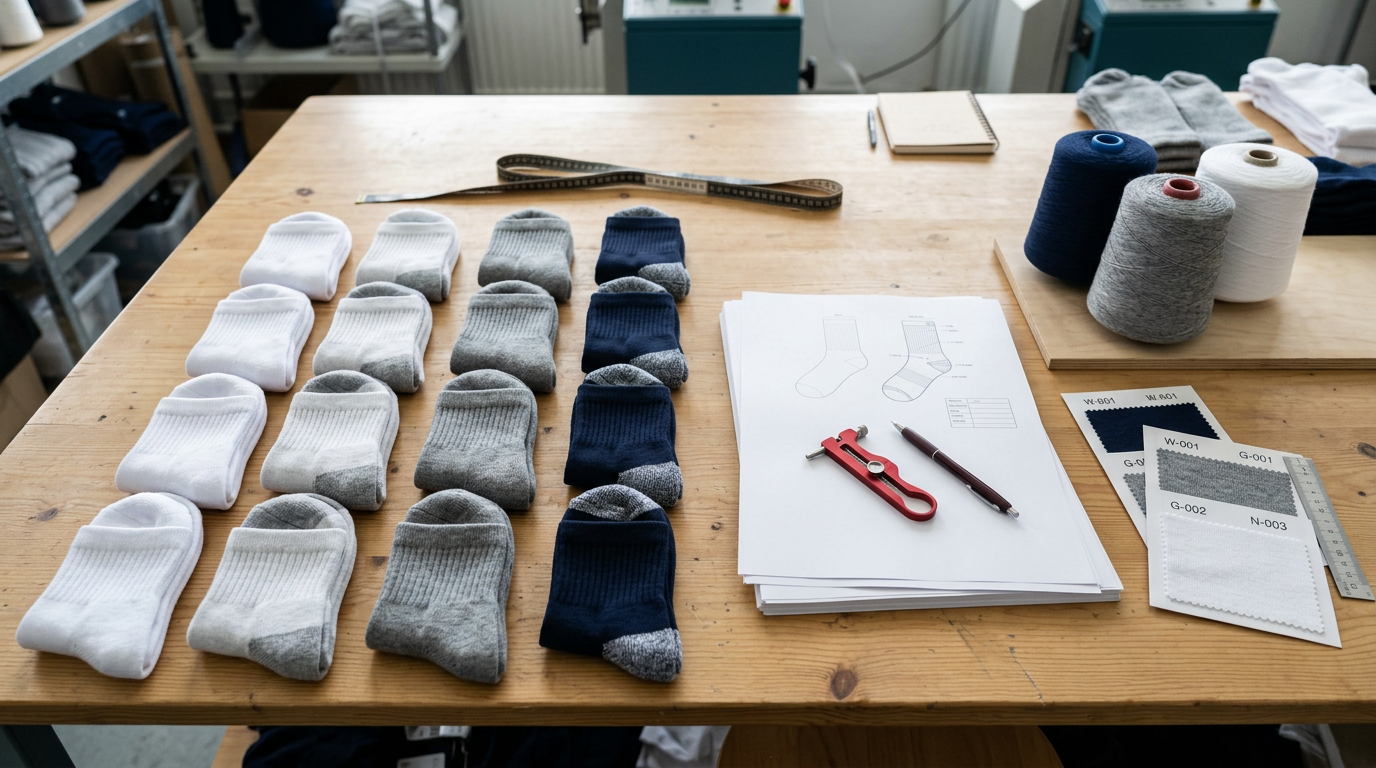
This guide focuses on athletic sock sourcing artwork proofing signoff for buyers in Australia who need a clear, repeatable approval process before an order moves forward. Artwork on an athletic sock is not a flat print on a flat surface. It is knitted or applied onto a shaped, stretchable textile product, so a design that looks settled on screen can look different once it is placed on a leg form, folded for packing, or viewed as a matched pair. Good procurement practice therefore treats the proof as a decision document, not as a casual preview.
The purpose of this page is narrow and practical. It helps the buyer define what a proof must show, compare proof versions against an agreed brief, record changes without confusion, and sign off only the version that the supplier is expected to follow. It covers actions, comparison criteria, questions to ask, and fields that the buyer and supplier must agree in writing. It does not replace the buyer's own product brief, colour references, or acceptance criteria, and it asks the buyer to request supplier documentation for any specification that needs evidence rather than assuming it.
Athletic Sock Procurement Scope for Artwork Proofing Signoff in Australia
Start by fixing the scope of the approval. In athletic sock procurement, a signoff should name the exact style, size range, colourway, and artwork version it covers, so that approval for one design is not mistakenly applied to another. Buyers in Australia should state which items are inside the signoff and which are outside it. For example, the proof may cover logo placement and stripe pattern only, while yarn composition, cushioning, sizing, and packing remain subject to separate agreement and separate approval records.
Agree the proof format before work begins. A digital proof, a photographed sample, and a physical sample can each show different things, and each has limits. A digital proof can confirm layout, spelling, and relative placement, but it cannot by itself confirm how yarn colours will appear in the finished textile. A physical sample can show placement on the actual sock shape, but it reflects only the version and materials used for that sample. The buyer should specify which proof types are required, in which order, and which one is the final approval reference.
Also agree who may approve. Name the buyer-side approver, the supplier-side contact who receives the decision, and the form the decision must take, such as a signed approval note or a confirmed message attached to the proof version. Verbal approval and approval implied by silence create avoidable disputes, so the process should state that only a recorded decision against a named version counts as signoff.
Finally, agree how changes after signoff are handled. Any change to artwork, placement, colour reference, or wording after approval should create a new version, a new proof, and a new signoff. That single rule protects both parties and keeps the production reference unambiguous.
What to Check on the Artwork Proof Before Signoff
Check the proof against the brief, item by item, rather than judging the overall impression. The following checks help the buyer turn a visual review into a controlled procurement decision.
First, confirm identity and version control. The proof should carry the style name or code used in the enquiry, the colourway name, the artwork version identifier, and the date field agreed between buyer and supplier. If any of those fields are missing or inconsistent with the enquiry, return the proof for correction before reviewing the design itself.
Second, check placement and proportion. Confirm where each artwork element sits on the sock, including the cuff, leg, heel, toe, and foot areas that the brief defines. Ask how the element aligns when the sock is worn and stretched, when it is flat, and when it is folded for presentation. Ask the supplier to show the proof on a leg form or on the actual sock shape where placement is critical, and to flag any element that will distort, wrap, or be partly hidden by construction features such as ribbing or heel shaping.
Third, check colour representation. Compare each proof colour with the colour reference the buyer supplied, and record the reference alongside the proof. Screen and print colours are representations, not the textile itself, so the buyer should ask which proof stage confirms yarn colour and should not treat a screen image alone as colour approval where colour is a critical requirement. Where the buyer has supplied physical references, ask the supplier to confirm receipt and to identify the exact reference used for matching.
Fourth, check all wording and symbols as supplied artwork. Read every word, number, and size or care element that appears in the artwork exactly as it will appear on the product or its agreed presentation. Compare it character by character with the approved copy supplied by the buyer. The buyer remains responsible for supplying correct copy, and the supplier should be asked to reproduce only the copy in the approved file, flagging anything that is unclear rather than correcting it informally.
Fifth, check pair and repeat consistency. Ask how the design appears on the left and right sock, whether elements are mirrored or repeated, and how stripes, patterns, or motifs align across a pair and across the size range. A design approved on one size may need separate confirmation for other sizes if placement or proportion changes with size.
Buyer Decision Table for Athletic Sock Artwork Proofs
Use a decision table to record each check as approved, approved with a named correction, or not approved. The table below is built from buyer-defined process checks only. The buyer completes it for each style and colourway and keeps the completed version with the signoff record.
| Decision point | What the buyer defines | What to compare on the proof | Signoff action |
|---|---|---|---|
| Artwork version identity | Style code, colourway name and version identifier for the design under review | Proof header fields against the enquiry and the latest artwork file supplied | Approve only the named version and reject or return any proof with missing or mismatched version fields |
| Proof type and stage | Whether digital proof, photographed sample or physical sample is required at each stage | The proof received against the agreed sequence of proof stages | Record which stage has been approved and which stage remains outstanding before production |
| Logo and motif placement | Intended position, orientation and relative size of each artwork element | Element position on the flat proof and on the shaped sock or leg form | Approve placement as shown, or mark the exact element and movement required on a new proof |
| Colour reference match | Colour references supplied by the buyer for each yarn and artwork colour | Proof colours and, where agreed, sample yarn or sample sock against the supplied references | Approve colour at the agreed stage only, or name the colour that must be re-matched and re-proofed |
| Wording and supplied copy | Final approved copy for all text and symbols in the artwork | Every word and symbol on the proof, checked character by character against the supplied copy | Approve copy as reproduced, or return the proof with the corrected copy supplied as a new artwork version |
| Pattern repeat and alignment | How stripes, motifs and repeats should align across the sock and across a pair | Repeat spacing, alignment and continuity on the proof and on a paired sample where provided | Approve the repeat as shown, or describe the alignment change required and request a revised proof |
| Left and right pair treatment | Whether artwork is identical, mirrored or different on each sock of a pair | Both socks shown together against the pair treatment defined in the brief | Approve the pair treatment, or specify which sock requires correction before signoff |
| Size range application | How artwork placement and proportion apply across the agreed size range | Proof or sample evidence for each size, or a written statement of how the design scales | Approve per size where differences exist, rather than applying one size approval to all sizes automatically |
| Change control after approval | How post-approval changes are requested, versioned and re-approved | Any change request against the signed-off version and its change record | Treat any change as a new version requiring a new proof and a new recorded signoff |
Step-by-Step Artwork Proofing Signoff Process
A short, written process keeps proofing consistent across styles, colourways, and repeat orders.
- Issue the artwork brief with the enquiry, including the artwork files, colour references, placement intent, pair treatment, size range, and the copy the buyer has approved for use.
- Agree the proof sequence, the approver on each side, the response format for comments, and the rule that only a recorded decision against a named version counts as approval.
- Receive the first proof and check its version fields against the brief before reviewing the design, returning it for correction if the identity fields do not match.
- Review the proof using the decision table, marking each point as approved, approved with a named correction, or not approved, with comments tied to specific elements rather than general impressions.
- Return consolidated comments in one response per version, so the supplier works from a single instruction set instead of conflicting messages from different reviewers.
- Receive the revised proof as a new version, check that each requested correction has been made, and confirm that no unrequested changes have appeared elsewhere in the design.
- Complete any physical sample stage agreed in the sequence, comparing the sample against the approved proof and the supplied colour references before giving final approval.
- Record the final signoff against the exact version, style, and colourway approved, and file the proof, comments, and decision together so the order reference is complete.
- Apply change control after signoff, so any later artwork change restarts the proof and approval cycle for the affected elements.
Common Proofing Risks and How Buyers Control Them
Version confusion is the most avoidable risk. It arises when several proof files circulate with similar names and different content. Control it by using one version identifier per revision, by dating each decision, and by asking the supplier to confirm in writing which version is held as the production reference.
Colour expectation gaps arise when a screen image is treated as a textile colour promise. Control this by separating layout approval from colour approval, by naming the stage at which colour is confirmed, and by keeping the buyer's supplied references attached to the signoff record.
Placement surprises arise because a sock changes shape in wear. Control this by asking for proof views on the shaped product, by defining placement in relation to construction features the buyer can identify, and by checking the design folded and paired as well as flat.
Copy errors arise when wording is retyped during proof preparation. Control this by supplying final copy as part of the artwork file, by checking the proof character by character, and by requiring any unclear copy to be queried rather than corrected informally.
Scope creep arises when artwork approval is assumed to cover unrelated product attributes. Control this by listing, in the signoff record, exactly what the approval covers and what remains subject to separate specification and acceptance checks under the order terms.
Recording the Final Signoff
The signoff record should be short, complete, and easy to retrieve when the order is discussed later. Include the buyer and supplier names used in the enquiry, the style and colourway identifiers, the approved artwork version, the proof type approved, the colour references relied on, the approver name, the decision date field agreed by both parties, and a note of any elements expressly excluded from the approval. Attach the approved proof itself, not only a description of it.
If approval is given with corrections, the record should state whether production may proceed on the basis of the corrected proof to follow, or whether a further proof must be approved first. That distinction should never be left implied. Where the buyer and supplier disagree about what was approved, the filed proof and the recorded decision are the reference points for resolving the question, which is why both must be kept together with the order documents.
RFQ Checklist
- Ask the supplier to confirm the exact artwork version, style code and colourway that the quotation and proofing process will be based on.
- Specify the proof types and sequence required, including whether a digital proof, a photographed sample and a physical sample are each required before production.
- Specify the placement, orientation and relative size intended for each logo, motif, stripe and pattern element on the sock.
- Ask the supplier to identify any artwork element that may distort, wrap or be obscured by ribbing, heel shaping or other construction features.
- Specify the colour references supplied for each yarn and artwork colour, and ask the supplier to confirm receipt of those references.
- Require the supplier to state at which proof stage colour approval is confirmed, separate from layout approval.
- Specify the final approved copy for all wording and symbols in the artwork, and require the supplier to query any unclear copy instead of altering it.
- Ask the supplier to show how the artwork applies to the left and right sock of a pair and across the full size range in the enquiry.
- Require the supplier to issue a new versioned proof for every change requested after a proof has been reviewed.
- Specify who may give signoff on the buyer side and require the supplier to accept only a recorded decision against a named version as approval.
- Ask the supplier to confirm in writing which approved version will be held as the production reference for the order.
- Require the supplier to provide documentation for any specification, material claim or labelling field that the buyer asks to be evidenced for the order.
- Specify the fields the final signoff record must contain, including style, colourway, version, proof type, colour references, approver and decision date.
- Ask the supplier to confirm how changes requested after signoff will be versioned, re-proofed and re-approved before they are applied.
Discuss Your Requirements
Review our manufacturing capabilities, then share your specifications for a supplier-fit review.