Custom Sock Manufacturer Guide: MOQ, Pricing Structure, and Landed-Cost Controls
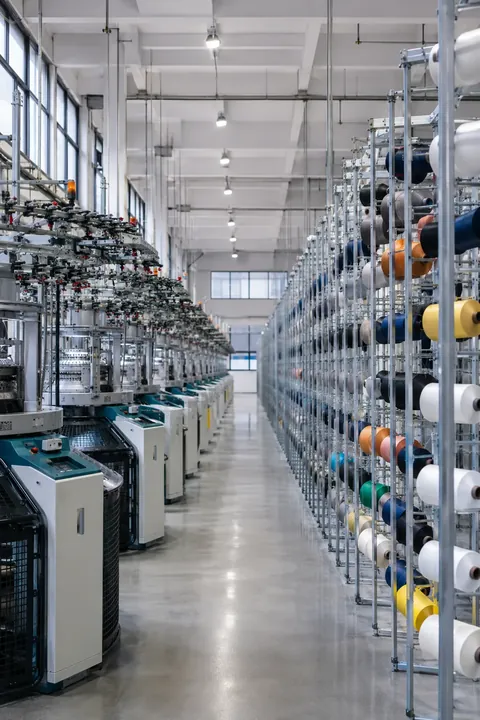
Custom Sock Manufacturer Guide: MOQ, Pricing Structure, and Landed-Cost Controls
**By Vincent Xi, Editorial Author** *Editorial Author profile: https://www.zhesock.com/authors/vincent-xi/*
<script type="application/ld+json"> { "@context": "https://schema.org", "@type": "Article", "headline": "Custom Sock Manufacturer Guide: MOQ, Pricing Structure, and Landed-Cost Controls", "author": { "@type": "Person", "name": "Vincent Xi", "jobTitle": "Editorial Author", "url": "https://www.zhesock.com/authors/vincent-xi/" }, "publisher": { "@type": "Organization", "name": "ZheSock", "url": "https://www.zhesock.com/" }, "mainEntityOfPage": "https://www.zhesock.com/" } </script>
Choosing a **custom sock manufacturer** is rarely a unit-price decision. For brand, retail, team, and corporate buyers, program outcomes usually depend on three commercial controls:
1. **MOQ rules** — what the minimum actually covers 2. **Quote structure** — what is itemized versus blended 3. **Landed cost** — freight, duties, packaging, sampling, and quality leakage after EXW/FOB
This editorial guide synthesizes publicly published B2B sourcing guidance so procurement and product teams can brief suppliers clearly, compare offers on equal terms, and protect margin before a purchase order is issued. It does not present factory claims unique to any one mill, and it does not assert ZheSock production capacity, pricing, certifications, or customer outcomes. Instead, it converts recurring buyer-side criteria into RFQ language, a decision table, and landed-cost checks.
Buyer quick path
| Stage | Buyer action | Output to lock | | --- | --- | --- | | 1. Define program | Construction, volume path, customization depth, launch window | One-page product/commercial brief | | 2. Normalize RFQ | Same construction sheet, packaging, Incoterm, destination | Comparable quote package | | 3. Score MOQ + price | Per style/color/size/pack rules + line items | MOQ matrix + itemized quote | | 4. Model landed cost | Freight, cartonization, duty assumptions, defect buffer | Cost per sellable pair | | 5. Validate | Measurement-based samples + pilot PO | Spec lock + reorder terms |
What “custom sock manufacturer” means in B2B programs
In wholesale and private-label contexts, “custom” is not one service. Match design ownership, tooling, and lead time to commercial goals before shortlisting factories.
A Turkey-focused B2B sourcing guide distinguishes several common models (Goren Socks B2B Guide):
- **OEM** — buyer supplies design, colors, logo, and yarn specs; factory produces to brand requirements.
- **ODM** — factory design adapted and branded by the buyer.
- **Private label** — standard or semi-standard construction with buyer branding and packaging.
- **White label** — unbranded stock finished with buyer labels.
MOQ, sampling cost, and revision cycles usually rise as construction, yarn dyeing, and packaging become more program-specific. That relationship is commercial logic for RFQ design, not a fixed industry tariff.
Before shortlisting, define the product and commercial envelope: construction complexity (basic crew logo socks versus multi-zone performance styles), first-order volume and 12-month volume path, customization depth, launch timing, and target unit economics (Dead Sox manufacturer selection guide). A supplier optimized for simple logo runs is not automatically the right partner for compression mapping, specialty yarns, or multi-SKU retail assortments.
Factory-side knowledge bases for wholesale buyers also frame the work as a chain—supplier selection, materials, QC, packaging, and private-label planning—rather than a single price conversation (Velon Socks knowledge base). That systems view matters when MOQ and freight terms interact with cartonization, hangtags, polybags, and size-run mix.
MOQ logic: what minimums actually control
MOQ is often presented as a single number of pairs. In practice, manufacturers use minimums to cover setup, yarn purchasing, machine allocation, color changes, packaging changeovers, and inspection overhead. Ask whether the quoted MOQ is:
- **per style**
- **per colorway**
- **per size run**
- **per packaging configuration**
- **per total order** across mixed SKUs
Published supplier examples show how wide the range can be. In one 2026 buyer’s guide aimed at US brands, Solos lists a **60-pair** minimum order as its published entry point, with a **12-hour** digital mockup turnaround and **5–10 day** DHL/FedEx delivery windows to the US (figures as published in that guide for that supplier’s stated commercial offer; verify current terms, construction scope, and destination coverage directly with any supplier before planning) (Solos 2026 buyer’s guide). Those numbers are supplier-specific commercial markers, not industry standards and not ZheSock terms. Use them only as a reminder that “low MOQ” offers must still be tested against construction quality, yarn consistency, and reorder reliability.
For larger OEM programs, higher MOQs may improve yarn utilization and knitting efficiency, but they also raise inventory risk, cash lock-up, and markdown exposure. Separate:
1. **Development MOQ** — samples / pilot / first production 2. **Reorder MOQ** — repeat colorways with locked specs 3. **Assortment MOQ** — size curves and multipack configurations
Selection guidance commonly recommends evaluating **at least 3–5** manufacturers on sample quality, lead-time reliability, and responsive account management—not price alone—and validating with a small test order before large production commitments (Dead Sox manufacturer selection guide). That multi-quote process is especially important when one supplier’s low MOQ hides weaker yarn lots, higher defect allowances, or slow communication on artwork corrections.
Example MOQ economics (assumption set—verify in quote)
The following is an **example calculation only**, not a market survey and not a supplier offer:
- Assume a factory quotes **USD 2.40 per pair** at **3,000 pairs per color**, EXW.
- Assume a second option quotes **USD 2.85 per pair** at **600 pairs per color**, EXW.
- If packaging, inspection, and freight are equal, the lower unit price saves **USD 0.45 per pair**, or **USD 1,350** on 3,000 pairs.
- If forecast error forces a 30% leftover (900 pairs) that must be discounted later, inventory risk can erase the unit-price advantage.
Ask suppliers to restate the same construction under two MOQ bands so finance teams can compare true program cost, not just the headline pair price. Replace every placeholder with the supplier’s written quote and your own demand forecast.
Pricing structure: reading the quote beyond per-pair cost
A usable custom sock quote usually breaks costs into controllable layers. If a manufacturer returns only one blended number, request a line-item structure before comparing vendors.
Line items to isolate
- **Yarn and material basis** — fiber content, yarn count, recycled vs virgin inputs, elastomer type
- **Knitting complexity** — needle/gauge class, jacquard vs simpler logos, cushioning zones, rib architecture
- **Finishing** — boarding, linking/toe-close method, brushing, special washes
- **Branding method** — knit-in logo, embroidery, transfer/print, woven label, hangtag set
- **Packaging** — polybag, band, header card, retail box, multipack, barcode/label application
- **Sampling and development** — digital mockups, strike-offs, physical samples, fit iterations
- **Quality controls** — inline checks, final inspection method if specified (for example, an agreed AQL sampling plan), measurement charts
- **Commercial terms** — Incoterms, payment terms, currency, validity window, surcharge rules
B2B selection frameworks emphasize equipment and machine gauge, yarn sourcing capability, sample quality, MOQ, lead-time reliability, communication, and QC process as core evaluation dimensions (Dead Sox manufacturer selection guide). Those dimensions explain why two “same weight cotton crew” quotes can diverge: gauge, yarn quality, and finishing standards change both cost and returns risk.
Geography also affects the commercial story. One B2B guide states that Turkey is the world’s second-largest sock exporter and argues that proximity to European markets can improve transit time and freight economics versus longer East Asia lanes for some EU-bound programs (Goren Socks B2B Guide). Treat that as a **published sourcing claim from that guide**, not as independently verified trade-statistics output in this article and not as a universal landed-cost guarantee for every destination, fiber mix, or Incoterm. Re-test with current freight quotes, transit reliability, and duty treatment for the buyer’s actual lane.
Pricing red flags in RFQ responses
- One all-in price with no Incoterm
- MOQ stated only as “pairs,” without color/size/pack rules
- No sample-to-bulk tolerance language for shade, size, or weight
- No surcharge rules for rush, yarn substitution, or packaging changes
- Lead time quoted without separating sampling, bulk knitting, finishing, and export booking
Landed-cost controls buyers can actually manage
Landed cost is the full cost to place sellable inventory in the buyer’s warehouse or 3PL, including product, packaging, international movement, duties/taxes where applicable, domestic drayage, and quality leakage. Per-pair FOB/EXW price is only one input.
Core landed-cost formula (buyer worksheet)
Use this as a control sheet. All values are placeholders until a supplier quote and freight forwarder confirm them:
**Landed cost per pair =** (Product + packaging + sampling amortization + inspection + export docs) + (international freight + insurance + origin/destination fees) + (duties/taxes/brokerage, if applicable) + (quality loss allowance + returns buffer) ÷ sellable pairs received.
Practical control levers
1. **Incoterms clarity** EXW, FOB, CIF, and DDP shift risk and cash timing. Compare manufacturers only after normalizing to the same Incoterm and destination gate.
2. **Cartonization and dimensional weight** Sock programs are sensitive to fold method, multipack, and carton fill. Ask for carton outer dimensions (length × width × height), pairs per carton, and gross/net weight early. Small packaging changes can move airfreight brackets more than yarn cost savings.
3. **Assortment efficiency** Too many colorways at low volume multiplies changeovers and underfilled cartons. Consolidate hero colorways first, then expand after reorder data stabilizes.
4. **Sampling amortization** If development samples cost a fixed fee, allocate that fee across expected first-season sellable pairs. A low bulk price with expensive, multi-round sampling can still lose.
5. **Defect and claim pathway** Landed cost rises when defective pairs cannot be sold. Request measurement charts, shade standards, and written claim windows. Published selection guidance stresses verifying real-world performance with a small test order before large runs (Dead Sox manufacturer selection guide).
6. **Lane and service level** Express courier lanes (for example, published **5–10 day** DHL/FedEx windows in one US-facing supplier guide) can justify higher unit cost for launches or replenishment spikes, while ocean or consolidated LCL/FCL may fit planned seasonal inventory (Solos 2026 buyer’s guide). Re-quote freight at current market rates; service-level claims are time-sensitive and supplier/route-specific.
7. **Duty and origin documentation** Fiber content, country of origin, and preferential trade eligibility can change duty outcomes. Require HS-code assumptions and documentation ownership in the quote package, then validate with a licensed broker for the destination market. Do not treat website origin claims as customs determinations.
Example landed-cost bridge (assumption set—verify)
Assume, for illustration only—not a market rate and not a ZheSock or competitor offer:
- EXW product + packaging: **USD 2.50/pair**
- Origin handling + export docs allocated: **USD 0.08/pair**
- International freight + insurance: **USD 0.35/pair**
- Destination fees + brokerage allocated: **USD 0.12/pair**
- Expected unsellable/defect buffer: **2%** of pairs
Estimated landed cost ≈ **(2.50 + 0.08 + 0.35 + 0.12) / 0.98 ≈ USD 3.11 per sellable pair**.
If another factory quotes **USD 2.30 EXW** but freight is **USD 0.70/pair** and defect buffer is **5%**, estimated landed cost ≈ **(2.30 + 0.08 + 0.70 + 0.12) / 0.95 ≈ USD 3.37**. The “cheaper” pair becomes more expensive after logistics and quality leakage. Always replace these placeholders with supplier and forwarder numbers for the same construction, packaging, Incoterm, and destination.
Buyer decision table: MOQ, price, and landed-cost fit
| Decision factor | Lower-risk buyer signal | Higher-risk buyer signal | What to request in writing | | --- | --- | --- | --- | | MOQ definition | MOQ stated per style/color/size/pack | Single “pairs” number only | MOQ matrix by SKU attribute | | Pricing transparency | Line items for yarn, knitting, finish, pack, sample | One blended unit price | Itemized quote + validity date | | Sample path | Paid/controlled samples with locked spec sheet | Free sample with no measurables | Size chart, weight, shade standard | | Lead time | Split by sample, bulk, finishing, ship | One vague “3–4 weeks” claim | Calendar with dependencies | | QC model | Inspection points + acceptance criteria | “Quality guaranteed” with no method | Process map and defect classes | | Logistics fit | Incoterm + carton data + pairs/carton | No cartonization data | Packing list template + dims/weights | | Commercial scalability | Reorder MOQ and color continuity plan | First order only, no reorder terms | Reorder price band assumptions | | Communication | Named account path and revision SLA | Slow/unclear artwork feedback | Proof workflow and change log |
Use the table during vendor scorecards. Price should be one column, not the whole model. Published guidance consistently prioritizes equipment fit, materials, sampling, MOQ realism, lead-time reliability, communication, and QC verification ahead of pure discounting (Dead Sox manufacturer selection guide; Velon Socks knowledge base).
How to evaluate a custom sock manufacturer without over-trusting marketing pages
Use this sequence to reduce switching costs later:
1. **Lock the brief** Product type, fiber targets, construction references, artwork rules, packaging, target markets, compliance documents needed for those markets, first PO volume, and replenishment hypothesis.
2. **Shortlist by capability, not geography slogans** Regional advantages (for example, published claims about Turkey’s export position and EU proximity) may matter for some lanes, but only after construction capability and QC evidence are acceptable (Goren Socks B2B Guide).
3. **Compare 3–5 manufacturers on equal RFQs** Same construction sheet, same Incoterm request, same packaging assumptions, same destination (Dead Sox manufacturer selection guide).
4. **Score samples with measurements, not photos only** Record pair weight, dimensions, stretch recovery, logo registration, toe-close appearance, and wash behavior against the agreed method.
5. **Run a pilot order** Validate production consistency, packing accuracy, and communication under real PO pressure before seasonal volume.
6. **Rebuild landed cost after the pilot** Replace assumptions with actual freight, actual defect rate, and actual receiving labor.
Standards and certifications should be named only when the destination market or brand policy requires them, and only against current documents. A guide may urge buyers to demand certifications, but certification status is date-bound and supplier-specific; never infer compliance from website language alone (Solos 2026 buyer’s guide). Distinguish a standard’s written requirement from a factory’s current practice, and verify with certificates, scope, legal entity name, and expiry when compliance is material to the PO. This article does not claim that any named supplier—or ZheSock—holds a specific certification.
Practical RFQ checklist for custom sock programs
Copy this checklist into the RFQ packet so every manufacturer answers the same commercial questions.
A. Product and construction
- [ ] Sock type/height (no-show, ankle, crew, knee, etc.)
- [ ] Target fiber blend and acceptable substitutes
- [ ] Gauge/needle class preference or reference sample
- [ ] Cushioning, rib, arch support, mesh zones, or compression notes
- [ ] Toe-close method preference
- [ ] Size run and grading chart
- [ ] Artwork method (knit-in, embroidery, print/transfer) and color references
B. Commercial quantities and MOQ
- [ ] First order pairs by style/color/size
- [ ] 6–12 month forecast band (for planning only)
- [ ] Requested MOQ alternatives (pilot vs bulk)
- [ ] Reorder MOQ after first bulk approval
- [ ] Multipack or assortment rules
C. Pricing structure request
- [ ] Unit price by MOQ band
- [ ] Yarn, knitting, finishing, branding, packaging broken out where possible
- [ ] Sample fees and whether credited against bulk
- [ ] Tooling/setup or dye-lot charges
- [ ] Currency, quote validity date, and surcharge policy
- [ ] Payment terms and deposit rules
D. Landed-cost and logistics controls
- [ ] Requested Incoterm and named place
- [ ] Carton dimensions, gross/net weight, pairs per carton
- [ ] Inner pack method and labeling fields
- [ ] Lead time by stage (sample / bulk / finish / ex-works readiness)
- [ ] Shipping mode options (courier / air / ocean) with responsibilities
- [ ] HS code assumption and origin documentation owner
- [ ] Insurance responsibility by Incoterm
E. Quality and acceptance
- [ ] Measurement tolerances
- [ ] Shade approval method
- [ ] Inline and final inspection scope
- [ ] Defect classification and claim window
- [ ] Packaging accuracy checks (barcodes, size stickers, pair matching)
- [ ] Required test reports only if market/brand policy demands them, with document dates
F. Governance
- [ ] Single point of contact for artwork and production updates
- [ ] Proof approval workflow and revision limits
- [ ] Change-order process for yarn or packaging substitutions
- [ ] Confidentiality handling for brand assets
- [ ] Pilot PO success criteria before seasonal release
Methodology: how this guide was assembled
This article is an editorial synthesis of publicly available B2B manufacturer and wholesale sourcing pages focused on custom/private-label socks. Source contexts used for attributable points include:
- a Turkey-oriented custom sock B2B guide discussing OEM/ODM/private-label models and export positioning (Goren Socks B2B Guide);
- a decision-making guide on manufacturer selection criteria, multi-vendor evaluation, and test-order validation (Dead Sox manufacturer selection guide);
- a factory-side knowledge base index for wholesale and private-label planning topics (Velon Socks knowledge base);
- a 2026 US-facing buyer’s guide that publishes supplier-specific commercial markers such as a **60-pair** minimum order example, **12-hour** digital mockup turnaround, and **5–10 day** express delivery windows to the US (Solos 2026 buyer’s guide).
How the data points were derived: exact commercial markers (MOQ pairs, mockup hours, courier day ranges, multi-vendor count guidance, and model labels such as OEM/ODM) are restated only where the cited pages publish them; worksheet unit prices and defect buffers are labeled as assumption-based calculations for buyer comparison, not as observed market averages. No factory audits, lab tests, certifications, customer outcomes, or first-person production claims are made in this article.
Limitations and what to verify before PO release
- Published MOQs, mockup times, and transit windows are **as stated on third-party pages at the time of their publication** and can change with capacity, yarn markets, and carrier conditions.
- Export-rank or proximity advantages cited in manufacturer marketing should be validated with current freight quotations, duty treatment, and service reliability for the buyer’s actual origin–destination pair; this article does not independently re-verify trade rankings.
- Unit prices and defect buffers in the worked examples are illustrative placeholders, not ZheSock offers and not competitor quotes.
- Compliance documents, if required by the destination market or retailer, must be checked for scope, legal entity name, and validity date; website mentions are not substitutes for current certificates.
- Landed-cost models exclude brand-side costs such as photography, retail markdowns, influencer seeding, and internal QA labor unless the buyer adds them.
- Always normalize quotes to the same construction sheet, packaging, Incoterm, and destination before ranking manufacturers.
Closing buyer takeaway
A strong **custom sock manufacturer** relationship is built on controllable commercial architecture: explicit MOQ rules, itemized pricing, and a landed-cost model that includes freight, packaging density, and quality leakage. Use multi-vendor RFQs, measurement-based sampling, and a pilot order to convert marketing claims into verified production behavior. When those controls are in place, pair price becomes a manageable input—not a surprise that appears after goods arrive.
---
*Author: Vincent Xi, Editorial Author — https://www.zhesock.com/authors/vincent-xi/*