Custom Socks With Logo Wholesale: RFQ Specs, Samples, and Quote Checklist
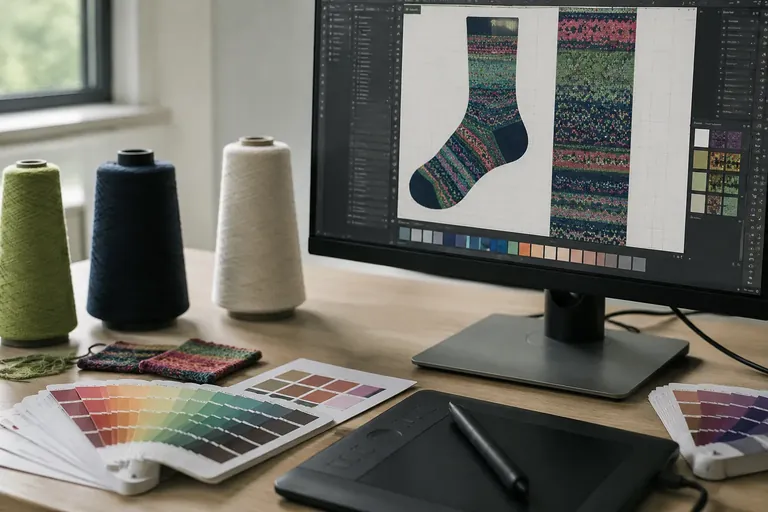
Custom Socks With Logo Wholesale: RFQ Specs, Samples, and Quote Checklist
A strong RFQ for custom socks with logo wholesale orders separates buyer requirements from supplier assumptions. It should tell suppliers what the socks are for, how they will be branded, what specifications must be quoted, how samples will be approved, what packaging is required, and how final quotes should be compared.
DeadSoxy describes B2B bulk sock buying as larger-quantity purchasing for uses such as corporate gifting, promotional campaigns, retail inventory, team uniforms, and event merchandise. It notes that quantities can range from hundreds to thousands of pairs depending on the program DeadSoxy.
This guide is a buyer-side RFQ framework. It does not assume that every supplier offers every sock type, material, decoration method, packaging format, shipping term, or compliance document listed below. Ask each supplier to confirm what they can quote and to state assumptions in writing.
1. Define the Buying Context
Open the RFQ with the business context so suppliers price the same request.
| Buyer input | What to provide | |---|---| | Project purpose | Retail, promotion, uniform, gifting, event, merchandise, internal use, or another defined purpose. | | Target wearer | Adult, youth, employee, customer, athlete, team member, or another defined group. | | Wear context | Casual, dress, sport, work, winter, travel, everyday use, or another defined use case. | | Distribution format | Store shelf, ecommerce parcel, event handout, kit packing, team issue, or bulk internal distribution. | | Delivery requirement | Launch date, event date, seasonal window, replenishment timing, or latest acceptable delivery date. | | Quantity scope | Total pairs, pairs per design, pairs per colorway, and expected reorder quantity if known. |
Do not send only a logo file and total quantity. Add the use case, size split, packaging need, delivery destination, and approval timeline.
2. Identify the Sourcing Model
Goren Socks distinguishes OEM, ODM, private label, and white label sourcing models. In that framing, OEM generally means the buyer provides the specification and design; ODM means the manufacturer supplies or adapts a design; private label uses buyer branding on a standard or specified product; and white label usually refers to stock products with branding added Goren Socks.
Use the model name only when it matches the request.
| Model | Use when | RFQ detail to include | |---|---|---| | OEM | The buyer has defined artwork, specifications, size ratios, and packaging requirements. | Attach the specification sheet, artwork, color references, packaging files, quantity table, and inspection criteria. | | ODM | The buyer wants supplier input on style development. | Ask which sock elements, materials, sizes, artwork placements, and packaging details can be customized. | | Private label | The buyer wants goods sold or distributed under its own brand. | Define brand placement, labels, packaging, SKU structure, and reorder expectations. | | White label | The buyer wants a stock or near-stock item with branding added. | Ask what base products are available and what branding can be added. |
If exact colors, repeatable sizing, branded packaging, or a specific logo method are required, list each requirement as a separate RFQ line.
3. Build a Quote-Ready Sock Specification
For additional supplier-side background on custom sock sourcing topics, see Velon Socks Velon Socks.
Use a structured specification table before requesting final pricing.
| Specification field | What to send or ask | |---|---| | Sock type and height | Crew, quarter, ankle, no-show, knee-high, over-the-calf, dress, sport, work, thermal, or another required style. Add finished height if needed. | | Size range and ratio | Quantity by size, not only total order quantity. Include required size labels. | | Quantity structure | Total pairs, pairs per design, pairs per colorway, and expected reorder quantity if known. | | Material direction | Desired yarn blend if known, or a request for supplier-recommended options by use case and price level. | | Weight or thickness | Lightweight, midweight, cushioned, heavy, or supplier-stated equivalent. Ask suppliers to define what is included in the quote. | | Cushioning | None, sole cushion, half cushion, full cushion, targeted padding, or supplier recommendation. | | Fit and construction | Cuff requirement, arch support request, heel and toe reinforcement request, seam preference, and any stated comfort requirement. | | Colors | Pantone references, yarn color references, supplier color-card choices, lab dip request, or approved sample standard. | | Artwork files | Vector artwork if available, plus a flat preview image and placement notes. | | Packaging | Bulk pack, belly band, hang tag, header card, polybag, box, insert, or another buyer-required format. | | Shipping destination | Full delivery address, warehouse, port, or destination country for freight quoting. | | Compliance documents | Buyer-required declarations, test reports, labeling files, or market-specific documents. State whether the buyer or supplier is responsible for review. |
Ask each supplier to identify quote assumptions, including construction, material, logo method, packaging format, sample timing, production timing, shipping term, and exclusions.
4. Specify Logo and Branding Requirements
Treat logo execution as part of the product specification. Ask each supplier to confirm which branding methods they can quote for the requested sock type, artwork, and order quantity.
RFQ fields for each logo or brand element:
- Logo method requested or quoted: jacquard knit, embroidery, print, transfer, woven label, hang tag, belly band, header card, or supplier recommendation.
- Logo placement: cuff, side leg, foot, sole, toe area, packaging, or another defined location.
- Logo dimensions: width and height in the required unit of measure.
- Number of logo colors, with references for each color.
- Artwork file type, including vector artwork if available and a preview image.
- Detail limits, including any minimum line width, minimum letter height, color-count limit, or artwork-size limit.
- Readability requirement, including whether the logo must remain legible when worn.
- Approval evidence, such as a mockup, sample photo, physical sample, or another defined approval item before bulk release.
Ask whether fine lines, small lettering, gradients, or multi-color artwork require a simplified design or a different branding method.
5. Ask Comparable Material and Construction Questions
Use the same question set for each supplier so the answers can be compared line by line.
- What material or yarn blend is being quoted?
- What material alternatives are available at different price levels?
- What sock weight or thickness is included in the quote?
- What cushioning is included?
- What cuff, heel, toe, arch, and seam construction is included?
- What logo method is being quoted for the submitted artwork?
- What limits apply to color count, artwork size, fine detail, or placement?
- What size range is available for the quoted construction?
- What minimum order quantity applies by design, color, and size?
- What changes would affect unit price, sample cost, or production timing?
Request written answers so the quotation can support purchase order drafting, sample approval, packing instructions, and receiving checks.
6. Define Sampling and Approval Steps
Custom Sock Lab advises buyers to request samples before final production to confirm material quality and design accuracy Custom Sock Lab.
Define the approval process in the RFQ.
1. Artwork review: confirm logo size, placement, color count, and decoration feasibility. 2. Digital mockup: approve layout direction; treat material, fit, and construction as unapproved unless the supplier states otherwise. 3. Pre-production sample: review actual construction, logo execution, size, hand feel, and packaging. 4. Written comments: send required changes, using annotated photos where useful. 5. Final sample approval: approve only after required changes are closed. 6. Bulk production release: confirm the approved sample, specification sheet, quantity, packing method, and delivery terms. 7. Finished-goods check: inspect bulk goods against the approved sample and written specification.
Include who approves the sample, how many samples are needed, which address receives them, whether the sample can be retained as the production standard, and whether the sample cost is separate from or credited against the bulk order.
7. Turn Quality Expectations Into Inspection Points
Avoid broad wording such as premium, high quality, or retail standard unless the RFQ defines checkable criteria.
Inspection points to include when applicable:
- Logo placement and size against the approved sample or written measurement.
- Logo color against the agreed color reference or approved sample.
- Pair matching and correct left-right pairing where applicable.
- Size label accuracy and size ratio accuracy.
- Cuff stretch and recovery check method.
- Heel, toe, seam, and reinforcement checks.
- Loose thread, hole, stain, odor, and contamination checks.
- Packaging type, brand placement, barcode, SKU, and label accuracy.
- Pair count per inner pack and carton count per master carton.
- Carton marks, packing list, and shipping document consistency.
If tolerance limits matter, state them before production. If the approved sample is the reference standard, name it in the purchase order and keep one approved sample for receiving inspection.
8. Include Packaging and Logistics in the First RFQ
Ask suppliers to quote packaging and logistics details in the first request so responses can be compared line by line.
Packaging and logistics fields:
- Individual packaging: none, belly band, hang tag, header card, polybag, box, insert, or another defined format.
- Brand placement: sock only, package only, both, or neutral packaging.
- Size labeling: woven label, sticker, hang tag, printed package, carton mark, or another method.
- Care and fiber content label: buyer-required wording, destination market, and compliance review responsibility.
- SKU and barcode: required code, placement, scan test request, and carton label requirement if applicable.
- Carton packing: pairs per inner pack, pairs per carton, carton dimensions, gross weight, and net weight.
- Shipping terms: requested Incoterm, destination port or address, preferred freight mode, and required delivery date.
- Documents: commercial invoice, packing list, carton photos, product photos, and buyer-required compliance documents if applicable.
Custom Sock Lab notes that buyers may order extra units for events to avoid running out during peak demand and should ask suppliers about quantity price thresholds Custom Sock Lab. If the order is event-driven, include the buffer quantity and latest acceptable delivery date in the RFQ.
9. Use This Custom Sock RFQ Checklist
Copy the relevant fields into the quotation request.
- Company name, contact person, billing country, and delivery country.
- Project purpose and distribution channel.
- Total quantity, quantity per design, and quantity per colorway.
- Size range and quantity by size.
- Sock type, height, and use case.
- Material direction or request for supplier recommendations.
- Cushioning, cuff, arch, heel, toe, and seam requirements.
- Logo method preference or request for supplier recommendation.
- Logo placement, logo dimensions, color references, and artwork files.
- Packaging type, brand placement, labels, barcode, and SKU requirements.
- Carton packing, carton marks, and shipping documentation.
- Sample type, sample quantity, sample delivery address, and approval timeline.
- Bulk production deadline and final delivery deadline.
- Destination address, destination port, or warehouse.
- Requested Incoterm and freight preference.
- Inspection points and tolerance requirements.
- Required compliance documents or test reports if applicable to the buyer's market.
- Target price or budget range if the buyer wants alternative options quoted.
- Reorder expectations or forecast quantities if known.
10. Compare Supplier Quotes Line by Line
Compare the full quote package, not only the unit price.
| Comparison field | Supplier A | Supplier B | Supplier C | |---|---|---|---| | Sourcing model | | | | | MOQ by design, color, and size | | | | | Sock type and height | | | | | Material or yarn blend quoted | | | | | Weight, cushioning, and construction | | | | | Logo method and color count | | | | | Size range and size ratio | | | | | Packaging and labeling included | | | | | Sample cost and sample lead time | | | | | Bulk production lead time | | | | | Payment terms | | | | | Shipping term and destination | | | | | Inspection support | | | | | Reorder process | | | | | Exclusions or assumptions | | | |
The best RFQ outcome is a quote that clearly states what is included, what is excluded, what must be approved before production, and what will be checked at receiving.