Eco Sock OEM Compliance Requirements for New Zealand Manufacturing RFQs
By Vincent Xi, Editorial Author
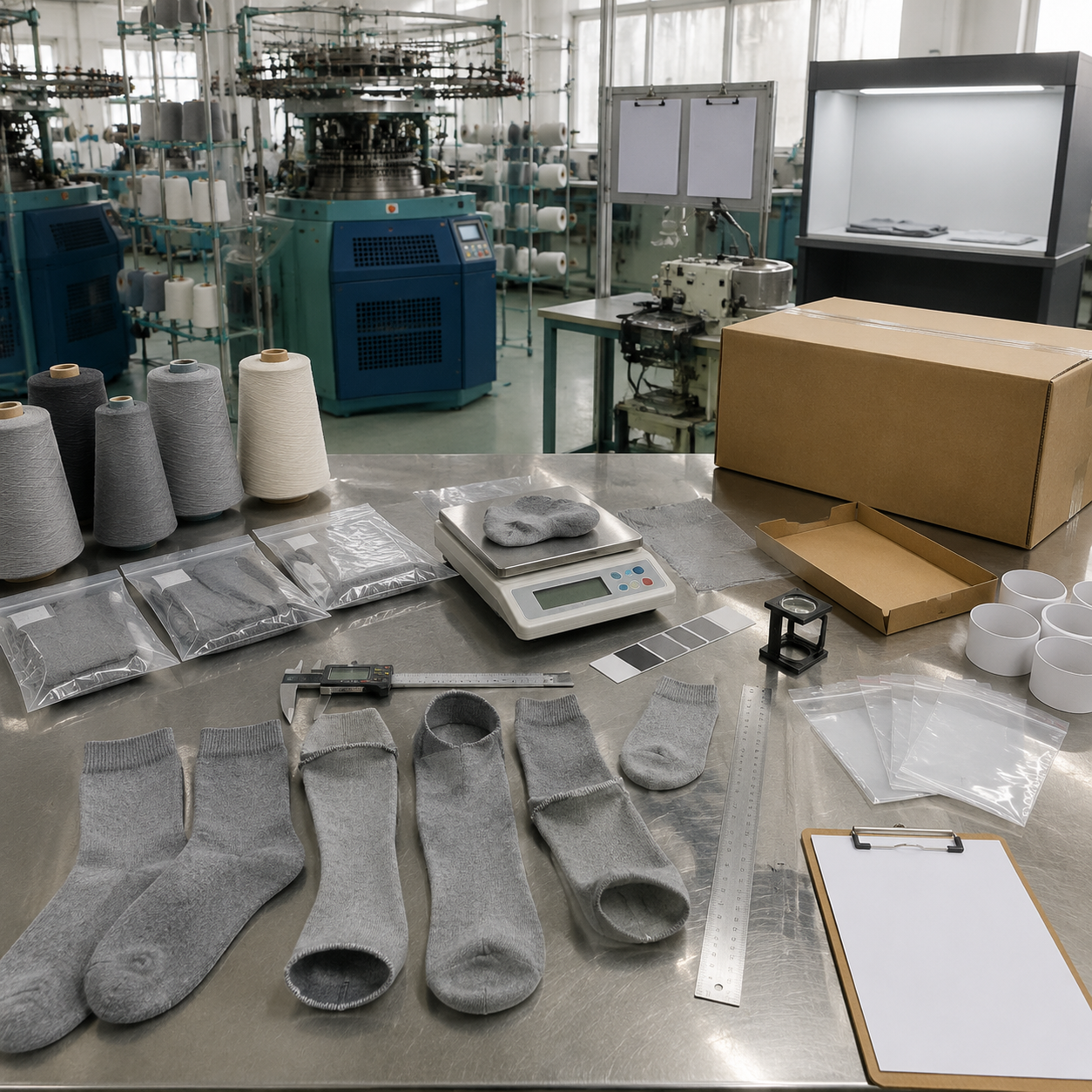
For a New Zealand eco sock manufacturing RFQ, treat compliance as a set of documented release decisions. Before approving an order, require a controlled finished-SKU specification, bill of materials, exact public claim wording, scope-matched evidence, measurable inspection criteria, an approved sample, and change-control terms. Before shipment, require lot-linked QC records, approved labels and packaging, and the documents requested by the responsible New Zealand importer or customs broker.
In this article, eco sock is a product-family term, not proof of environmental performance. Claims such as recycled content, organic content, biodegradability, compostability, plastic-free construction, chemical safety, product origin, or reduced carbon impact require separate evidence that matches the finished SKU and the exact wording used.
The release gates below are recommended buyer controls for a manufacturing RFQ. They are not described as New Zealand statutory requirements unless an official source is cited. Legal, customs, tariff, tax, and biosecurity decisions should be confirmed by the responsible New Zealand adviser, importer, broker, or authority.
New Zealand eco sock compliance requirements at a glance
| Decision area | Release when | Hold when |
|---|---|---|
| Finished SKU | The supplier accepts a controlled specification covering construction, materials, sizes, colourways, intended wearer, packaging, and production site | The quote relies on a generic sock description or leaves materials, processes, sites, or subcontractors open |
| Public claims | Each proposed composition, environmental, origin, safety, or performance statement has defined wording, scope, evidence, and an approver | The wording is broader than the evidence or uses an undefined term such as eco-friendly |
| Standards and certificates | The RFQ explains why each standard is relevant, and the document holder, site, scope, status, and validity have been checked | A site-level document is presented as proof for an uncovered finished SKU or shipment |
| Sample and QC | The approved sample, conditioning method, measurements, tolerances, test plan, defect rules, and failed-lot process are documented | Acceptance depends on appearance alone or an undefined passed-inspection statement |
| Change control | Materials, dyes, finishes, processes, sites, subcontractors, labels, and packaging cannot change without review | The supplier can substitute an equivalent input without approval and replacement evidence |
| Shipment file | QC records, artwork, packing data, and importer-requested documents are complete and linked to the production lot | Records are expired, inconsistent, incomplete, or unrelated to the goods being shipped |
Trace every compliance requirement to evidence
A useful evidence file separates explanatory sources, official New Zealand sources, supplier records, test results, and buyer approvals. One source should not be used to answer a question outside its stated role.
| Source context | Citation | Appropriate use | What it does not establish |
|---|---|---|---|
| Author attribution | Vincent Xi author profile | Identifies Vincent Xi as Editorial Author | Factory visits, testing, technical credentials, certifications, or procurement outcomes |
| OEM scope | Goren Socks OEM sourcing guide | Commercial context for allocating buyer-specified OEM inputs | Capability, compliance, certification, or performance of a prospective supplier |
| Certification orientation | DeadSoxy certification guide | Secondary background on selected certification concepts | Current official requirements, a valid certificate, or certification of a finished eco sock |
| Manufacturing sequence | ANV Socks manufacturing guide | Commercial context for sequencing materials, production, QC, shipping, and customs work | New Zealand legal requirements or a supplier's actual manufacturing controls |
| New Zealand representations | Fair Trading Act 1986 | Official statutory text for the responsible New Zealand reviewer assessing proposed representations | A legal opinion that particular wording is compliant |
| New Zealand imports | New Zealand Customs import guidance | Official starting point for current import-process and document review | A binding tariff classification, origin decision, valuation, duty rate, tax result, or clearance |
| New Zealand biosecurity | Ministry for Primary Industries import guidance | Official starting point for current import and biosecurity checks | Approval of a shipment, pallet, crate, packaging material, or wooden dunnage |
Give final label, packaging, catalogue, and online-listing wording to the responsible New Zealand reviewer with the evidence file. The manufacturer can supply records and draft information, but should not be assigned the final legal decision for a representation intended for the New Zealand market.
Build a finished-SKU evidence file
Create a separate evidence row for each finished SKU and each proposed public claim. A material-level declaration is not automatically finished-product evidence.
Record:
- The exact claim wording and every location where it will appear.
- The finished SKU, construction, size range, colourway, intended wearer, and intended use.
- The controlled bill-of-materials revision and approval status.
- The composition basis by mass, including the treatment of elastic, reinforcement, sewing thread, trims, and excluded components.
- Available yarn, trim, dye, finishing, production, packing, and shipment lot identifiers.
- The evidence type, issuer, legal holder, covered site, process or product scope, issue status, and expiry status.
- The test method, applicable limit, tested-sample identity, colourway coverage, report date, result, and laboratory identity when testing is required.
- The responsible reviewer, decision, unresolved condition, and event that triggers reapproval.
For any requested certificate, compare the holder name, manufacturing site, covered process or product, standard version, annexes, current status, validity period, and available directory record. If a selected scheme requires transaction or chain-of-custody records, list those separately as order or shipment evidence.
Keep evidence types distinct. A facility audit, fibre declaration, chemical test report, chain-of-custody record, and finished-product certificate answer different questions and should not be treated as interchangeable.
Put measurable compliance requirements in the manufacturing RFQ
The Goren Socks OEM sourcing guide is used here only as commercial context for OEM input allocation. The ANV Socks manufacturing guide is used only as manufacturing-workflow context. Neither source proves that a particular supplier can meet the following controls.
| RFQ field | Required supplier response | Release condition |
|---|---|---|
| Parties and sites | Legal seller, production site, proposed subcontractors, and relevant evidence holders | Every party that could affect evidence scope is disclosed |
| Finished SKU | Construction, sizes, colourways, wearer, intended use, and specification revision | Quote, sample, evidence, and artwork refer to the same revision |
| Bill of materials | Fibre composition, yarn codes, elastic, reinforcement, sewing thread, dyes, finishes, trims, labels, and packaging | No input remains described only as equivalent or subject to availability |
| Public claims | Exact wording for labels, packaging, product listings, and supporting qualifiers | Wording does not exceed the documented evidence scope |
| Voluntary standards | Standard name and version, purpose, required scope, and required status at production and shipment | Current documents cover the relevant holder, site, process, material, or finished product |
| Testing | Requirement, covered materials and colourways, method, limit, sample identity, and timing | The report scope matches the production decision it supports |
| Sample approval | Conditioning, measurement points, appearance criteria, performance method, tolerances, and approval authority | Bulk production starts only after documented approval |
| Production QC | Incoming and in-process checks, measurement records, defect classes, sampling method, acceptance rule, and failed-lot disposition | Lot-linked results meet the agreed specification |
| Traceability | Links between incoming materials, production batches, tests, inspections, packing records, and shipment | Shipped goods can be matched to the approved evidence set |
| Change control | Advance disclosure of changes to materials, dyes, finishes, sites, subcontractors, processes, artwork, or packaging | Replacement evidence and buyer approval are complete before use |
| Quote scope | Included and excluded testing, certification, inspection, retesting, documentation, corrective action, cost, and timing | Mandatory controls are assigned and priced before order approval |
| Nonconforming goods | Investigation, segregation, corrective action, retesting, replacement, and cost responsibility | Failed or undocumented goods have an agreed disposition |
A standard becomes an RFQ or purchase-order requirement when the buyer places it in the specification or contract, or when a responsible adviser identifies an applicable requirement. A supplier's internal inspection is the supplier's own practice unless an official standard, approved specification, or contract makes that control mandatory. Do not make a certification claim without a current document whose scope covers the claim.
Use manufacturing hold points
Write the following buyer-defined gates into the RFQ and purchase order:
- Before sample production: Approve proposed materials, exact public claims, evidence responsibilities, test responsibilities, and the sample specification.
- Before bulk production: Approve the identified sample, controlled bill of materials, artwork, production site, subcontractors, and required current documents.
- During production: Match incoming materials to approved codes and lots, then record the specified knitting, linking, finishing, conditioning, measurement, and colourway checks.
- Before final inspection: Confirm the active specification revision, lot identities, measurement methods, sampling method, defect categories, acceptance rule, and required reports.
- Before shipment: Close failed tests, substitutions, expired documents, inconsistent claims, traceability gaps, packing discrepancies, and missing importer-requested records.
Require each gate to be recorded as passed, open, or failed, with the person authorised to close it identified. A production target or freight booking should not override an unresolved hold.
Keep quote calculations separate from verified data
The following data points are buyer-created examples for RFQ drafting. They are not supplier, product, order, or shipment facts and must be verified in the supplier quote and supporting records.
| Example | Buyer assumption and calculation | Scope and verification required |
|---|---|---|
| Material composition | Assume a proposed yarn lot is 1,000 kilograms and the draft supplier response states 70 percent recycled polyester by yarn mass. The example calculation is 1,000 kilograms x 70 percent = 700 kilograms of recycled polyester within that yarn lot. | This does not establish finished-sock composition. Verify the actual lot mass, declaration basis, allocation method, transaction records, production losses, elastic, reinforcement, sewing thread, trims, and finished-SKU bill of materials. |
| Sample measurement | Assume a draft pre-production check covers 10 pairs from one size and one colourway, with a target foot length of 250 millimetres and a buyer-set tolerance of +/- 5 millimetres after an agreed conditioning method. | These are illustrative RFQ settings, not recommended defaults. Verify the sampling basis, measurement datum, conditioning, target, tolerance, size and colourway coverage, and failed-sample rule. |
| Freight volume | Assume one master carton has external dimensions of 60 centimetres by 40 centimetres by 40 centimetres. The illustrative geometric volume is 0.096 cubic metres per carton. | Verify production carton dimensions, carton count, pack quantity, net mass, gross mass, route, carrier measurement rules, and charging method before using the result for landed-cost or emissions work. |
Review New Zealand claims, import records, and freight
For public claims, submit the exact wording and scope-matched evidence to the responsible reviewer. The Fair Trading Act 1986 provides official statutory text for that review, but this article does not determine whether any proposed wording is legally compliant.
Before booking cargo, send the proposed goods description and draft document set to the New Zealand importer or customs broker responsible for the shipment. Ask that party to review classification, origin treatment, valuation, taxes or duties, restrictions, permits, and supporting evidence against the current New Zealand Customs import guidance. Treat any tariff code or origin statement proposed by the supplier as an input for review, not a binding New Zealand decision.
Subject to importer or broker confirmation, require the supplier's shipment file to include:
- A draft commercial invoice with consistent parties, SKUs, goods description, quantity, value, currency, and origin information.
- A packing list linked to the same SKUs and showing pack quantity, package count, external dimensions, net mass, and gross mass.
- The applicable transport document and booking reference.
- Origin support and other evidence requested for the proposed customs treatment.
- The agreed delivery term, applicable edition, named place, and allocation of freight, insurance, export clearance, import clearance, and document-delivery responsibilities.
- Document submission dates that leave time to correct discrepancies before shipment release.
For local delivery in New Zealand, the quote should identify the named delivery point, responsibility for port or airport handling, the domestic freight leg, access constraints supplied by the buyer, and the evidence supporting any surcharge. Do not publish or approve a freight price or transit estimate without a current route-specific quote and stated assumptions.
Disclose proposed pallets, crates, and wooden dunnage before booking. The responsible importer or broker should check current conditions through the Ministry for Primary Industries import guidance. Linking to the guidance does not amount to biosecurity clearance for a shipment or packaging material.
A freight-related environmental claim also needs a documented route, transport legs, shipment mass or volume basis, allocation method, emissions factors, factor source, and data period. No New Zealand freight price, transit time, tariff classification, duty rate, tax outcome, or biosecurity result is stated here because no route-specific quote or shipment assessment was supplied.
Eco sock OEM compliance requirements checklist
- [ ] State New Zealand as the destination sales market for the RFQ.
- [ ] Identify the legal supplier, manufacturing site, and proposed subcontractors.
- [ ] Identify the responsible New Zealand importer, customs broker, and claim reviewer.
- [ ] Define every finished SKU, construction, size range, colourway, intended wearer, and intended use.
- [ ] Attach a controlled bill of materials covering the sock body, cuff, heel, toe, reinforcement, elastic, sewing thread, dyes, finishes, trims, labels, and packaging.
- [ ] State the composition basis and treatment of minor or excluded components.
- [ ] Provide exact environmental, composition, origin, safety, and performance claim wording.
- [ ] Attach a claim-to-evidence matrix with scope, status, holder, site, owner, decision, and reapproval trigger.
- [ ] Explain the purpose and required scope of each requested voluntary standard.
- [ ] Request current certificates, annexes, directory checks, and transaction records where relevant.
- [ ] Define test methods, limits, materials, colourways, sample identity, and report timing.
- [ ] Define conditioning, measurement points, tolerances, defect categories, sampling, acceptance, and failed-goods disposition.
- [ ] Require traceability from incoming material lots through packed shipment lots.
- [ ] Prohibit unapproved changes to materials, processes, sites, subcontractors, artwork, and packaging.
- [ ] Separate included and excluded testing, inspection, certification, documentation, retesting, and corrective-action costs in the quote.
- [ ] Request production pack quantities, carton dimensions, net mass, gross mass, and packaging materials.
- [ ] List importer-requested invoice, packing, transport, origin, test, and inspection records with submission deadlines.
- [ ] Disclose pallets, crates, and wooden dunnage for current New Zealand biosecurity review.
- [ ] Make complete evidence, approved QC results, and importer-reviewed documents explicit shipment-release conditions.
Methodology, limitations, and author basis
The methodology maps each proposed requirement through the same sequence: exact claim or specification, affected SKU and scope, evidence or authority, document owner, verification action, recorded result, and release or hold decision. The material, measurement, and carton calculations are explicitly labelled buyer assumptions so they cannot be mistaken for current supplier or shipment data.
Source roles were kept separate. The Goren Socks page supplies commercial OEM context, the DeadSoxy page supplies secondary certification context, and the ANV Socks page supplies manufacturing-workflow context. They are not treated as New Zealand regulatory authorities or proof of supplier capability. The Fair Trading Act page supplies official statutory text, while the New Zealand Customs and Ministry for Primary Industries pages are official starting points for current import and biosecurity review.
No supplier quote, finished-SKU specification, bill of materials, test report, certificate, annex, directory result, transaction record, inspection report, freight quote, or shipment file was provided for assessment. This article therefore does not claim that any prospective manufacturer holds a certification, meets a named standard, satisfies a particular New Zealand legal requirement, or can clear a specific shipment. Current evidence should be checked with the relevant standard owner, issuing body, qualified laboratory, New Zealand legal adviser, importer, customs broker, or authority before production or shipment release.
The approved author basis is limited to Vincent Xi's author profile, which identifies him as Editorial Author. It does not document factory visits, laboratory tests, product trials, certification assessments, or procurement outcomes, so no first-person or first-hand experience claim is made.
Discuss Your Requirements
Review our manufacturing capabilities, then share your specifications for a supplier-fit review.