Fashion Sock OEM Pilot Run Validation for Europe Buyers
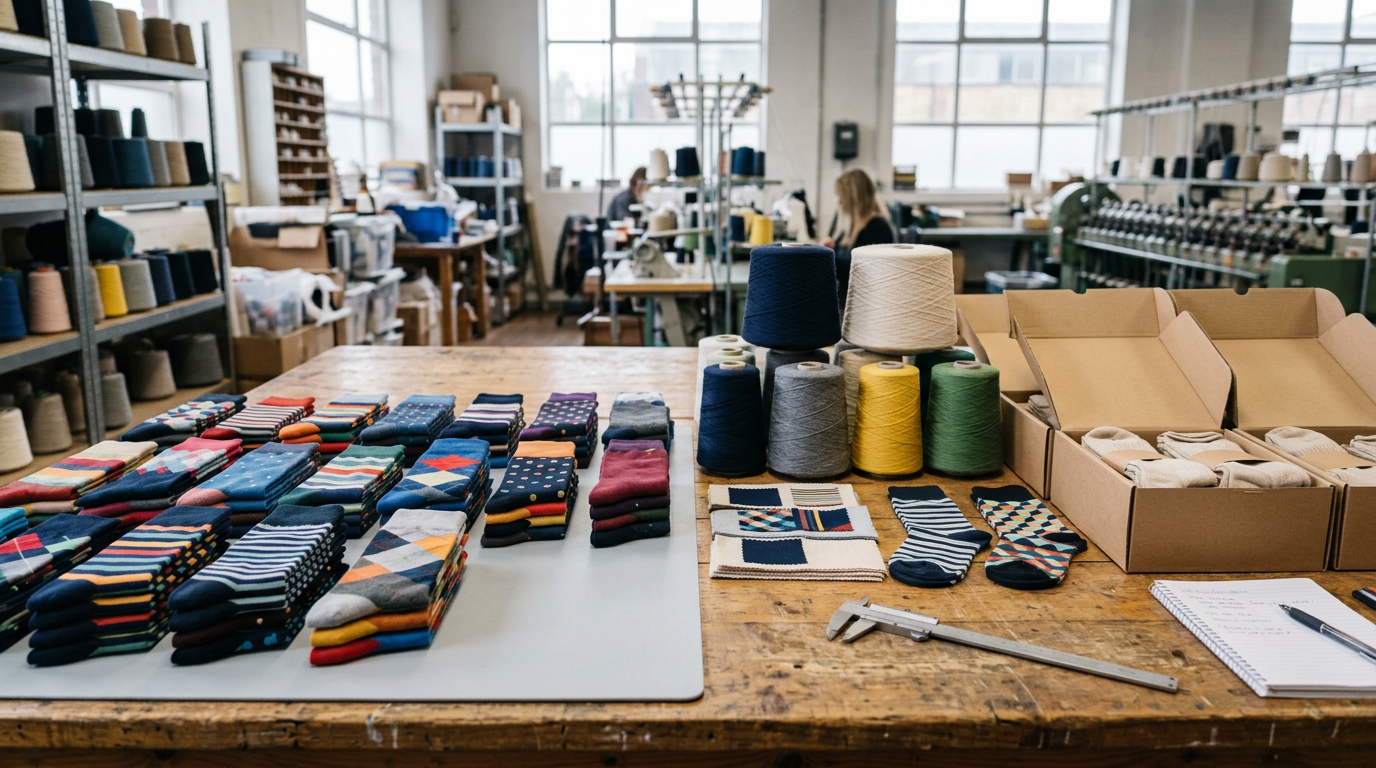
A fashion sock oem pilot run validation is a controlled small-batch step that lets a buyer check whether an agreed design can be made consistently before committing to bulk manufacturing. For buyers supplying Europe, the value is not the pilot quantity itself. The value is the record it creates: what was specified, what was produced, what was checked, what was changed, and what was finally approved. Used well, pilot run validation turns assumptions about colour, pattern, sizing intent, hand feel, cuff behaviour, labelling presentation, and packing into documented decisions that both sides can refer to when the bulk order is released.
Without that record, a bulk discussion can drift. A pattern that looked clear on a screen may sit differently on a knitted sock. A colour approved from a swatch may read differently beside other colours in the same range. A cuff, heel, or toe detail may be acceptable in a single sample and harder to repeat across a full pilot batch. The pilot run gives the buyer a practical way to see those issues at batch level, compare them against an agreed specification, and decide what must be corrected, what can be accepted, and what needs a fresh approval before manufacturing continues.
What Pilot Run Validation Should Confirm Before Bulk Manufacturing
Pilot run validation should confirm repeatability, not only appearance. A single attractive sample shows that a design can be made once. A pilot batch shows whether the same result can be produced across pairs, sizes, and colours within the range the buyer intends to order. That distinction should shape every check in the process.
Start by freezing the reference that the pilot will be judged against. The buyer and supplier should agree the design file, colour references, yarn and fibre content description, size range intent, knit construction notes, and any placement rules for motifs, stripes, logos supplied by the buyer, or contrast panels. If any of those fields are still open, record them as open. Do not treat an unresolved field as approved simply because the pilot has started.
Next, agree how the pilot output will be reviewed. Specify which pairs will be checked, how colour will be compared, which measurements will be taken against the agreed specification, and how defects or variations will be recorded. The method matters as much as the result. A buyer who only comments that a batch looks acceptable has not created a usable approval. A buyer who records which attributes were checked, which variations were found, and which corrections were agreed has created a reference for bulk production and for later dispute resolution.
Finally, agree the decision that follows the review. The possible outcomes should be clear before the pilot begins: approve for bulk, approve with listed corrections, revise and repeat part of the pilot, or stop the style. Naming those outcomes in advance keeps the conversation focused on evidence from the batch rather than on general impressions.
Buyer Decision Table for Pilot Run Approval
The table below turns pilot run validation into buyer-defined process checks. Each row is a decision to agree with the supplier, not an assumption about performance. Complete each row for the specific fashion sock style under review.
| Decision area | What to agree in the pilot run | How the buyer validates it | Hold point before bulk |
|---|---|---|---|
| Design and motif placement | Specify the approved artwork, motif scale intent, placement on leg and foot, and how stripes or patterns should align across sizes | Compare pilot pairs against the approved design reference and record any placement drift by size and colour | Do not release bulk until placement is approved or a revised reference is signed off |
| Yarn and colour approval | Specify the fibre content description, yarn type as described by the supplier, and the colour reference for each colourway | Compare pilot pairs and swatches side by side under the viewing conditions the buyer will use for approval and note differences in writing | Do not release bulk if a colourway is accepted verbally but not recorded as approved |
| Sizing and fit intent | Specify the size range, the intended fit for each size, and the measurement points and method buyer and supplier will both use | Measure pilot pairs using the agreed method and compare the results with the agreed specification for that style | Do not release bulk until measurement disagreements are resolved and the method is documented |
| Knit construction and hand feel | Specify the knit structure, density intent as described in the specification, and the hand feel the buyer expects for this style | Handle and stretch pilot pairs as the buyer intends them to be assessed and record where the feel differs from the reference sample | Do not release bulk if the reference sample and pilot batch feel materially different without an agreed explanation |
| Cuff, heel, and toe construction | Specify cuff construction and height intent, heel shape, toe closing method as described by the supplier, and comfort-related details the buyer will check | Inspect those areas on multiple pilot pairs, check inside and outside finish, and list any irritation, distortion, or finishing issue found | Do not release bulk until construction details are approved on the pilot batch, not only on an earlier sample |
| Labelling and packaging presentation | Specify label content supplied by the buyer, label placement, folding method, pairing method, and outer packing presentation for the order | Check labelled and packed pilot units exactly as they would leave the supplier and confirm the presentation matches the agreed packing specification | Do not release bulk until the packed unit, not only the loose sock, has been approved |
| Inspection and acceptance method | Specify what will be checked, how findings will be classified by the buyer, and what outcome counts as acceptance for this order | Apply the agreed check to the pilot batch, keep a written record of findings, and link each finding to a correction or an acceptance note | Do not release bulk if the acceptance method for bulk has not been agreed during the pilot stage |
| Change control and re-approval | Specify which changes require a new sample, a partial pilot repeat, or only written confirmation | Log every change made after pilot review, attach it to the revised specification, and confirm which version is now the production reference | Do not release bulk on an older specification after changes have been agreed elsewhere |
Structuring the Pilot Run for Europe Fashion Sock Orders
For Europe orders, structure the pilot around the actual assortment the buyer intends to sell, not around the easiest style to produce. If the range includes several colourways, sizes, or pattern variants, decide which of them the pilot must cover and why. A pilot that covers only one colourway may not validate a motif that behaves differently in another colour combination. A pilot that covers only one size may not show how a pattern scales or how a cuff sits across the range.
Buyers should also separate destination questions from product questions. Europe is not a single uniform destination for labelling, language, or documentation purposes. Ask the supplier what documentation and labelling information they propose for the specific destination countries in the order, ask the buyer-side team to confirm what those destinations require, and record the agreed result in the specification. Do not assume that a label, language version, or document accepted for one destination automatically covers another. Keep that check as a documented step in the pilot, and approve the packed unit for the intended destination rather than approving a generic packed unit.
Sequence the work in a clear order. First, confirm the specification and the reference sample. Second, agree the pilot scope, including styles, colourways, and sizes to be included. Third, agree the inspection method and the approval form or record that will be used. Fourth, produce the pilot batch. Fifth, review the batch against the specification and record findings by attribute. Sixth, agree corrections, decide whether any part of the pilot must be repeated, and issue a written bulk release only when the approved reference is unambiguous.
Keep the pilot scope proportionate. The aim is to validate the decisions that carry risk into bulk manufacturing: repeatability of colour and pattern, consistency of construction, clarity of sizing method, and accuracy of labelling and packing. Adding unrelated styles or late design ideas into the same pilot weakens that focus and makes the approval harder to interpret.
What to Inspect and Approve in the Pilot Batch
Inspect the pilot batch as a batch, not as a collection of individual samples. Look across pairs for consistency in colour, pattern placement, cuff appearance, and finishing. Then look within each pair for matching between left and right socks, clarity of motif, and neatness of toe and heel areas. Record variations even when they are acceptable, because a variation that is acceptable once needs a shared understanding if it appears again in bulk.
Check the inside of the sock as carefully as the outside. Loose ends, rough joins, or distorted areas may not be visible in a product photograph but can affect how the buyer assesses comfort and quality for their market. Ask the supplier to explain how any inside finishing issue found in the pilot will be addressed in bulk, and record that explanation alongside the correction list.
Check the packed unit separately from the loose sock. Confirm pairing, folding, label position, and the overall presentation against the packing specification the buyer supplied. Many disagreements at delivery stage concern presentation that was never actually approved. Approving a packed pilot unit removes that ambiguity and gives both sides the same visual reference.
Close the inspection with a written outcome for each attribute: approved, approved with correction, or not approved. Attach photographs taken by the buyer during review if they help identify the exact pair or detail discussed, and name the specification version those comments belong to. A short, precise record is more useful than a long general comment, because production staff and buyer staff can both act on it without reinterpretation.
RFQ Checklist
- Ask the supplier to confirm the full specification they will use for the pilot run, including design reference, colour references, fibre content description, and size range intent.
- Ask the supplier to state which styles, colourways, and sizes the proposed pilot run will cover and which parts of the range it will not cover.
- Require the manufacturer to agree the measurement points and measurement method that both sides will use to assess pilot pairs.
- Require the manufacturer to provide a written record format for pilot findings, corrections, and approvals before the pilot batch is produced.
- Specify the labelling content, label placement, folding method, pairing method, and packing presentation that the pilot packed units must show for approval.
- Specify the destination countries for the order and ask the supplier to confirm the labelling and documentation they propose for those specific destinations.
- Ask the supplier to explain how changes requested after pilot review will be logged, priced for approval by the buyer if applicable, and confirmed in a revised specification.
- Require the manufacturer to confirm which specification version will become the bulk production reference once pilot approval is given.
- Ask the supplier to state what would trigger a partial pilot repeat rather than a direct move to bulk production.
- Specify the buyer-side approver for the pilot batch and require written approval from that approver before bulk manufacturing is released.
From Pilot Approval to Bulk Release
Bulk release should be a separate, explicit step. Pilot approval does not automatically authorise bulk manufacturing for additional colourways, revised artwork, different labelling, or a changed size range. If any of those fields change after approval, return to the change control row in the decision table and decide whether written confirmation is enough or whether a new sample or partial pilot is needed.
Before release, reconcile three records: the final specification, the pilot review record, and the packing specification. If those records describe the same sock in different ways, resolve the difference first. The bulk reference should be a single coherent set of documents that the buyer and supplier can both point to, with the approved pilot pairs retained as the physical companion to that set.
During bulk production, use the pilot record as the comparison baseline. Agree in advance which checks from the pilot stage will be repeated, who will carry them out, and how findings will be reported to the buyer. That agreement should be made before bulk begins, not improvised when the first bulk output is ready. It keeps expectations aligned and prevents the pilot work from being wasted.
A disciplined fashion sock oem pilot run validation does not slow a serious order down. It removes the most common sources of delay later: unclear colour approval, disputed measurement methods, unapproved packing, and changes that were discussed but never recorded. For Europe buyers building a repeatable fashion sock range, that documented clarity is the real output of the pilot run, and it is what makes the step from pilot approval to bulk manufacturing a controlled decision rather than a leap of faith.
Discuss Your Requirements
Review our manufacturing capabilities, then share your specifications for a supplier-fit review.