Fashion Sock Sourcing Material Options for US Procurement
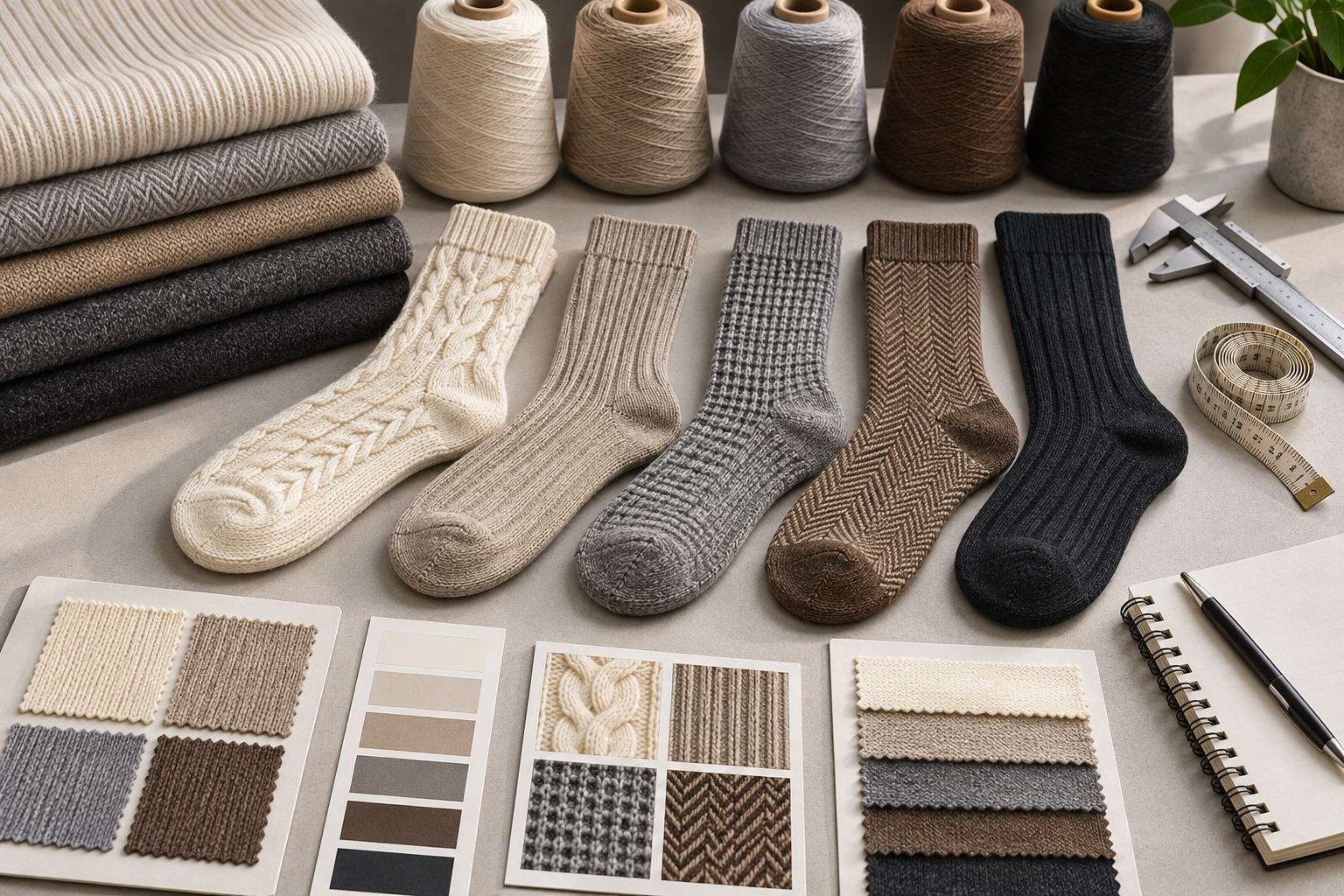
Fashion Sock Sourcing Material Options for United States Procurement
Vincent Xi — Editorial Author
For United States buyers, fashion sock sourcing material options should be selected by matching the intended look, hand feel, wear context, care expectations, decoration method, and landed-cost priorities to a written product specification. The procurement decision is not simply which fiber sounds most attractive. It is which material direction the buyer can describe clearly, compare consistently, approve against a sample, and order with the supplier's responsibilities documented.
Start by separating the brief into visible design requirements and functional requirements. Record the target sock construction, color system, pattern, finish, size range, packaging, labeling fields, delivery destination, and commercial terms separately from the material composition. Ask the supplier to identify the proposed fiber content, yarn form, blend structure, finishing treatments, and any material substitutions that could occur during production. For United States purchasing, also agree which labeling information, packaging details, and shipping documents the supplier will provide and which items remain the buyer's responsibility.
A useful sourcing comparison keeps the product family fixed: fashion socks and hosiery for a defined buyer, channel, season, and use case. It should not mix fashion-sock development with unrelated performance claims or a general apparel program. The goal is a controlled choice among material options that can move from concept to approved sample to purchase order.
How to frame fashion sock material options
Begin with the customer's expected experience, but translate every preference into a field that can be reviewed. “Soft,” “light,” “premium,” and “easy-care” are useful starting descriptions, not complete specifications. Ask the supplier to explain how the proposed yarn and construction are intended to support each preference, then decide which attributes must be confirmed through a submitted sample, written composition, appearance review, or agreed acceptance criteria.
Common material directions may include a predominantly plant-based cellulosic approach, a predominantly synthetic approach, a natural animal-fiber approach, or a blended construction. These labels alone do not determine the final product experience. Yarn preparation, knit structure, finishing, color application, reinforcement, and packaging can affect the result. Keep the comparison focused on the actual sock: request the proposed composition and construction for the exact design rather than approving a generic material family.
For each option, ask the supplier to state:
- The fiber names and blend proportions proposed for the sock.
- Whether the composition applies to the entire sock or differs by section.
- The yarn description and any planned finishing or treatment.
- The expected appearance, hand feel, stretch response, and recovery as represented by the sample.
- Any limitations affecting color, pattern clarity, decoration, care communication, or packaging.
- Which elements are fixed after approval and which may be substituted.
Keep material selection separate from unsupported claims. A fiber name does not by itself establish suitability for a particular climate, use, durability expectation, or regulatory outcome. Those decisions belong in the buyer's product brief and supplier approval process.
Material options decision table for buyers
Use the table as a discussion tool, not as a ranking of materials. The buyer should complete the final decision fields with the supplier for the specific design.
| Material direction | Buyer priority to define | Supplier information to request | Approval check | Procurement risk to control |
|---|---|---|---|---|
| Predominantly plant-based or cellulosic | Desired hand feel, drape, appearance, care position, and seasonal role | Exact fiber composition, yarn description, construction, finishing, and color limitations | Compare the submitted sample with the approved appearance and hand-feel brief | Control composition changes, shade variation, and care-language alignment |
| Predominantly synthetic | Desired color effect, stretch response, shape retention, and decoration result | Fiber type, yarn structure, section-by-section composition, finishing, and substitution policy | Review the sample after the buyer-defined handling and appearance checks | Document fiber substitutions, surface changes, and packaging or labeling updates |
| Natural animal-fiber direction | Desired warmth impression, softness, texture, season, and price position | Exact fiber identity, blend content, yarn form, finishing, and care communication | Approve hand feel, surface appearance, size consistency, and labeling fields | Require written agreement on composition, appearance tolerance, and care information |
| Blended construction | Which attribute each component is intended to support | Full blend breakdown, placement by sock section, yarn details, and acceptable alternatives | Confirm that the sample represents the proposed production composition | Prevent unapproved ratio changes and ensure the purchase order matches the approved sample |
| Decorative or specialty yarn approach | Visual effect, texture, pattern clarity, and intended retail presentation | Yarn content, knitting behavior, finishing, color continuity, and available alternatives | Review the complete design rather than a loose yarn swatch alone | Control visual inconsistency, substitution, and mismatch between sample and order |
A buyer can also ask for a side-by-side sample set using the same colorway, pattern, size, and construction. That makes the material comparison more useful than comparing unrelated swatches. Record the approved option by a clear internal name, but make the purchase order rely on the full composition and construction description rather than an informal nickname.
United States procurement controls for fashion socks
United States buyers should make the commercial and product-control fields explicit before approving a supplier quotation. Do not assume that a material proposal automatically resolves labeling, packaging, delivery, or landed-cost questions. Assign each requirement to the buyer or supplier and request the relevant documentation before the order is released.
Agree the following in writing:
- Product composition and how it is described on the order and packaging.
- Required label content, placement, language, and responsibility for preparation.
- Color references, artwork version, pattern scale, and approval method.
- Size range, measurements, tolerances, construction details, and packing method.
- Sample stages, approval authority, revision control, and treatment of changes.
- Unit price basis, tooling or setup charges if applicable, payment terms, and other commercial charges.
- Shipping point, destination, packaging configuration, delivery responsibility, and documents needed for the shipment.
- The method for handling shortages, visible defects, incorrect composition, packaging errors, or late changes.
Landed cost should be built from the actual quotation and agreed shipment plan. Ask the supplier to separate product price from packing, transport, duties or taxes where applicable, payment charges, and other buyer-incurred costs. If an amount cannot be confirmed at quotation stage, mark it as open and assign an owner rather than treating it as included.
For product labeling, use a review workflow. Ask the supplier to provide the proposed composition and label layout, then have the buyer confirm that the information matches the approved product and the buyer's intended sales channel. The article does not establish the legal sufficiency of any label; the buyer should obtain appropriate review for the product and route to market.
How to compare samples before approval
A material decision should end with a documented approval, not a verbal preference. Ask for samples that represent the proposed color, pattern, construction, finishing, and packaging direction. Keep a sample record containing the supplier reference, material composition, design version, date received, review comments, and approval status.
Use a consistent review sequence:
- Confirm that the physical sample matches the requested sock family, design, size, and construction.
- Compare appearance under the buyer's normal review conditions and record any shade or pattern concerns.
- Review hand feel, stretch response, recovery, surface texture, and overall comfort impression against the written brief.
- Check that the material composition and section-by-section details match the supplier's written proposal.
- Review packaging, labels, folding, pairs, and presentation against the intended sales channel.
- List open questions and require written answers before approval.
- Mark the approved sample and retain the associated specification with the purchase documentation.
Avoid treating one favorable sample as proof of every future order attribute. Instead, define what the approved sample controls, what production records must repeat, and what changes require buyer approval. If the supplier proposes a substitute yarn, finishing change, or composition change, require a revised specification and sample review before ordering or continuing production.
RFQ Checklist
- Specify the fashion sock construction, design, colorway, size range, intended use, packaging format, and delivery destination.
- Ask the supplier to provide the complete fiber composition, yarn description, section-by-section breakdown, finishing details, and permitted substitutions.
- Require the manufacturer to identify which material attributes are represented by the submitted sample and which remain subject to production variation.
- Request comparable samples using the same design brief when evaluating different material options.
- Compare each proposal against hand feel, appearance, stretch response, care communication, decoration result, packaging, and commercial priorities.
- Ask the supplier to state all assumptions behind the quotation, including packing, shipping responsibility, additional charges, and documentation.
- Specify the label fields, artwork version, language, placement, and party responsible for preparing and approving them.
- Require written confirmation that the purchase order composition matches the approved sample and product specification.
- Ask the supplier to describe the change-control process for yarn, blend ratio, finishing, color, construction, packaging, or substitute materials.
- Define the buyer's acceptance process for appearance, composition, measurements, packing, quantity, and documentation before shipment.
- Record the approved sample reference, specification version, open issues, responsible owners, and approval date in the purchasing file.
- Agree how shortages, incorrect labeling, visible product issues, shipment-document gaps, and unapproved changes will be reported and resolved.
Final purchasing decision
Choose the material option that best fits the approved product brief and can be controlled through the RFQ, sample review, order confirmation, labeling workflow, and delivery process. A lower quoted price may not be the best procurement choice if composition, appearance, packaging, or change control remains unclear. A more complex material direction may be appropriate when the buyer can define its purpose and manage the additional approval fields.
Before releasing the order, confirm that the supplier's written composition, sample, quotation, packaging plan, label information, delivery terms, and change-control commitments all describe the same product. For United States procurement, keep unresolved labeling, landed-cost, and shipment-document questions visible until the responsible party has answered them. This creates a practical basis for comparing fashion sock sourcing material options without turning a material preference into an unsupported product claim.
Discuss Your Requirements
Review our manufacturing capabilities, then share your specifications for a supplier-fit review.