Fashion Sock Wholesale Supplier Product Development Capability for Malaysia Buyers
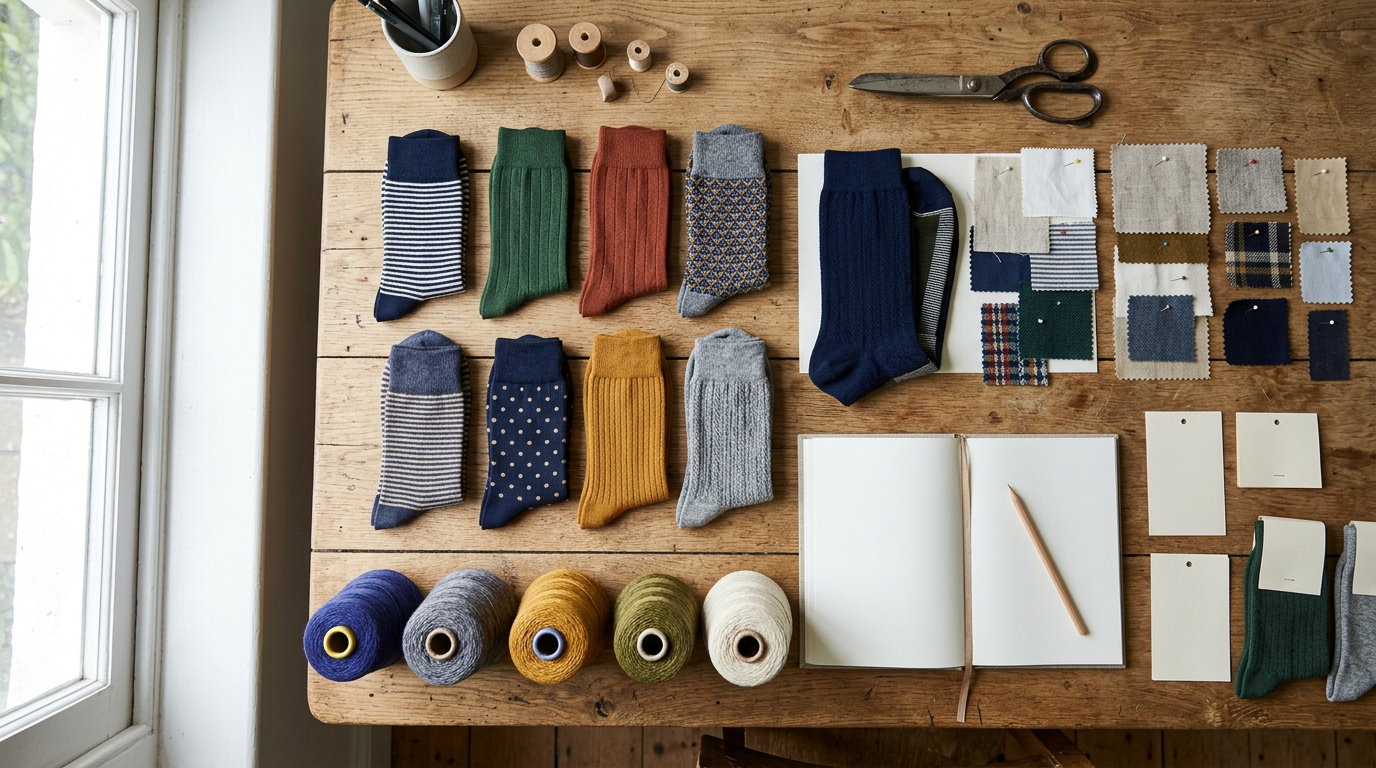
When a Malaysian buyer searches for a fashion sock wholesale supplier product development capability, the core task is not just finding socks to buy, but finding a partner who can turn a clear brief into an agreed sample, then into a repeatable wholesale order. This guide helps buyers in Malaysia structure that evaluation as a procurement process, focusing on questions to ask, criteria to compare, and fields to agree in writing before approval, so the fashion sock you approve is the same one that moves forward to production and delivery.
Product development in this context means the shared work between buyer and supplier to define style, materials, construction, colours, sizing, packaging, and approval steps. A capable process makes each choice visible, records who approved what and when, and separates an idea, a sample, and a final specification. Buyers should treat every early discussion as draft until the agreed specification is documented and confirmed by both sides.
How to Evaluate Product Development Capability for Fashion Sock Wholesale Supply
Start by judging the process, not the promise. Ask how the supplier receives a brief, how they confirm understanding, and how they handle changes after sampling begins. A clear process will name the stages, the information needed at each stage, and the point at which a decision becomes final. If stages are vague, ask for the sequence to be written down before sending detailed artwork or committing to an order.
Compare suppliers using the same brief and the same evaluation fields. Send each candidate the same product direction, intended use, size range to discuss, colour direction, material preferences to explore, and packaging needs. Then compare how completely each supplier responds, what questions they ask back, what they flag as unclear, and what they propose to sample first. Consistent comparison prevents a polished presentation from hiding missing details that will matter later.
Look also at how revisions are managed. Fashion sock development often involves adjustments to pattern, stripe placement, cuff appearance, heel and toe construction, design placement, and colour matching. Ask how revision rounds are handled in the agreed process, how revised samples are labelled, and how older versions are marked as superseded. Require that only the latest approved version is used for production, and that change requests are recorded rather than handled through informal messages alone.
Product Development Steps for Malaysian Buyers to Agree
Buyers in Malaysia can structure development as a sequence of agreed steps, each with an input, an output, and an approval decision. The steps below are a buyer-defined framework to adapt to your own range plan, rather than a claim about how any specific supplier operates.
- Define the brief by describing the intended wearer, wearing occasion, style direction, colour story, size needs to confirm, and any packaging or labelling information the buyer will supply.
- Confirm the brief by asking the supplier to restate the product direction, list assumptions, and identify any missing information before sampling starts.
- Explore material and construction options by requesting swatches or sample references to review, and by asking what trade-offs each option creates for appearance, feel, and handling.
- Review the first sample against the brief, checking appearance, colour, pattern placement, and finishing details, and record all requested changes in one consolidated feedback note.
- Review the revised sample only against the recorded changes and the original brief, so new ideas are separated from corrections and can be treated as changes if needed.
- Freeze the specification by agreeing the final written description, approved sample reference, colour references, size breakdown, and packaging details before the wholesale order is placed.
- Confirm production and delivery arrangements separately from development, including order quantities to agree, inspection approach to agree, packing method, delivery destination in Malaysia, and acceptance criteria.
At each step, ask what document or sample marks completion. That might be an updated specification sheet, a labelled sample, a colour reference, or a written approval note. Without a clear completion marker, it is difficult to know whether development has finished or is still open to change.
Buyer Decision Table for Fashion Sock Wholesale Supply
Use this decision table to compare candidates and development proposals on the same buyer-defined checks. Record evidence as documents or samples the supplier provides during your process, and mark any field that remains unconfirmed as open rather than assuming it is included.
| Decision Area | What to Compare | Buyer Action | Agreement to Record |
|---|---|---|---|
| Brief handling | How completely the supplier restates the brief and lists missing information | Ask the supplier to confirm the brief in writing before sampling | Confirmed brief, assumptions, and open questions |
| Material options | Options proposed for yarn and fabric feel against the intended use | Ask for swatches or samples to review and compare side by side | Selected material description and review notes |
| Construction details | Cuff, heel, toe, and body construction as described for the proposed style | Require a written description linked to the sample reference | Agreed construction description for the approved sample |
| Colour and pattern | How colours are referenced and checked, and how pattern placement is shown | Ask how colour references will be supplied, approved, and retained | Approved colour references and pattern placement notes |
| Sizing approach | How sizes are defined, labelled, and allocated across the order | Specify the size range, size labels, and quantity split to agree | Final size breakdown and labelling instructions |
| Sampling and revisions | How samples are labelled, how feedback is consolidated, and how versions are controlled | Require version labels and a single feedback record for each round | Latest approved sample reference and superseded versions |
| Packaging and labelling | Options for individual packing, multipacks, tags, and outer packing as proposed | Ask for packaging samples or mock details to approve before ordering | Agreed packaging specification and buyer-supplied information |
| Approval and change control | How final approval is confirmed and how later changes are handled | Require written approval and a change process for any post-approval edit | Written approval note and change log |
| Inspection and acceptance | How the buyer will check delivered goods against the approved specification | Specify inspection steps, acceptance criteria, and how discrepancies are reported | Agreed inspection and acceptance process |
| Delivery arrangements | Packing, documentation, and delivery details the supplier will provide for Malaysia | Ask what delivery information and packing documents will be supplied | Agreed delivery destination, packing list details, and timing to confirm |
If a supplier cannot yet provide a sample, document, or clear answer for a row, keep that row open. Do not treat an open row as a confirmed capability.
Sampling, Approval, and Specification Control in Malaysia
Sampling is where product development capability becomes visible. The buyer can see whether the sample reflects the brief, whether feedback is understood, and whether the next version addresses only the requested changes. To make sampling useful, give feedback in a structured form: reference the sample version, describe the change, show where it applies, and state whether the point is a correction, a preference, or a new idea.
Approval should be explicit. Ask the supplier to identify which sample is proposed as the approval sample, and require that the final specification describes that sample in words and references that both sides can use later. If colour, artwork, or packaging files are involved, record the exact file names and versions approved. This reduces the risk that an earlier draft file is used by mistake.
If development reveals that a requested detail cannot be produced as briefed, ask the supplier to state the limitation in writing, propose an alternative, and explain the visible difference. The buyer can then decide to accept the alternative, revise the brief, or stop development with that supplier. Recording the decision avoids silent substitutions in wholesale supply.
RFQ Checklist
Prepare the request for quotation only after the development direction is clear enough to describe consistently to every supplier. Use the checklist below to make your RFQ complete and comparable.
- Ask the supplier to confirm the product description, style reference, and approved or proposed sample reference in their quotation response.
- Specify the material description to confirm, colour references, and pattern or design details you want quoted.
- Require the supplier to state what is included in sampling, how revisions are handled, and how sample versions will be labelled.
- Ask the supplier to itemise the wholesale supply offer by size, colour, and packaging option so offers can be compared on the same basis.
- Specify the size range, size labels, quantity breakdown by size and colour, and total order quantity to be quoted.
- Require the supplier to confirm packaging details, including individual packing, tags or labels the buyer will supply or approve, and outer packing method.
- Ask the supplier to describe the inspection and acceptance process they propose, and how discrepancies against the approved specification will be reported and resolved.
- Specify the delivery destination in Malaysia, required packing documents, and delivery timing and terms to be agreed in writing.
- Require written confirmation of the final specification version, approval process, and change control procedure before any order is placed.
- Ask the supplier to list any assumptions, exclusions, or open items in their response, so gaps are visible before comparison.
After receiving responses, compare them row by row against the decision table. Highlight any response that quotes a different specification, packaging assumption, or size breakdown, because those offers are not directly comparable until the differences are clarified and requoted on the same basis.
Questions to Ask Before Placing a Wholesale Order
Before moving from development to ordering, pause for a final alignment check. Ask whether the approved sample, the written specification, the quotation, and the order terms all describe the same fashion sock. If any document uses different wording for material, colour, sizing, or packaging, ask for it to be corrected and reissued before you confirm.
Ask also what will happen if a change is needed after approval. A clear answer will describe how the change is requested, how its effect on the product and on delivery arrangements is confirmed, and how the updated specification replaces the earlier one. If the answer is informal, require a written change process as part of the order agreement.
Finally, decide internally who on the buyer side can approve samples, specifications, and changes. Development problems often arise when feedback comes from several people without consolidation. Naming one approver and one consolidated feedback channel protects both sides and keeps the wholesale supply relationship focused on the agreed product.
Used well, product development capability is therefore not a slogan to accept, but a process to test through a brief, samples, a decision table, and a disciplined RFQ. Malaysian buyers who follow that sequence will have a clearer basis to compare fashion sock wholesale suppliers, approve a specification with confidence in the process, and place an order that reflects what was actually agreed.
Discuss Your Requirements
Review our manufacturing capabilities, then share your specifications for a supplier-fit review.