How to Draft a Custom Sock Specification for Defect Prevention and Inspection Evidence
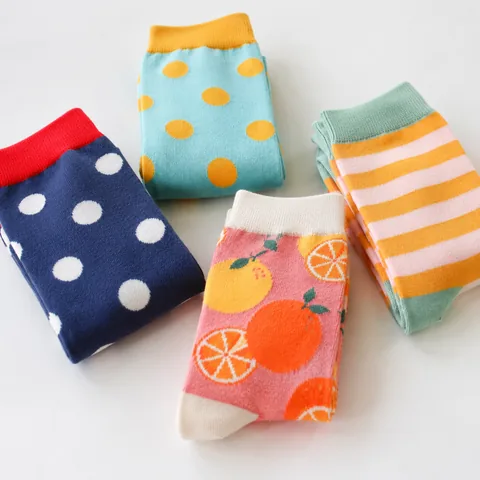
How to Draft a Custom Sock Specification for Defect Prevention and Inspection Evidence
A custom sock specification should tell the supplier what to make, define what counts as a defect, explain how conformity will be inspected, and identify the evidence required before release. Quotations, artwork, renderings, and approved samples may support the specification, but the buyer should record the controlling acceptance requirements in one traceable package.
Supplier resources covering bulk-order questions (DeadSoxy), OEM discussions (Goren Socks), sample-order workflows (Custom Sock Lab), and manufacturing or private-label topics (Velon Socks) can help identify questions for the supplier. Use them as discovery references, not as authority for tolerances, defect severities, sampling plans, or shipment decisions.
Every numeric limit, test method, sample size, acceptance number, and release rule should come from the buyer’s approved requirements, an expressly adopted standard, or a documented supplier agreement. Do not turn an example value into a production requirement without approval.
Draft each requirement as a complete decision chain:
product identity → acceptance criterion → inspection method → sample rule → evidence record → release decision
If one link is missing, the requirement is not inspection-ready.
1. Establish the Controlled Product Identity
Begin with a control block that lets the supplier, inspector, and release reviewer identify the applicable requirements without reconstructing an email thread.
| Control field | Required entry | |---|---| | Buyer and purchase order | [buyer] / [PO number] | | Product and SKU | [style name] / [unique SKU] | | Variant | [size] / [colorway] / [logo version] / [pack version] | | Specification | [revision and effective date] | | Artwork | [controlled filename and revision] | | Color reference | [code, physical reference ID, or both] | | Controlled sample | [sample ID, approval date, and location] | | Packaging and inspection plans | [documents and revisions] | | Approved deviations | [schedule and revision, or none] |
Assign a separate SKU or other unambiguous identity whenever a variant must be measured, sampled, counted, packed, reported, or released separately. Use that identifier on the purchase order, carton record, inspection worksheet, defect log, and photographs.
Define a buyer-approved order of precedence for conflicting documents. For every deviation, identify the clause it overrides and the SKU, quantity, or production scope covered. A physical sample should not silently override written dimensions, artwork, or defect limits.
Include this change-control rule:
> The supplier shall not change a specified material, construction feature, dimension, artwork element, color reference, label, packaging configuration, test method, or inspection rule without a written deviation identifying the affected SKU, clause, proposed change, reason, and production scope.
Keep an open-item register with the affected SKU, decision owner, due date, and status. Incorporate resolved decisions into controlled documents or approved deviations before production.
2. Build a Requirement-to-Evidence Matrix
Convert each requirement into a criterion that produces a recorded result. Separate evidence of identity from evidence of conformity.
| Requirement | Specification must define | Required evidence | |---|---|---| | SKU identity | Style, size, colorway, logo, pack version, and revision | Quantity record, label check, and identity photographs | | Fiber composition | Named fibers, percentages, reporting basis, permitted variance, and verification method when required | Declaration and, when contracted, a sample-specific test report | | Dimensions | Measurement points, product condition, tool, units, limits, and decision rule | Individual values linked to sample IDs | | Logo | Artwork revision, method, size, position, orientation, color, and evaluation condition | Recorded checks and traceable overview, detail, and measurement photographs | | Color | Reference, comparison method, conditions, locations, and boundary | Comparison record or contracted instrument readings | | Construction | Required cuff, heel, toe, seam, cushioning, reinforcement, and interior features | Feature observations, measurements, and detail photographs | | Workmanship | Defect codes, boundaries, severities, and counting rules | Defect log linked to numbered photographs | | Packaging | Pairing, fold, labels, assortment, quantities, and carton marks | Count sheet, label record, carton selection record, and photographs | | Release | Lot, stage, sample rule, acceptance numbers, and authority | Calculation, result, exceptions, and authorization |
For every row, confirm that production can follow the requirement without inventing a technical decision, the inspector can apply the method, the evidence identifies the SKU and sampled unit, and the release reviewer can reproduce the decision.
Name each evidence type accurately. A supplier declaration does not replace a test report when testing is required. A photograph documents only its visible condition and context. A close-up does not establish lot identity unless linked to a sample ID and selection record. An acceptance calculation applies only the contracted rule to the recorded results.
3. Draft Measurable Product Requirements
Finished dimensions
Each dimension clause should define:
- A measurement code and name
- Start and end landmarks, with a diagram when needed
- Whether the sock is flat, relaxed, extended, or on a specified form
- Required conditioning, preparation, alignment, and waiting period
- Whether socks are measured individually or as pairs
- Permitted force for an extended measurement
- Tool, units, resolution, and any required status record
- Target and lower or upper limits
- Rounding rule
- Sample quantity
- Whether the criterion applies to each unit, pair difference, or another statistic
- Recording requirements
| Code | Measurement | Condition | Tool | Target and limits | Sample | Decision basis | |---|---|---|---|---|---|---| | DIM-01 | Overall length: [A to B] | [condition] | [tool] / mm | [target; lower–upper] | [ ] pairs | [each unit/other] | | DIM-02 | Foot length: [A to B] | [condition] | [tool] / mm | [target; lower–upper] | [ ] pairs | [each unit/other] | | DIM-03 | Cuff width at [location] | [condition] | [tool] / mm | [target; lower–upper] | [ ] pairs | [each unit/other] | | DIM-04 | Pair difference for [measurement] | [condition] | [tool] / mm | ≤ [ ] | [ ] pairs | each sampled pair |
Record the SKU, sample ID, left- or right-sock identifier, individual value, unit, applicable limit, and result. Do not report only a range or average unless that statistic is expressly the acceptance criterion. Put production targets and limits in the controlled specification rather than relying solely on an approved sample.
Finished logo execution
Artwork is an input; the specification must state how the finished logo is evaluated. Define the controlled filename and revision, production technique, finished dimensions, measurement edges, product condition, placement from named landmarks, limits in millimeters, wearer orientation, left/right rules, colors, controlled fine details, and applicable interior-finishing limits.
Use a clause such as:
> Produce logo [ID] from artwork [filename/revision] using [technique]. Evaluate it [flat/on form/both]. Measure width and height between [defined edges]. Required width is [ ] mm, with limits [ ] to [ ] mm; required height is [ ] mm, with limits [ ] to [ ] mm. Locate [logo point] [ ] mm from [sock landmark], with limits [ ] to [ ] mm. Orientation shall be [description] on the wearer. Artwork simplification requires a marked revision and written approval.
Do not use logo as shown or match the mockup as the complete rule. Require a full-sock identity view, placement view including the landmark, execution close-up, measurement view showing both endpoints and a readable result, left/right comparison when applicable, and an interior view when interior construction is controlled.
Color acceptance
Define a controlled visual method, a contracted instrumental method, or both. A visual method should identify the reference, reference condition, lighting, background, presentation, comparison location, sample quantity, boundary, and authority. An instrumental method should identify the required capability, settings, status record, measurement locations, readings, metric, reference values, threshold, and treatment of patterned or heathered areas.
Ordinary photographs should not control color acceptance unless a controlled imaging procedure is specified. General photographs may support identity and visible-condition records.
Construction and packaging
List only features that apply to the selected SKU.
| Feature | Required criterion | Method | Defect code | Evidence | |---|---|---|---|---| | Cuff, leg, and ankle | [structure, location, or limit] | [visual/measurement] | [code] | [record/photo] | | Heel, foot, and sole | [type, coverage, or limit] | [method] | [code] | [record/photo] | | Toe and seam | [construction and boundary] | [method] | [code] | [record/photo] | | Cushioning and reinforcement | [location and extent] | [method] | [code] | [record/photo] | | Interior finishing | [float, trimming, backing, or cleanliness limit] | [method] | [code] | [record/photo] | | Pair matching | [identity, orientation, and permitted difference] | [method] | [code] | [record/photo] | | Packaging | [pairing, fold, labels, assortment, and quantities] | [method] | [code] | [count/record/photo] |
Do not copy a construction label from another sock style unless it applies to the product being specified.
4. Create an Order-Specific Defect Catalog
A defect name alone does not produce a repeatable decision. Each entry should include a unique code, inspection unit, observable definition, nonconforming boundary, buyer-assigned severity, counting rule, method, required evidence, and controlled reference when applicable.
| Candidate condition | Decision the specification must contain | |---|---| | Hole or open construction | Size boundary, inspection condition, severity, and count | | Missing or wrong logo | Affected element, severity, and inspection-unit count | | Reversed orientation | Wearer orientation, left/right rule, severity, and count | | Out-of-limit dimension | Measurement code, severity, and failed-unit counting rule | | Untrimmed yarn | Length, number, location, severity, and recurrence rule | | Stain or contamination | Size, location, viewing condition, severity, and count | | Wrong label or pack | Packaging level, affected quantity, severity, and count | | Pair mismatch | Identity or dimensional difference constituting the defect |
These are drafting prompts, not universal severity assignments. The buyer should approve severity and release treatment.
State whether the inspection records defective units, defect occurrences, or both; how multiple defects on one unit are treated; whether a unit receives its highest severity for the acceptance calculation; how the same condition on both socks is counted; and how continuous or repeated conditions are handled. The defect log and sampling plan must use the same basis.
5. Specify the Complete Sampling and Release Rule
Random inspection and AQL inspection are incomplete unless every input needed to reproduce the decision is stated.
| Sampling field | Required entry | |---|---| | Lot and inspection unit | [quantity, batch, SKU, status] / [sock, pair, pack, or carton] | | Check category | [visual, dimensions, packaging, or other] | | Sampling basis | [named standard and edition, buyer table, or agreed plan] | | Level and sample determination | [level, code, table, fixed quantity, or calculation] | | Sample size | [n] | | Defect basis | [defective units/defect occurrences] | | Class decisions | [critical, major, and minor Ac/Re or other rules] | | Distribution | [cartons, batches, SKUs, sizes, and colorways] | | Selection authority | [role selecting cartons and units] | | Inspection stage | [required production and packing status] | | Failure disposition | [hold, sort, rework, replace, reinspect, or other] | | Release authority | [named role] |
Use separate plans when checks have different inspection units or sample quantities. A pair-level workmanship plan does not automatically define carton sampling, dimensional samples, or material-test samples.
When multiple SKUs form one lot, define whether pooling is allowed, minimum coverage per SKU, distribution by variant and batch, defect attribution, independent SKU failure, and the effect of one SKU’s failure on the lot. A low-volume variant should not receive no samples when coverage is required.
The report should show declared and available lot quantities, lot composition, sample-size rule, required and actual sample quantities, distribution, totals by class, applicable acceptance and rejection numbers, result, and departures from the plan.
Use bounded release language:
> Based on units selected from lot [lot ID] under inspection plan [revision], the recorded result [met/did not meet] the stated sample acceptance rule. Shipment release remains subject to [authority] and completion of [other required records or tests].
Do not describe a sampled result as proof that every production unit was inspected. Preserve the original report when failure is followed by sorting, rework, replacement, or reinspection.
6. Control the Approved Sample
The approved sample should support the written specification, not replace it. Record its sample ID, SKU, variant, approval date, applicable revisions, material and color references, measured dimensions, represented construction, approved exceptions, approvers, custody locations, sample-controlled features, and features governed by written limits.
| Sample feature | Observed condition | Approval scope | Bulk requirement | |---|---|---|---| | [feature] | [condition] | [sample only/quantity/other] | [requirement] |
Do not let an accepted irregularity become an unstated production tolerance. If it is approved for production, update the specification or issue a scoped deviation. When comparison with a physical sample controls a feature, identify the sample and comparison condition.
7. Require Lot-Traceable Inspection Evidence
The evidence pack should let a reviewer reconstruct what was available, what was selected, which requirements were checked, what was found, and how the result was calculated. Require:
- Buyer, purchase order, supplier, location, date, and inspector
- SKU and controlled-document revisions
- Lot, batch, carton, and quantity status
- Sample-size determination and actual distribution
- Selected carton numbers and sample IDs
- Individual dimensions and conformity results
- Defect log by SKU, sample ID, code, severity, and count
- Packaging, assortment, label, and carton-count results
- Contractually required declarations and test reports
- Tool identification and required status records
- Numbered photographs linked to the report
- Acceptance calculation, result, deviations, and release authorization
- Corrective-action, rework, replacement, and reinspection records after failure
| Photo group | Required view | Required identifiers | |---|---|---| | Lot identity | Available goods and selected cartons | PO, lot, and carton IDs | | Product | Full, paired, and interior views as applicable | SKU and sample ID | | Construction | Cuff, heel, toe, seam, reinforcement, and interior details | Sample ID and check code | | Logo | Placement, close-up, and measurement views | Artwork revision, sample ID, and code | | Dimensions | Complete path, landmarks, aligned tool, and readable result | Measurement code and sample ID | | Color | Sample and reference in the specified setup | Color reference and sample ID | | Defect | Context, close-up, and measurement when relevant | Code, severity, SKU, and sample ID | | Packaging | Pairing, fold, labels, assortment, and carton | Pack revision and carton ID |
Define file naming, sequence, minimum views, and delivery timing. One possible convention is [PO]_[lot]_[SKU]_[sample ID]_[check or defect code]_[view number]. If an image lacks enough context to identify the unit or evaluate the boundary, require another view rather than inferring the result.
8. Assign Evidence and Authority to Each Gate
Include only gates that apply to the order.
| Gate | Decision | Minimum evidence | |---|---|---| | Specification review | Are requirements complete and deviations resolved? | Specification, artwork, inspection plan, and deviation schedule | | Pre-production sample | Does the identified sample support bulk authorization? | Sample record, measurements, checks, photographs, and approval | | Inline inspection | Is the identified production stage following requirements? | Quantity status, SKU checks, defect log, measurements, and photographs | | Pre-shipment inspection | Does the available lot meet the sample acceptance rule? | Sampling calculation, findings, photographs, and packing audit | | Corrective-action review | Has the identified failure been contained and addressed? | Disposition, affected quantities, and supporting records | | Reinspection | Does the corrected lot meet the stated reinspection rule? | Linked original failure, new selection, complete results, and decision | | Release review | Is evidence complete enough to authorize shipment? | Checklist, unresolved exceptions, and named authorization |
State who may inspect and who may authorize production, rework, reinspection, and shipment. Record inspection completion and shipment authorization separately when different roles control them.
9. Make Supplier Deviations Clause-Specific
Require the supplier’s technical response to use only Comply, Deviate — [exact proposed difference], or Not offered — [explanation].
Each deviation should identify the affected clause, SKU and quantity, exact proposed difference, effect on samples or related documents, price or timing effect when relevant, and approval scope. Keep the response to the stated specification separate from the marked technical description of an alternative.
A general statement such as specification accepted should not override conflicting values in a quotation, drawing, sample record, or technical response. Resolve each conflict before production.
10. Replace Ambiguous Clauses
| Ambiguous clause | Inspection-ready replacement | |---|---| | Premium quality | Named material, construction, dimensions, workmanship boundaries, and evidence | | Match artwork | Revision, method, size, placement, orientation, color, and evaluation condition | | Same as approved sample | Sample ID plus written limits and identified sample-controlled features | | No defects | Defect catalog, severities, counting basis, sample rule, and acceptance numbers | | QC before shipping | Stage, lot, selection rule, checks, evidence pack, and authority | | Equivalent material allowed | Identified substitution, verification requirement, and written approval | | Standard packaging | Pairing, fold, labels, assortment, quantities, cartons, and evidence | | Color to match | Reference, method, conditions, locations, quantity, and boundary | | Random samples | Lot, inspection unit, selection authority, distribution, sample size, and rule |
During final review, flag words such as soft, durable, accurate, consistent, clean, acceptable, and high quality. Replace them with defined criteria and methods, connect them to controlled references with comparison rules, or remove them.
Final Custom Sock Specification Checklist
- [ ] Every separately inspectable variant has an unambiguous identity.
- [ ] Specification, artwork, color, sample, packaging, and inspection revisions are recorded.
- [ ] Document precedence and change control are defined.
- [ ] Fiber composition includes its basis, variance, and required verification method.
- [ ] Every dimension has landmarks, condition, tool, units, limits, sample quantity, and decision basis.
- [ ] Logo requirements define artwork, method, size, placement, orientation, color, and evaluation condition.
- [ ] Color acceptance defines the reference, method, conditions, locations, and boundary.
- [ ] Construction features have inspection methods and evidence requirements.
- [ ] Defects have definitions, boundaries, severities, counting rules, and required views.
- [ ] Defective-unit and defect-occurrence rules are not mixed.
- [ ] Lot, inspection unit, stage, selection authority, sample size, and distribution are defined.
- [ ] Acceptance and rejection rules are complete.
- [ ] SKU coverage is stated when variants are pooled.
- [ ] The controlled sample has an ID, revisions, custody record, and documented exceptions.
- [ ] Records and photographs link to lot, SKU, carton, and sample identifiers.
- [ ] Each gate has a decision, product status, evidence set, and authority.
- [ ] Failure disposition and reinspection rules are stated.
- [ ] Every deviation identifies its clause, SKU, quantity, and approval scope.
- [ ] Release language states the boundary of the sampled result.
A finished custom sock specification should let the supplier produce the identified SKU without inventing acceptance requirements. It should let the buyer trace a release decision from the controlling requirement to the sampled unit, recorded result, supporting evidence, acceptance calculation, and production lot.