Novelty Sock Wholesale Supplier Shelf Life Stability for United States Buyers
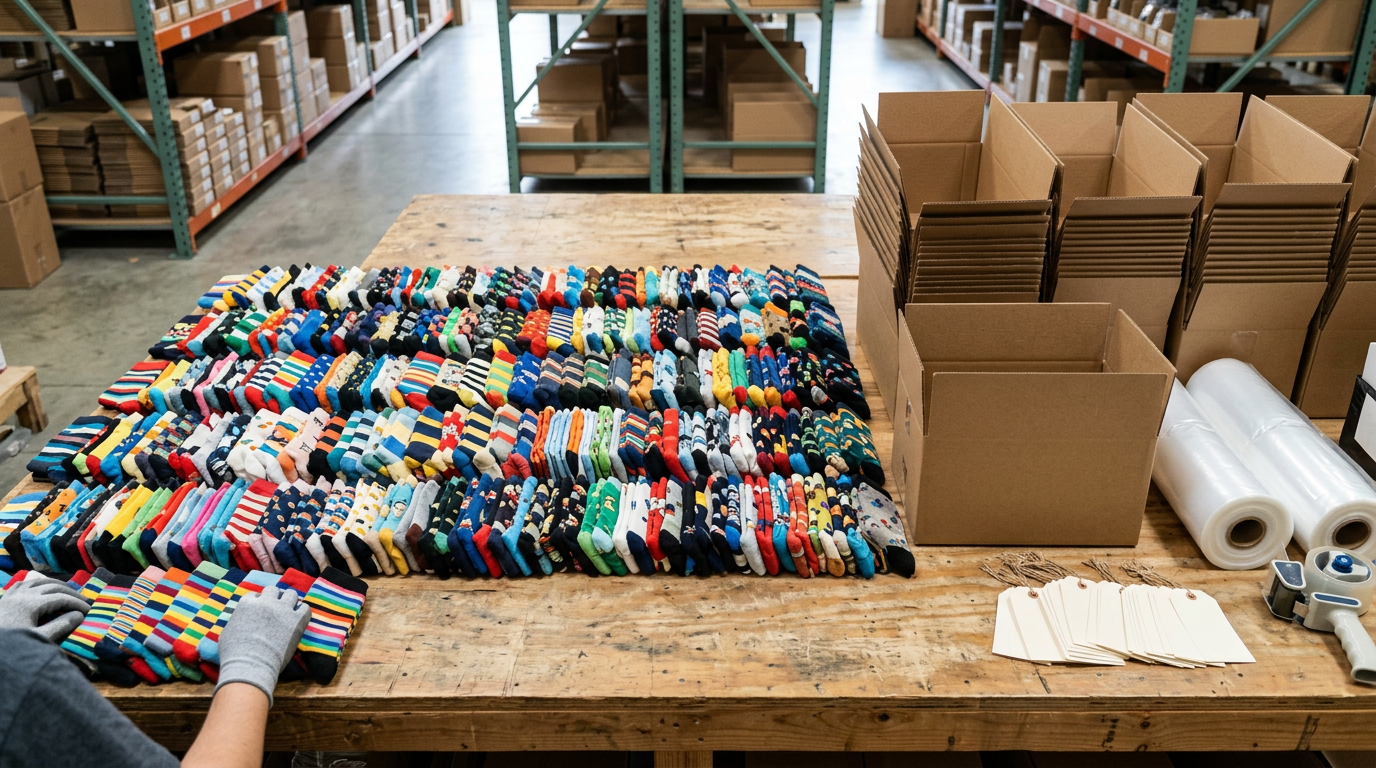
Set out a novelty sock wholesale supplier shelf life stability process in the RFQ before placing an order. For United States buyers, define the fields for material description, packaging, storage expectations, carton identification, and acceptance checks, and record the intended use field the buyer specifies in the brief. Ask each supplier to respond to the same fields, in the same order, so the buyer can compare responses on the same basis and record the agreed fields in the purchase documents.
Shelf life stability in this context is a set of agreed fields, not a single product claim. Use those fields to define, in writing, the condition checks for packed socks on receipt, the check method to be used, and the information fields to appear on each carton during holding and onward movement. Fill in the holding period, storage area, and selling window from the buyer's own plan, and agree those fields in advance rather than leaving them blank. The sections below keep the focus on that agreement process for novelty sock wholesale supply.
How United States Buyers Evaluate Novelty Sock Wholesale Supply
United States buyers can start by separating the buying task into product definition, packing definition, and holding definition. Product definition covers the sock itself: the fiber content field, yarn and fabric description field, size range, color and pattern identification, pair construction description, and any buyer-specified finish or accessory field, such as a hang tag or band entry. Packing definition covers how pairs are folded, bagged, banded, or boxed, the inner pack quantity field and outer carton quantity field as agreed for the order, and the identification fields at each level of packing. Holding definition covers the storage area type field and the planned selling window field, each filled in from the buyer's own plan.
With those three definitions written down, the buyer can ask each supplier to respond against the same brief. A useful comparison looks at whether the response is complete, whether the wording matches the buyer brief or introduces different terms, and whether open points are flagged rather than left blank. Where a supplier proposes a different material, packing method, or carton configuration, ask for that difference to be stated plainly in a revised written offer, with any price or schedule field for that difference shown separately. Record each proposed difference in the comparison sheet alongside the product, packing, and holding fields for that offer.
Buyers should also decide who inside their own organization approves each part of the brief. Design approval, material approval, packaging approval, and commercial approval may sit with different people, and the RFQ should name the approval step for each one. Place the approved version of the artwork, color reference, and packing layout alongside the order, and name that version as the reference receiving staff will use when they compare delivered cartons on arrival.
Shelf Life Stability Checks for Novelty Sock Inventory
A shelf life stability review for novelty socks is a structured check of condition over the holding period the buyer plans, using criteria the buyer and supplier agree before shipment. The buyer defines what condition means for the order. Ask the supplier to list, in the offer, the documentation and packing fields that correspond to that definition. Areas to define include a pattern appearance check, a packaging condition check, a carton and pack identification legibility check, and a buyer-defined defect check, each described in observable terms and compared with the approved sample.
The following process can be used to turn those areas into an agreed review method:
- Define the planned holding period and the selling window the inventory is intended to serve, in the buyer's own planning terms.
- List the product and packaging attributes that receiving staff will check on arrival, and describe each attribute in observable terms.
- Ask the supplier to provide written storage and handling instructions for the packing method proposed, and to list any handling limits in that written response.
- Agree how retained samples from the approved production will be kept by the buyer, labeled by style, color, size, and order reference, for later comparison.
- Agree what happens if a later check finds a difference from the approved sample or specification, including how the difference is recorded, photographed, and raised with the supplier.
This process does not set a universal holding limit for novelty socks in the RFQ. Instead, record the material description, packing configuration, and storage fields for the specific order, ask the supplier to provide documentation for the product offered, and record the agreed check points in the order file. Where the buyer plans seasonal selling, tie the review dates to the buyer's own calendar in the order file, and list the discussion options to be available if a check records a difference, such as alternative sourcing or rework, as agreed for that order.
Packaging, Storage, and Labeling Fields to Agree
Use the packing hierarchy as a comparison field for the order. The buyer should specify the packing hierarchy required, from pair presentation through inner packs to outer cartons, and ask the supplier to confirm the exact configuration in the offer. Fields to agree include pair folding method, use of individual bags or bands where required by the buyer, inner pack quantity as ordered, outer carton quantity as ordered, carton material description, and any buyer-specified protection inside the carton. If the buyer requires a specific arrangement for mixed colors or sizes, that arrangement should be drawn or described and approved before production.
Labeling in this article means the identification fields the buyer asks the supplier to apply, not a statement of any external requirement. The buyer should list the fields needed on pair packaging, inner packs, and outer cartons to run receiving and inventory systems, such as style reference, color name, size, quantity, order number, and carton number. The supplier should be asked to provide a sample layout or photograph of each label position for approval, so wording, placement, and scan readability, where barcodes are used by the buyer, can be checked before bulk packing begins.
Storage expectations should be exchanged in the same direct way. The buyer can describe the type of storage area cartons will enter and ask the supplier to state any storage or handling instructions that accompany the packing method. Both sides should record who is responsible for noting damage to outer cartons on arrival, how damaged cartons are separated for inspection, and how the contents check is documented. File those records with the order so the buyer and supplier can refer to the same notes during later discussions about condition.
Buyer Decision Table for Novelty Sock Wholesale Supply
The table below turns the main decisions into buyer-defined process checks. Each row can be copied into a comparison sheet so supplier responses are judged on completeness and fit with the buyer brief, rather than on presentation alone.
| Decision Area | Buyer Check | Supplier Response to Request | Acceptance Action |
|---|---|---|---|
| Product specification | Confirm fiber content, size range, and color and pattern references match the approved brief | Written specification tied to style and order reference | Compare approved sample against the brief before shipment approval |
| Pattern and color approval | Check that artwork and color references are versioned and signed off by the buyer | Sample or strike-off submitted against the current artwork version | Record the approved version and reject unapproved substitutions in writing |
| Packaging configuration | Verify pair, inner pack, and outer carton quantities match the ordered configuration | Packing list and packing description for each style | Inspect a packed carton against the packing list on arrival |
| Shelf life stability plan | Confirm the agreed condition checks and retained sample method are documented | Written handling and storage instructions for the packed product | Keep retained samples labeled by order for later comparison |
| Carton identification | Check that style, color, size, quantity, and carton number fields appear as specified | Label layout or photograph for buyer approval before bulk packing | Scan and count cartons against the packing list at receiving |
| Landed cost breakdown | Confirm each cost field the buyer defines is itemized in the offer | Itemized offer covering product, packing, freight, and other buyer-defined fields | Compare total cost on the same fields across supplier offers |
| Delivery and documents | Confirm delivery location, delivery window as ordered, and document list are stated | Offer and order confirmation naming documents to be supplied | Match delivery documents to the order before accepting cartons |
After completing the table, the buyer can note where suppliers differ. A difference is not automatically a reason to reject an offer, but it should be visible in the comparison sheet. For example, label a hypothetical pair of offers with different carton configurations as Offer A and Offer B in the sheet, record the packing material description for each, and ask receiving staff to note the handling and check steps they will use for the configuration selected. Record those differences beside the price field the buyer defines, and circulate the selected configuration to receiving staff before the shipment arrives.
Approval, Sampling, and Acceptance Process
Define the sample type required at each stage in the RFQ. Sample types to specify include a design sample for pattern and color review, a pre-production sample for material and construction review, and a shipment sample drawn from packed production. For each sample stage, the RFQ should state the quantity required as ordered, the address for sending samples, the approval method, and whether production or shipment may proceed before written approval is received. Record approvals in writing, tied to a dated version of the specification, and ask the supplier to confirm that version in the order confirmation before production.
Acceptance on arrival should follow the same written basis. Receiving staff can check carton count and outer condition first, then open cartons on a buyer-defined sampling basis to compare pairs against the approved sample, the specification, and the packing list. Findings should be recorded in observable terms, noting style, color, size, carton number, and the nature of any difference found. The buyer and supplier should agree in advance how differences are reported, what supporting photographs or records will be shared, and what resolution options will be discussed, such as replacement, rework, credit, or another outcome agreed between the parties for that order.
Delivery planning belongs in the same file. The buyer should state the delivery address, the required delivery window as ordered, any booking-in procedure the receiving site uses, and the documents that must accompany the shipment. The supplier should be asked to confirm those points in the order confirmation rather than in separate informal messages. File the specification, approvals, packing plan, stability checks, cost breakdown, and delivery terms together in the order file, and name that file as the reference point for later questions about condition or completeness.
RFQ Checklist
- Ask the supplier to confirm the full product specification, including the fiber content field, size range, and color and pattern references for each style.
- Require the supplier to submit samples against the current approved artwork and specification version, and to wait for written buyer approval before bulk production.
- Specify the packing configuration for pairs, inner packs, and outer cartons, including quantities as ordered and the carton material description.
- Ask the supplier to provide written storage and handling instructions for the packed product, together with the agreed condition checks for the planned holding period.
- Require the supplier to provide label layouts or photographs showing every buyer-specified identification field and its position before bulk packing begins.
- Specify the retained sample method, including how samples will be labeled by style, color, size, and order reference for later comparison.
- Ask the supplier to itemize the offer using the cost fields defined by the buyer, covering product, packing, freight, and any other field the buyer includes.
- Require the supplier to confirm the delivery address, delivery window as ordered, booking-in procedure, and the list of documents to accompany the shipment.
- Specify the acceptance process on arrival, including carton checks, contents comparison against the approved sample, and how differences will be recorded and reported.
- Ask the supplier to state how post-delivery differences from the specification will be handled, and which resolution options will be available for discussion on that order.
Use this checklist to build the RFQ for United States buyers comparing novelty sock wholesale supply offers on shelf life stability. Record an approved specification, agree a packing and labeling plan, file the handling instructions, label retained samples by order, and define the acceptance method before production. For repeat orders or new novelty designs, return to the same checklist and update each field in writing.
Discuss Your Requirements
Review our manufacturing capabilities, then share your specifications for a supplier-fit review.