Novelty Sock Wholesale Supplier Test Report Verification for Europe
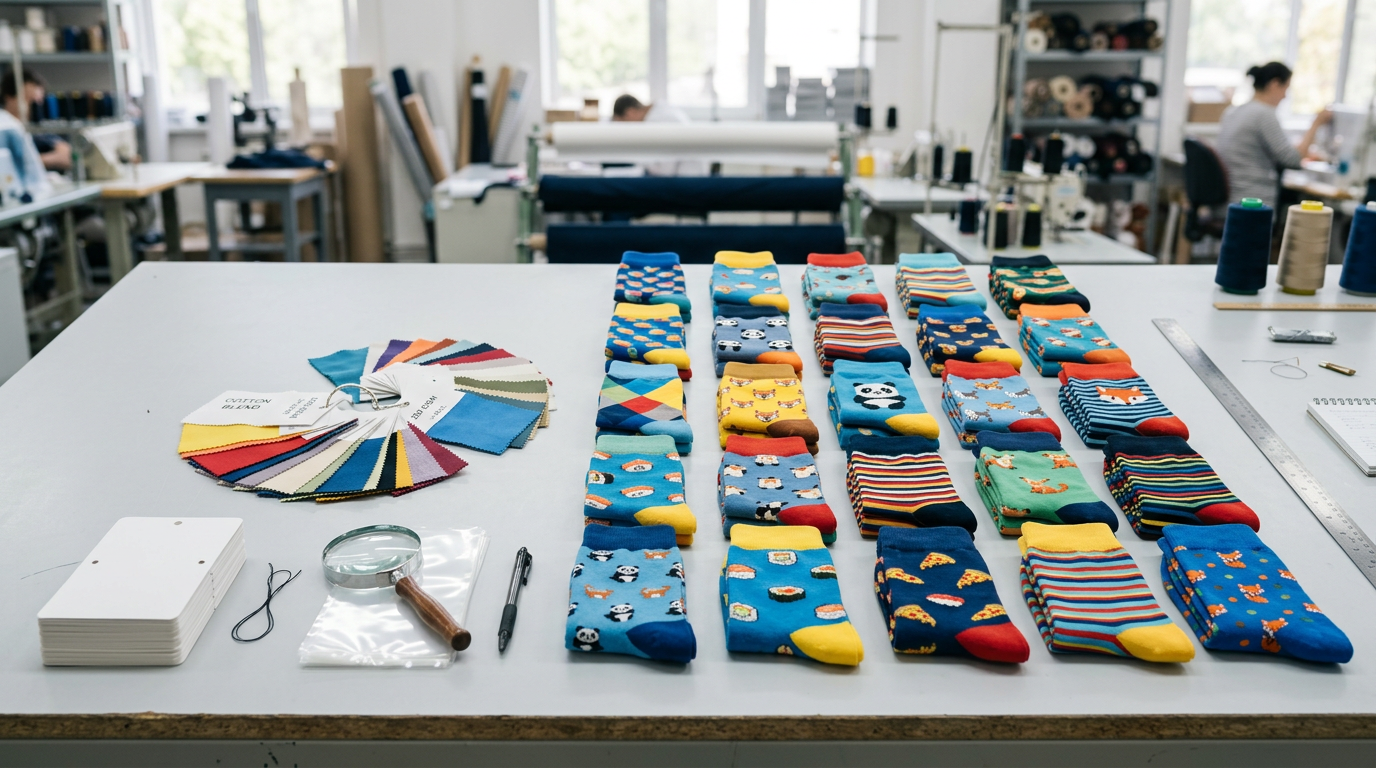
For buyers in Europe, novelty sock wholesale supplier test report verification is the process of checking that a report actually relates to the sock style, materials and construction you intend to order, before you approve wholesale supply. It is not a stamp to collect at the end of sourcing. Used early, it helps you match the report to a specific sample, separate product evidence from general business paperwork, and record what still needs to be agreed in the RFQ. This guide sets out buyer actions, comparison criteria and questions to ask, without assuming that one document covers every style or destination.
A useful review starts with identity. Ask which exact novelty sock the report describes, which sample it was linked to, and whether colours, patterns, yarn choices or packing have changed since it was issued. If any of those fields differ, treat the report as background for discussion rather than as a match for the current order, and ask the supplier to explain the link in writing. Keep that distinction clear throughout: business documents show how a supplier is organised, while product-linked records are what you compare against the agreed specification for the socks themselves.
Test Report Verification for Novelty Sock Wholesale Supply in Europe
Start by building a simple verification file for each style under review. Keep the approved sample reference, the artwork version, the material and construction description, the size range description, the packing method and the report copy together, so a reviewer can see at a glance whether they describe the same item. Where a field is missing, write the question back to the supplier instead of filling the gap with an assumption. A report that cannot be tied to a defined sample, version or batch description leaves the buyer with nothing firm to accept against when cartons arrive.
- List every report the supplier provides for the style and note the product description, sample reference, issue details shown on the document and the party that issued it, exactly as written, without summarising away differences in wording.
- Match each report field against the current sample and specification sheet, and mark every field as matching, differing or not stated, so gaps stay visible until the supplier answers them in writing.
- Separate reports linked to the actual sock from general company, factory or process documents, and do not use the second group as a substitute for product-linked evidence for the style you are buying.
- Record any change made after the report was prepared, including artwork, colour, yarn, knitting, finishing or packing changes, and ask whether the supplier considers a new sample or updated document necessary.
- Close the review with a written outcome for each style: accepted as matching the agreed specification, accepted with listed questions resolved, or held until further documentation or a revised sample is provided.
Distinguish destination questions early as well. Europe is not a single purchasing desk, and buyers may be placing socks into different countries and sales channels. Ask the supplier what destination information they need from you, and confirm with your own responsible team or adviser which documents your business needs for the specific destination and channel. Keep that confirmation with the order file, rather than relying on a general statement from any supplier that a document is suitable for every market.
How to Compare Novelty Sock Reports Before Wholesale Supply Approval
Comparison is clearer when you compare like with like. Place reports, quotations and sample notes side by side using the same fields: product description, fibre and material description as stated by the supplier, construction, design and colour version, size descriptors, quantity basis, packing and labelling fields, and any care or product information the buyer requires. If two suppliers describe the same feature in different words, ask each of them to define the term they used. Do not convert a vague description into a precise claim in your own specification, because that invented precision will be hard to enforce later.
Pay particular attention to scope. Ask what a report covers and, just as clearly, what it does not cover. A document linked to one colour, one material blend or one construction does not automatically describe a later variation, even when the pattern looks similar. Ask the supplier to state the link between the report and each variation you plan to order, colour by colour and style by style. Where the link is indirect, record it as indirect in your comparison sheet and decide whether you need a fresh sample, a revised document or a narrower order before proceeding.
Also check legibility and completeness as a buyer control. Ask for a complete, readable copy rather than a cropped page, check that page order and product identifiers are consistent within the copy you hold, and ask the supplier to reissue or clarify any page where the product description cannot be read. This is a document-handling check, not a judgement about the underlying work, and it prevents later disputes based on different copies of the same file.
Buyer Decision Table for Europe Wholesale Supply Review
Use the table below as a working review sheet. Adapt the fields to your own order, but keep the discipline of a written decision for each row.
| Decision area | What to check | Buyer action before approval | If left unclear |
|---|---|---|---|
| Report identity | Product description, sample reference and version shown on the report | Ask the supplier to confirm the report belongs to the exact style quoted | You may approve a style the report does not describe |
| Product match | Material, construction, colour and artwork fields against the current sample | Require a written list of every difference before approval | Differences surface only after production or delivery |
| Scope limits | Variations, colours or constructions the report does not cover | Ask the supplier to state exclusions and what is needed for excluded variations | Similar looking styles are treated as covered without a link |
| Sample link | Which physical sample the report and the order both refer to | Specify one production reference sample and record who approved it | Inspection later compares goods against photographs or memory |
| Packing fields | Pairing, folding, banding, bagging, boxing and separation of mixed styles | Specify the packing method and approve the final version in writing | Cartons arrive packed for a different channel or handling route |
| Labelling fields | Label content, artwork version and who supplies the text | Require the supplier to work only from the approved final version | Outdated artwork or text is used in production |
| Change control | Artwork, yarn, colour, knitting, finishing or packing changes after review | Require notification and your written approval before any change is used | The delivered product no longer matches the reviewed version |
| Acceptance method | How goods will be checked against specification, sample and packing description | Agree the checks, mismatch definition and reporting route before ordering | Disputes have no agreed reference or resolution steps |
Sample, Packing and Acceptance Agreement for Europe Orders
Reports only become useful when they sit beside an approved sample. Keep a clearly identified reference sample that matches the version described in your specification, and record who approved it and which order it belongs to. If production will follow a different sample from the one linked to a report, stop and resolve the difference before confirming the order. Ask the supplier to confirm in writing which sample is the production reference, so inspection and acceptance discussions later refer to the same physical item rather than to photographs alone.
Agree packing and acceptance fields with the same care. Specify how socks are paired, folded, banded, bagged or boxed as required by your channel, which labels and product information fields you will supply or approve, and how mixed styles or colours should be separated. Then agree how you will check incoming goods against the specification, sample and packing description, what counts as a mismatch, and how a mismatch will be reported and resolved. Write these points into the order documents instead of leaving them to informal messages, which are easy to lose and hard to interpret months later.
RFQ Checklist
Send the checklist below with your enquiry and require written answers for the exact styles you intend to order.
- Ask the supplier to identify each report by product description, sample reference and version, and to state how it links to the exact novelty sock style quoted.
- Require the supplier to list every difference between the reported item and the current sample, including material, construction, colour, artwork and packing differences, in writing before approval.
- Specify the material, construction, design version, colour range and size descriptors you are buying, and ask the supplier to confirm each field or mark it as not agreed.
- Ask the supplier to state what each report does not cover, which variations are not described by it, and what further sample or document would be needed for those variations.
- Require the supplier to provide complete, legible copies of the reports relied on for the quotation, with product identifiers that match the sample and specification references in your file.
- Specify the packing, labelling and product information fields you will approve, who supplies the artwork and text, and the version that will be treated as final for production.
- Ask the supplier to confirm the production reference sample, the change control process for any later revision, and how changes will be notified and approved before they are used.
- Require the supplier to agree the acceptance checks, mismatch reporting route and resolution steps you will apply when goods are delivered against the specification and reference sample.
Questions to Ask Before Confirming an Order
Before you confirm, work through a short set of open questions and keep the answers with the order file. Which report belongs to which style, and who made that link? Which fields in the specification are still described in general terms rather than agreed wording? Has anything changed since the sample was approved, and has that change been recorded? Which packing and labelling version is final, and who approved it? If the delivered socks differ from the reference sample, what will you compare them against first? Clear answers will not remove every sourcing risk, but they turn assumptions into agreed fields that both sides can check.
A disciplined approach to novelty sock wholesale supplier test report verification keeps the focus where it belongs: on the actual socks, the exact version you approved, and the written terms you and the supplier agreed. For Europe buyers building a repeat wholesale supply programme, that discipline makes reorders cleaner as well, because each new style can be reviewed against the same file structure instead of starting from memory. Keep the file current, record changes as they happen, and hold approval until the report, sample and specification describe the same product.
Discuss Your Requirements
Review our manufacturing capabilities, then share your specifications for a supplier-fit review.