Photo Sock Wholesale Supplier Minimum Order Quantity for Canadian Buyers
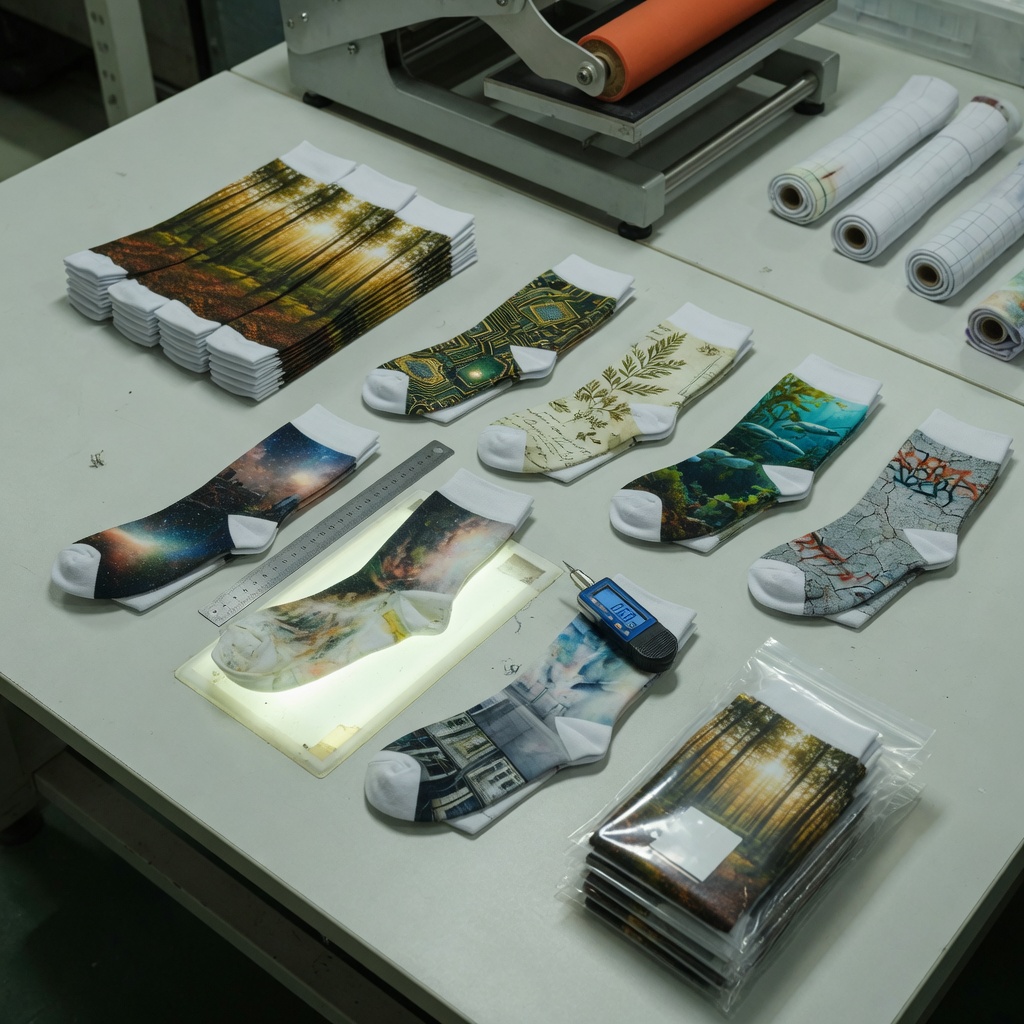
Photo Sock Wholesale Supplier Minimum Order Quantity: What Canadian Buyers Should Verify Before an RFQ
Byline. Vincent Xi, Editorial Author. Profile: https://www.zhesock.com/authors/vincent-xi/. Figures below are copied from the cited public supplier pages and must be reconfirmed in a dated quotation. This page does not claim factory visits, laboratory tests, client results, or first-person production experience.
Canadian B2B buyers comparing a photo sock wholesale supplier minimum order quantity should treat published thresholds as RFQ starting points, not as one commercial rule. Three public B2B pages (no visible publication dates; reconfirm every figure on a current quote) already list different quantity gates:
- No minimum order quantity for some direct-to-garment photo and image prints (Custom Sock Shop, print-sock path).
- 50 pieces per design (ZORWILD, custom socks including photo-integrated dress socks).
- 100 pairs when each pair uses a unique photograph, or 300 pairs when the artwork repeats (Ruixing Gifts, 360-degree dye-sublimation pet photo socks).
The same pages also list digital-proof windows of 3–5 days, a 7-day sample turnaround, mass production of 15–18 days for orders under 1,000 pairs, and shipment of most orders within 5 to 7 business days after approval. Those clocks are not interchangeable. For delivery into Canada, the buying question is which print method, unique-versus-repeating file mix, size run, unit (pair versus piece), and destination terms the factory will apply to the purchase order.
This page covers only that task: specifying, comparing, and verifying minimum order quantity for photo sock wholesale supply into Canada. It does not estimate search demand, prices, or rankings.
How these figures were derived and what they do not cover
Methodology. Commercial terms were extracted from three publicly listed B2B pages that describe custom or photo-printed socks. Scope is limited to the pair or piece counts, fiber percentages, and calendar-day or business-day ranges those pages state. No independent laboratory tests, factory visits, or customer-outcome data are included. Where this page uses an example mix or Incoterm, it is labeled as an assumption to replace with the buyer’s actual RFQ.
Source context 1. Ruixing Gifts custom pet photo socks wholesale page: unique-photo and repeating-design pair minimums, 95% polyester / 5% spandex, 3–5 day digital print proofing, and 15–18 day mass production under 1,000 pairs. Ruixing Gifts custom pet photo socks wholesale
Source context 2. ZORWILD custom socks page: 50-piece per-design minimum for custom socks, including photo-integrated dress socks via dye sublimation or digital knitting; 7-day sample turnaround; self-reported monthly capacity over 100,000 units. ZORWILD custom socks
Source context 3. Custom Sock Shop custom wholesale socks page: no minimum order quantity for DTG photo and image prints; 12-pair minimum for wholesale knit dress and athletic socks; free digital mockups; shipment of most orders within 5 to 7 business days after approval. Custom Sock Shop custom wholesale socks
Limitations / what to verify. The cited pages do not carry visible publication dates, so every number should be treated as listed on that page at the time it was reviewed and verified against a current quote. Piece versus pair is not defined the same way on every page. Size assortments can raise the commercial minimum. Unique personal photographs cannot be restocked from leftover inventory the way repeating artwork can. Self-reported monthly capacity is not a substitute for a capacity letter on a comparable order. None of the excerpts attach current certification documents. The pages do not publish Canadian duty rates, GST/HST treatment, bilingual-packaging rules, Incoterms, or door-to-door landed costs; those lines belong in the RFQ. If a claim is not on the cited page, it is omitted rather than inferred.
Minimum order quantity ranges published for photo sock wholesale supply
The cited pages name three decoration routes that change both minimum order quantity and how a photograph sits on a stretched sock: 360-degree dye-sublimation on a polyester-rich blank, digital knitting that integrates a photo-like motif, and direct-to-garment printing on a finished sock. Unique photographs are separate digital files. The pages state different quantity gates for unique images and repeating artwork; they do not publish a setup-fee schedule. The RFQ should ask whether file handling, color-profile work, or mapping/setup is charged separately.
Concrete data points to copy into the comparison sheet (unit, scope, as-of, source):
- 100 pairs unique photos or 300 pairs repeating designs — unit: pairs; scope: 360-degree dye-sublimation custom pet photo socks as described on the Ruixing Gifts page; as-of: not dated on the page; source: Ruixing Gifts. Treat as a listed threshold to verify in the supplier quote, not as a binding offer.
- 50 pieces per design — unit: pieces; scope: custom socks, including photo-integrated dress socks via dye sublimation or digital knitting, as described on the ZORWILD page; as-of: not dated on the page; source: ZORWILD. Confirm whether piece equals one sock or one pair.
- No minimum order quantity for DTG photo and image prints, versus a 12-pair minimum for wholesale knit dress and athletic socks — unit: none listed for DTG / pairs for knit; scope: Custom Sock Shop custom wholesale socks page; as-of: not dated on the page; source: Custom Sock Shop. Do not apply the knit minimum to a print program, or the reverse, without written confirmation.
Related calendar and material figures from the same pages, also undated and quote-dependent:
- Digital print proofing 3–5 days and mass production 15–18 days for orders under 1,000 pairs — unit: calendar days / pairs; scope: Ruixing Gifts custom pet photo socks page; as-of: not dated on the page; source: Ruixing Gifts.
- Sample turnaround 7 days and self-reported monthly capacity over 100,000 units — unit: days / units per month; scope: ZORWILD custom socks page; as-of: not dated on the page; source: ZORWILD. Capacity is self-reported marketing copy, not a comparable-order letter.
- Free digital mockups and shipment of most orders within 5 to 7 business days after approval — unit: business days; scope: Custom Sock Shop custom wholesale socks page; as-of: not dated on the page; source: Custom Sock Shop.
- Fabric listed as 95% polyester and 5% spandex — unit: fiber percentage by stated blend; scope: Ruixing Gifts page only; as-of: not dated on the page; source: Ruixing Gifts. Do not apply this blend to the other two pages.
Those policies are why a Canadian buyer cannot drop a single number into an RFQ and assume it will hold. Example mix to replace with the buyer’s actual assortment: 40 unique family photographs on ankle socks can hit a different commercial gate than 500 identical pairs of one photo-plus-wordmark design. State, in pairs (or pieces, if that is how the factory quotes), both the total quantity and the number of distinct photo files.
Unique photographs versus repeating designs: file-count rules that change the quote
Minimum order quantity on the cited photo sock pages is not only a total-pair count. It is also a file-count rule. A unique photo file is one artwork that must be mapped around heel, instep, and toe. Repeating designs can share one approved file across many pairs, which is the split Ruixing Gifts publishes as 100 pairs unique versus 300 pairs repeating. ZORWILD’s 50-piece minimum is stated per design, so three different photographs may mean three design minimums unless the factory agrees in writing to combine them.
Trade-offs to quantify in the quote (procurement checks; the cited pages do not publish prices):
- Inventory lock-in. A unique-photo minimum can force a larger first buy of pairs that cannot be mixed into a later generic SKU if the photographs are personal or licensed to one campaign. Ask leftover-pair handling in writing.
- Reorder risk. Repeating artwork can often be re-run from the same file; a unique personal photo may need a new setup even for a small top-up. Size the first order to the campaign rather than assume a later refill at the same threshold.
- File responsibility. Unique photos typically require the buyer to supply high-resolution, legally cleared images. Ask who owns the mapped print file after approval, and require a mapped 360-degree proof so crop and stretch can be checked before mass production.
- Size runs. If the factory treats each size as a separate SKU inside the unique-photo rule, a 100-pair unique minimum can become larger once S/M/L/XL splits are applied. State the size breakdown in the RFQ, not after the first proof.
None of the three pages publish a setup-fee schedule for photo printing. Custom Sock Shop states that digital mockups are free. Absence of a listed fee is not a guarantee that a unique-photo program will have zero pre-press charges; ask for any mapping or setup charge in writing.
Print methods and fiber data that can change the quoted quantity gate
Name the decoration route in the RFQ, because that is the lever behind the published quantity gates:
- 360-degree dye-sublimation (Ruixing Gifts), on a stated 95% polyester / 5% spandex blank, with unique-photo and repeating-design pair gates as listed above. Request a stretched-sample photograph so heel and toe registration can be inspected before mass production.
- Dye sublimation or digital knitting for photo-integrated dress socks (ZORWILD), at a 50-piece per-design minimum. Knitted-in motifs and printed motifs should be quoted as separate routes; the page names both methods, but it does not prove they share one production clock.
- Direct-to-garment printing on finished socks for photo and image designs (Custom Sock Shop), listed with no minimum order quantity. Do not apply the 12-pair knit minimum to this path without written confirmation. Check ink hand-feel, crocking, and stretch cracking on the actual sock fabric, not on a paper proof.
Only one of the three pages publishes a fiber blend (95% polyester and 5% spandex). Do not assume that blend applies to the other suppliers. For a Canadian destination order, request the fiber label copy the factory will sew or print. The cited pages do not document bilingual labelling as an included factory service; treat English/French pack copy as an RFQ line, not as a sourced capability.
Photo files that look sharp on a monitor still need a mapped 360-degree digital proof and, for a first unique-photo program, a physical pre-production sample in the production size and yarn. Use those samples to decide whether the quoted quantity gate is acceptable, not the on-screen file alone.
Proofs, samples, and calendars that sit in front of mass production
Published time windows from the three pages, each of which must be confirmed as current:
- Digital print proofing: 3–5 days (Ruixing Gifts, custom pet photo socks as described on that page).
- Mass production: 15–18 days for orders under 1,000 pairs (Ruixing Gifts).
- Sample turnaround: 7 days (ZORWILD).
- Shipment after approval: 5 to 7 business days for most orders (Custom Sock Shop).
A 3–5 day digital proof is not a washed, stretched physical sample. A 5–7 business-day ship window after approval is not the same as 15–18 days of mill production plus transit to Canada. Ask the supplier to split the calendar into (1) file-to-proof, (2) proof-to-physical-sample if required, (3) sample-approval-to-ex-works or to FOB, and (4) estimated transit to a named Canadian address under a named Incoterm. None of the cited pages publish Canada transit times or Incoterms.
Ask how many digital revision rounds are included in the 3–5 day proof window, whether a unique photo that fails the first mapping is reworked at no charge, and whether a rejected physical sample restarts the production clock. Confirm whether the 15–18 day band still applies if the unique-photo count sits at the 100-pair minimum rather than near 1,000 pairs.
Minimum order quantity and RFQ lines for photo sock delivery in Canada
The product mix and the quantity gate remain the primary decision. Canada enters the RFQ as destination, not as a substitute topic. Because the cited supplier pages do not list bilingual packaging, customs documentation, or landed-cost models, put those requests in the inquiry rather than assume they are included:
- Named Canadian delivery point and preferred Incoterm (example only, replace in the RFQ: DAP or DDP to a stated city).
- Whether the quote is in USD or CAD and whether estimated duties and tax are inside or outside the price.
- Carton marks, packing list, and commercial invoice fields the buyer’s broker will need.
- Fiber-content and country-of-origin labelling on the sock or poly bag.
- If English/French packaging copy is required for the intended Canadian channel, ask whether the factory can print supplied bilingual text. Do not treat that capability as documented on the cited pages.
Keep the RFQ focused on the photo sock itself: number of unique photographs, pairs per photograph, size split, print method, mapped proof, physical sample, and the minimum order quantity that will actually be applied to that mix. Destination logistics are add-on lines, not a reason to turn the order into a general import project.
Buyer decision table for photo sock wholesale quantity gates
| Decision factor | What the buyer should specify | Published example (as listed on the cited page; undated) | What to verify before PO |
|---|---|---|---|
| Unique-photo MOQ | Number of distinct photo files and pairs per file | 100 pairs for unique photos (Ruixing Gifts, 360° dye-sub pet photo socks) | Whether several unique photos packed in one carton still qualify as unique or are re-classed as repeating |
| Repeating-design MOQ | Pairs (or pieces) of the same artwork | 300 pairs repeating (Ruixing Gifts); 50-piece MOQ per design (ZORWILD) | Unit definition (pair vs piece) and whether a size assortment is allowed inside one design minimum |
| No-MOQ DTG path | Whether DTG on a finished sock meets photo and stretch requirements | No minimum order quantity for DTG photo/image prints (Custom Sock Shop) | Physical sample on production fabric; wash, crocking, and stretch-crack results |
| Knit vs print sock | Construction the photo must survive | 12-pair minimum for wholesale knit dress/athletic socks (Custom Sock Shop) | Do not apply the knit MOQ to a print program or the reverse without written confirmation |
| Fiber | Composition and stretch target | 95% polyester / 5% spandex (Ruixing Gifts) | Current composition sheet and fiber-label copy; do not assume the blend for other factories |
| Digital proof | File type, mapped 360 view, revision rounds, calendar days | 3–5 days digital print proofing (Ruixing Gifts) | How many free revisions; whether mapping of unique photos is included |
| Physical sample | Size, yarn, print method, and turnaround | 7-day sample turnaround (ZORWILD) | Whether the sample is production-method and production-size, not a paper or swatch substitute |
| Production / ship window after approval | Quantity band and Incoterm | 15–18 days mass production under 1,000 pairs (Ruixing Gifts); 5–7 business days ship after approval (Custom Sock Shop) | Split mill time from Canada transit; named Incoterm and address |
| Capacity | Ability to repeat a successful unique-photo run | Monthly capacity over 100,000 units (ZORWILD, self-reported) | Comparable-order reference or capacity letter, not the marketing figure alone |
| Mockups / setup | What is free vs chargeable | Free digital mockups (Custom Sock Shop); setup fees not listed on the three pages | Written list of mapping or setup charges for unique photos |
Every row is a specification, comparison, or verification action. If a cell cannot be filled from a current supplier quote, do not award the order on the public-page number alone.
RFQ checklist: information Canadian buyers should send with a photo sock wholesale inquiry
Use this list as the body of the request for quotation. Product mix and minimum order quantity come first so each supplier applies the correct rule to the same unique-photo program. Canada-destination lines follow as add-ons.
- Name the product as photo socks and the print method you will accept (360-degree dye-sublimation, DTG on finished socks, digital knitting, or an equivalent you are willing to consider).
- Give total pairs, number of unique photo files, and pairs per unique file. If some designs repeat, list repeating and unique quantities separately so the factory can apply the correct quantity rule.
- Ask the supplier to confirm the minimum order quantity that applies to your unique-versus-repeating mix, in pairs or pieces, and to state any per-design minimum.
- Provide the size run as percentages or pair counts (example assumption to replace with the buyer’s actual assortment: 20% M / 50% L / 30% XL) and ask whether sizes split the unique-photo minimum.
- Attach or describe artwork: resolution, color space, whether faces or pets must remain undistorted on the instep, and who will perform 360-degree mapping.
- Ask for any setup or mapping charge in writing. Note that the three cited pages do not publish a photo-print setup-fee schedule except for free digital mockups at Custom Sock Shop.
- Request a digital mapped proof and state how many revision rounds must be included, with a calendar-day target consistent with the 3–5 day window published by Ruixing Gifts if that is the method you are comparing.
- Request a pre-production physical sample in the production size and fabric, and ask whether the 7-day sample turnaround published by ZORWILD applies to your construction.
- Specify fiber: either require confirmation of 95% polyester / 5% spandex where that is the quoted blank, or ask for the actual composition sheet and the fiber-label copy that will ship with the goods.
- Define packaging: pair poly bag, header, carton quantity, and carton marks.
- State QC evidence required before balance payment: mapped-proof approval, sample sign-off, in-line photos of unique photos on the line, and the rejected-pair rule.
- Give the target goods-ready date and ask whether the quantity falls inside the under-1,000-pairs / 15–18 day production band published by Ruixing Gifts or the 5–7 business days after approval ship band published by Custom Sock Shop.
- State the destination as a Canadian city or warehouse and name the Incoterm you want quoted (example only: DAP or DDP). Ask the supplier to show mill time and estimated transit as separate lines.
- Ask for currency, deposit percentage, balance trigger (for example after sample approval or after QC photos), and whether estimated duties and tax for delivery in Canada are inside or outside the price.
- Request country-of-origin, fiber, and any restricted-substance statements the factory can provide. If English/French packaging copy is required for the intended Canadian channel, supply the text and ask whether the factory can print it; do not assume that capability from the cited pages.
- If you may reorder the same unique photos, ask how long mapped files are retained and what quantity gate would apply to a later top-up.
A complete RFQ that includes the items above lets two or three suppliers apply their own quantity rules to the same unique-photo mix. That is more useful to a Canadian buyer than a generic request for a best MOQ.
What to re-verify on every quote
Reconfirm every exact figure in a dated quotation: 100 pairs unique / 300 pairs repeating, 95% polyester / 5% spandex, 3–5 day proofs, and 15–18 day production under 1,000 pairs (Ruixing Gifts); 12-pair knit minimum, no DTG minimum, free digital mockups, and 5–7 business-day ship after approval (Custom Sock Shop); 50-piece per-design minimum, 7-day samples, and self-reported monthly capacity over 100,000 units (ZORWILD). Confirm the unit (pair versus piece), whether unique photos can share a carton, whether size splits raise the minimum, and whether Canada-destination freight, duty, and labelling are inside the price. Public pages change, excerpts used here carry no as-of date, and none of the sources document Canadian landed cost or bilingual packaging. Those gaps are why the RFQ, not the brochure, is the controlling document for photo sock wholesale supply.
Discuss Your Requirements
Review our manufacturing capabilities, then share your specifications for a supplier-fit review.