Private Label Athletic Socks: Technical Specs and RFQ Checklist for B2B Buyers
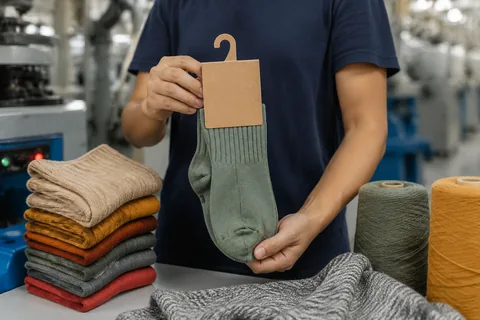
Private Label Athletic Socks: Technical Specs and RFQ Checklist for B2B Buyers
**By Vincent Xi, Editorial Author** Author profile
Private label athletic socks create commercial risk when branding is specified and construction is not. For B2B buyers—retail private labels, sports programs, team suppliers, and performance apparel brands—the logo is rarely the failure point. Incomplete RFQs are: yarn blend, gauge class, cushion map, cuff recovery, size grading, packaging, and acceptance criteria left unwritten.
This guide is for sourcing and product teams that need a production-ready brief. It covers what “private label athletic sock” means in manufacturing terms, which specs drive fit and durability, how to match program type to specification depth, and what to require in an RFQ before sampling or volume commitment. Claims below are limited to the cited public B2B sources; no factory audit, lab dataset, or brand production record is used as evidence.
Quick buyer path
1. Choose the commercial model (OEM / ODM / private label / white label). 2. Lock end use, silhouette, size run, yarn system, cushion map, and packaging BOM in writing. 3. Score quotes on capability and process control, not unit price alone. 4. Send one RFQ template to multiple suppliers and compare line-by-line answers. 5. Approve bulk only after development sample, size-set, and PPS gates.
What “private label athletic sock” means in B2B terms
In factory language, private label is commonly treated as a subset of OEM: the buyer orders socks to an agreed specification and applies brand labels, hang tags, and packaging for retail or program distribution. A Turkey-focused custom sock manufacturing guide for B2B buyers summarizes related models that buyers often mix in the same RFQ (Goren Socks B2B guide):
- **OEM:** buyer-defined design, colors, patterns, logo placement, and yarn/construction specs produced under the buyer’s brand.
- **ODM:** manufacturer-designed styles that the buyer brands; often faster when a catalog base style is acceptable.
- **Private label:** standard or semi-standard construction with buyer branding and packaging.
- **White label:** pre-made unbranded stock with labels added later; usually less differentiation.
Practical takeaway from those model distinctions: if moisture management, targeted cushioning, arch support, or compression zones matter commercially, treat the project as a **specified performance product**, not a logo-on-stock exercise. Marketing adjectives are not construction specs.
Planning ranges from published B2B guides
Bulk purchasing context helps early planning. It is not a universal MOQ, and every factory still sets minimums by machine setup, colorways, and packaging complexity.
| Data point | Unit / scope | As-of / source context | How to use it | | --- | --- | --- | --- | | Wholesale order framing of **100 to 10,000+ pairs** | pairs per order, bulk sock purchasing context in one B2B guide | DeadSoxy bulk-buying guide, February 2026 framing (DeadSoxy bulk socks guide) | Early volume planning only; confirm supplier MOQ by style and colorway | | Volume pricing described as **30–60% lower per-unit cost versus retail** | percent reduction, retail-to-bulk comparison in that guide’s framing | Same February 2026 DeadSoxy bulk guide (DeadSoxy bulk socks guide) | Directional cost framing only; not a landed-cost guarantee | | Corporate-style programs commonly described around **200 to 5,000 pairs per order** | pairs per order, corporate/program bulk context in the same guide | Same February 2026 DeadSoxy bulk guide (DeadSoxy bulk socks guide) | Program planning band; not a category standard | | Supplier-specific custom-program example: starting bulk threshold **100 pairs** at a published starting price of **$5.27 per pair** | pairs threshold; USD per pair under that supplier’s stated program conditions | Same February 2026 DeadSoxy bulk guide (DeadSoxy bulk socks guide) | Treat as a **supplier-specific commercial example**, not a category benchmark |
Core technical specifications to lock before RFQ
Athletic socks fail commercially when the brief stops at “crew sock, black, logo.” A production-ready private label brief should define the fields below in writing.
1) End use and performance claim boundary
State intended use: training, running, court sports, team uniform, lifestyle athletic, or multi-sport retail. Separate **marketing language** from **measurable construction**. If packaging will claim “moisture-wicking” or “arch support,” define the supporting construction feature (yarn type, mesh zones, elastic placement) and the verification method you will accept on samples (for example wash dimensional check, visual zone map match, or a named lab method if your channel requires it).
2) Silhouette and coverage
Common athletic silhouettes include no-show, low-cut, quarter, crew, and over-the-calf/team height. Specify finished length targets by size, not only a style name. For team programs, height consistency across sizes often matters more than fashion detailing.
3) Size range and grading
List sizes (men’s/women’s/unisex ranges or EU/US conversions you sell) and whether you need kids, youth, or extended sizes. Ask how suppliers grade cuff circumference, foot length, and stretch recovery across the range. Incomplete grading is a frequent cause of returns even when the sample size fits.
4) Yarn system and handfeel target
Define primary body yarn, plating yarn, elastic, and any specialty yarns (for example nylon reinforcement in heel/toe). Request approximate blend percentages by weight for the body and for high-wear zones if they differ. For athletic use, buyers typically trade off cotton comfort against synthetic durability and dry-time; state the priority order in the RFQ: comfort, durability, odor control, or price.
5) Knit structure and machine capability questions
Ask for machine type/gauge class and whether the style needs terry cushion, mesh ventilation, rib cuff, true heel pocket, or flat-knit zones. Manufacturer-selection guidance for custom socks emphasizes evaluating knitting equipment and machine gauge alongside yarn sourcing and sample quality (DeadSoxy manufacturer selection guide). One supplier-facing bulk guide also notes production on Italian-made Lonati knitting machines as part of its quality narrative (DeadSoxy bulk socks guide); treat machine-brand claims as **supplier-specific statements to verify on samples and process documents**, not as a category requirement.
6) Cushion map and support features
Specify where cushioning is required: forefoot, heel, full sole, or impact zones only. Define arch band presence/tension qualitatively (light/medium) and whether compression is a design goal or only a snug fit. Ambiguous “support” language creates sample disputes.
7) Color, logo method, and artwork rules
List Pantone or lab-dip process, maximum colors per style, and logo method options under consideration (jacquard knit-in, embroidery, printing, or sewn labels). Confirm logo placement (cuff, foot, or leg) and whether mirrored pairs are required. Provide vector artwork and minimum legibility sizes.
8) Packaging and retail readiness
Private label value often lives in packaging: pair bands, hangtags, polybags, headers, barcodes, care labels, and carton markings. Specify assortment rules (solid packs vs size runs) and any insert cards. Incomplete packaging specs are a common source of “unit price looked fine until landed cost.”
Construction variables that change cost, lead time, and returns
Score these variables in every quote comparison:
| Variable | Why it matters | What to force into the quote | | --- | --- | --- | | Colorways and yarn changes | Extra body colors or contrast heel/toe add changeover time and leftover yarn risk | Price by colorway count; leftover yarn policy | | Cushion density and zone count | More terry zones raise yarn use and can change drying time and bulk in-shoe | Zone map + density notes | | Elastic content and cuff engineering | Over-tight cuffs create comfort complaints; relaxed cuffs create returns | Wash-and-wear checks on PPS, not only loom-off handfeel | | Reinforcement strategy | Heel/toe abrasion zones matter for training socks | Structural yarn/plating vs visual-only reinforcement | | Finishing and boarding | Affects presentation and size appearance for e-commerce | Finishing expectation in RFQ | | Compliance and labeling | Sell-in markets drive fiber content, care, origin, and restricted-substance rules | Name only applicable rules; require current documents if certification is claimed |
Sourcing geography can affect total timeline. A Turkey manufacturing guide positions Turkey as the world’s **second-largest sock exporter** and highlights proximity advantages for European replenishment versus longer East Asia lanes (Goren Socks B2B guide). Use that as a logistics planning input, not as a quality proxy. Factory process control still determines pair-to-pair consistency.
Buyer decision table: match program type to specification depth
| Buyer program type | Typical order planning range (from cited B2B guides) | Spec depth required | Highest-risk gaps if under-specified | RFQ priority | | --- | --- | --- | --- | --- | | Retail private label athletic basics | Often planned in bulk tiers from about **100 pairs** upward; scale varies by supplier MOQ (DeadSoxy bulk guide) | Medium: silhouette, blend, cuff, packaging | Size grading, color consistency, packaging compliance | Lab dips, size set, barcode/pack copy | | Performance training / running private label | Usually higher complexity than basics; volume depends on channel (no universal pair band in the cited sources) | High: yarn system, cushion map, mesh zones, durability checks | Moisture claims without construction proof; heel/toe wear failures | Zone map drawings, wash checks, abrasion focus | | Team / league programs | Corporate-style bulk framing often cited around **200–5,000 pairs per order** in one guide (DeadSoxy bulk guide) | Medium-high: height consistency, color matching, roster sizing | Height drift across sizes; logo placement variance | Size run plan, Pantone locks, spare ratio | | Promo / gifting athletic styles | Can start lower volume; customization may be logo-led (confirm supplier minimums) | Low-medium if base style is fixed | Overpaying for unused performance features | Confirm base style code, decoration method, ship date | | Full custom OEM athletic platform | Multi-style roadmap over seasons (volume not fixed by the cited guides) | Very high: tech pack, BOM, QC AQL, packaging system | Unclear acceptance criteria; packaging scope gaps | Tech pack + QC checklist + PPS approval gates |
Use the table to prevent mismatched supplier conversations. A factory optimized for simple logo crews may quote aggressively on a complex cushioned runner and then struggle on consistency.
How to evaluate manufacturers without over-indexing on unit price
Custom manufacturer selection guidance recommends evaluating equipment capability, yarn sourcing, sample quality, MOQs, lead-time reliability, communication, and quality control—then verifying with a small test order before large runs. The same guidance suggests comparing **at least 3–5 manufacturers** on sample quality and reliability, not price alone (DeadSoxy manufacturer selection guide).
Practical evaluation sequence
1. **Capability screen:** Can they produce the silhouette, gauge class, and cushion/mesh features you need? 2. **Materials screen:** Can they source the yarn system and provide blend disclosure suitable for labeling? 3. **Sample screen:** Do first samples match the written brief, or only the mood board? 4. **Process screen:** Are there defined checkpoints for yarn-in, knitting, linking/toe close, boarding, and final inspection? 5. **Commercial screen:** MOQ by colorway, sampling fees, lead times, payment terms, and revision policy. 6. **Pilot screen:** Place a limited production or paid PPS lot before seasonal volume.
Factory-side knowledge bases for wholesale and private label teams also group work into supplier selection, materials/performance, and private label planning workflows (Velon Socks knowledge base). That structure is useful internally: keep sourcing, product development, and packaging as separate workstreams with named owners.
Practical RFQ checklist for private label athletic socks
Copy the checklist into the RFQ package. Require suppliers to answer line by line.
A. Commercial and program fields
- Company legal name, bill-to/ship-to, target in-hands date, and ship mode preference
- Program type: private label / OEM / ODM base style + brand-over
- Estimated first order quantity by style and by colorway
- 12-month volume scenario (planning only; not a purchase commitment)
- Incoterms request and destination market(s)
- Target ex-works or landed cost band, if used internally—**label any number as an internal planning assumption to verify in supplier quotes**
B. Product identity
- Style name/code and silhouette (no-show / quarter / crew / etc.)
- Gender/fit system and full size run
- Pair composition (identical pairs vs left/right engineered features, if any)
- Reference sample availability (physical sample, competitor reference, or tech sketch)
C. Materials and construction
- Body yarn, plating yarn, elastic type, and target handfeel notes
- Requested blend disclosure format for labeling (approximate % by weight)
- Cuff type/height and recovery expectation after wash
- Cushion map (attach simple foot diagram with zone labels)
- Ventilation/mesh zones
- Heel type (true heel pocket vs tube) and toe close method preference
- Reinforcement zones (structural plating vs visual-only)
- Any odor-control or specialty yarn requests, with verification method required
D. Appearance and branding
- Color standards (Pantone / approved lab dip process)
- Logo method options allowed and preferred
- Artwork files and safe-zone rules
- Care label, brand label, and hangtag placement
- Packaging BOM: band, bag, header, carton marks, barcodes/UPC ownership
E. Quality, testing, and acceptance
- Dimensional tolerances by size (or request supplier standard and review)
- Visual AQL or defect classification list (critical/major/minor)
- Required tests if any (wash dimensional change, colorfastness, pilling, fiber composition)—only those your category actually needs
- Sample stages: development sample, fit/size set, PPS, bulk reference
- Needle detection / metal contamination policy if required by your retail channel
- Carton drop/label durability expectations for your logistics path
F. Operations and risk
- Quoted lead time from deposit/artwork freeze to ex-works
- Capacity reservation rules for reorders
- Color continuity plan for replenishment lots
- Seconds/overrun policy and whether overruns may ship
- Subcontracting disclosure (knitting, dyeing, packaging)
- Document set with shipment: packing list, invoice, fiber content confirmation, and any certificates **only if currently valid and requested**
G. Quote response format (require the same template from every supplier)
- Unit price by quantity break and by colorway count
- Sampling cost and timeline
- Tooling/setup fees, if any
- Packaging included vs excluded
- Yarn substitution policy
- Validity date of quote
- Assumptions list (what is not included)
Sampling, QC gates, and a buyer decision path
A clean RFQ still fails without gated approvals. For athletic private label, use four gates:
1. **Brief freeze:** written specs + artwork + packaging BOM. 2. **Development sample:** validates construction and logo method. 3. **Fit/size set:** validates grading across the sellable range. 4. **PPS / pilot:** validates bulk process conditions, not just a hand-built sample.
Reject the idea that a single “perfect pair” is enough. Athletic returns often come from lot variation: cuff tension drift, height inconsistency, or color shift after the first production lot. Ask how the supplier retains a sealed bulk reference and how they handle claims if later lots diverge.
When comparing quotes, normalize total cost drivers:
- pairs per carton and carton dimensions (affects freight)
- packaging components included
- reject rate assumptions stated by the supplier
- reorder MOQ versus first-order MOQ
- time-to-sample and time-to-bulk
Methodology note: how this article’s data points were derived
This article synthesizes publicly available B2B sourcing guidance on custom/private label sock models, bulk order framing, and manufacturer evaluation criteria.
- **Quantitative planning ranges** (order quantity bands of 100 to 10,000+ pairs; corporate-style 200 to 5,000 pairs per order; the 30–60% retail-to-bulk cost reduction framing; and the 100-pair / $5.27-per-pair supplier example) are taken from the cited DeadSoxy B2B bulk guide as published with February 2026 timestamps/context (DeadSoxy bulk socks guide).
- **Manufacturer evaluation criteria** and the **3–5 manufacturer comparison** recommendation are taken from the cited DeadSoxy manufacturer selection guide (DeadSoxy manufacturer selection guide).
- **OEM / ODM / private label / white label model definitions** and the **“second-largest sock exporter”** statement for Turkey are taken from the cited Goren Socks B2B guide (Goren Socks B2B guide).
- **Topic architecture** for wholesale/private label planning is cross-checked against the Velon Socks knowledge-base index for B2B buyers (Velon Socks knowledge base).
No factory audit, lab test series, client outcome, or ZheSock production dataset is used in this article. Construction and QC checklist items are buyer-process recommendations for RFQ completeness, not measurements of any single factory’s capability.
Limitations and what buyers should verify
- **MOQs, prices, and lead times are supplier- and style-specific.** Published ranges are planning context only.
- **Performance claims require construction proof and, where needed, test reports.** Do not accept adjective-led sell sheets as specification.
- **Machine brand, gauge, and “premium yarn” claims need sample evidence.** Request retained samples and lot traceability language.
- **Export geography advantages do not replace QC systems.** Freight time and compliance readiness should be scored separately from knit quality.
- **Certificates and restricted-substance conformance must be current and lot-relevant.** Do not assume continuity from a prior season’s PDF; never treat a named standard as proof of certification without a current document.
- **Any internal target cost used in budgeting should be labeled as an assumption** until confirmed in a formal quote with packaging and testing scope included.
- **Cited commercial examples (including $5.27 per pair and 100-pair thresholds) are not transferable** across factories, yarn systems, packaging BOMs, or destination markets.
Closing: write the sock before you buy the sock
Private label athletic socks succeed when the buyer documents the product as a technical object: yarn system, zone map, grading, packaging, and acceptance tests. Use the decision table to choose the right depth of specification, send the RFQ checklist to multiple manufacturers, and approve bulk only after a PPS that matches the written brief. That process reduces avoidable sampling loops and protects margin when reorders begin.
For teams building a repeatable private label athletic program, the winning artifact is not a mood board. It is a controlled tech pack plus a quote template that forces every supplier to answer the same operational questions.