Private Label Sock Sourcing: MOQ, Pricing Structure, and Landed-Cost Controls
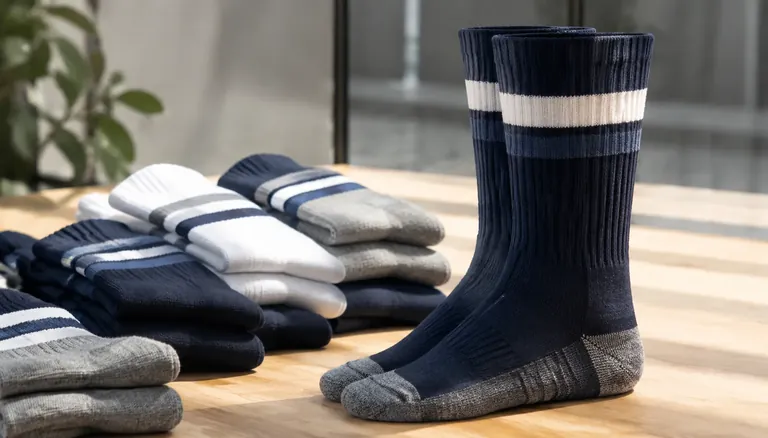
Private Label Sock Sourcing: MOQ, Pricing Structure, and Landed-Cost Controls
**By Vincent Xi, Editorial Author**
Private label sock programs usually succeed or stall on three commercial levers: **minimum order quantity (MOQ)**, the **structure of factory pricing**, and the **controls that keep landed cost predictable** after freight, duty, packaging, and quality risk. This guide is for brand, retail, and procurement teams comparing private label sock suppliers—not for consumer shopping.
It synthesizes public B2B sourcing guidance on private label versus wholesale models, OEM/private-label definitions, and manufacturing variables that commonly appear in sock RFQs. It does **not** present first-hand factory visits, named customer outcomes, proprietary ZheSock price lists, lab results, or certification claims.
Buyer-first commercial snapshot
Use these **source-cited signals only as starting ranges**, then replace them with construction-specific supplier quotes. Figures below are taken from the cited manufacturer web pages as published (undated public pages used for this editorial synthesis); they are **not** global industry standards and are **not** ZheSock commercial terms.
| Lever | Source-cited signal | Unit / scope | Buyer use | |---|---|---|---| | Private label MOQ | One manufacturer guide cites **typically 200–600 pairs** for private label programs (DeadSoxy private label vs wholesale) | Pairs per private-label program context as stated by that guide | Ask for pairs **per colorway** and **per size**, not only per style | | Wholesale/stock entry | Same guide cites **as few as 12–48 pairs** for wholesale stock paths (DeadSoxy private label vs wholesale) | Pairs for wholesale/stock entry as stated by that guide | Useful for demand tests; weaker for exclusivity | | Lead time | Same guide cites **6–12+ weeks** for private label development/production windows (DeadSoxy private label vs wholesale) | Calendar weeks for private-label development/production as stated by that guide | Split sampling lead time from bulk lead time in the RFQ | | Margin framing | Same guide cites **60–75%** private label and **30–50%** wholesale **brand/resale margin bands** (DeadSoxy private label vs wholesale) | Percentage brand/resale margin bands as framed by that guide—not factory FOB markup | Do **not** treat these as factory cost-plus rates |
**Decision rule:** score programs on **cash lock-up + landed cost + reorder risk**, not on the lowest FOB pair price alone.
What “private label sock” means in B2B sourcing
In common B2B usage, a **private label sock** program is manufactured to a defined specification and sold under the buyer’s brand. Related models are often grouped together, but they are not interchangeable in RFQ language:
- **OEM:** the buyer supplies design and technical direction; the manufacturer produces to those specs under the buyer’s brand.
- **Private label:** often treated as a practical OEM subset—standard or semi-standard constructions produced with the buyer’s labels, hang tags, and packaging.
- **ODM:** the manufacturer supplies ready designs that the buyer brands.
- **White label / wholesale stock:** pre-made goods with limited differentiation and usually lower design investment.
A Turkey-focused B2B guide frames private label as popular with retail and corporate buyers who want branded products with consistent repeat production, while distinguishing it from full custom OEM and white-label stock (Goren Socks B2B guide). A separate manufacturer guide contrasts private label with wholesale resale of pre-made goods: private label emphasizes brand control and exclusivity; wholesale emphasizes speed and lower product-development burden (DeadSoxy private label vs wholesale).
**Buyer takeaway:** put the commercial model in the RFQ first. “Private label sock” without yarn, construction, branding method, packaging, and exclusivity language will produce non-comparable quotes.
How MOQ works for private label sock programs
MOQ is rarely a single number. For socks, it is usually a stack of constraints:
1. **Style MOQ** — minimum pairs per construction/silhouette. 2. **Colorway MOQ** — minimum pairs per dye lot or yarn color. 3. **Size-run MOQ** — minimum coverage across the size curve. 4. **Packaging MOQ** — cartons, poly bags, hangers, belly bands, or retail boxes. 5. **Branding MOQ** — woven labels, jacquard logos, printed labels, or hang tags.
Treat the **200–600 pairs** private-label band and **12–48 pairs** wholesale band above as **one manufacturer guide’s stated ranges**, not a global industry law (DeadSoxy private label vs wholesale). Actual MOQ depends on machine setup, yarn dyeing, needle count, terry/cushion complexity, and packaging customization—confirm all five layers in the quote.
What commonly raises MOQ
- More colorways than the dye house or yarn inventory can support economically.
- Jacquard or multi-color patterning that increases setup and waste risk.
- Specialty yarns (for example merino or higher-spec performance blends) ordered in small lots.
- Full retail packaging kits that themselves carry print and carton minimums.
- Tight size curves that force many SKUs under one style code.
What can lower effective MOQ without destroying unit economics
- Fewer colorways at launch; expand after sell-through data.
- Shared base constructions with brand-only packaging differentiation.
- Standard needle/construction platforms instead of one-off machine settings.
- Phased packaging: bulk poly for replenishment, premium retail packs for A-SKU only.
**Control rule:** ask suppliers to quote **pairs per colorway** and **pairs per size**, not only “pairs per style.” A low style MOQ with high colorway MOQ is still a high commercial barrier.
Pricing structure: the components behind a private label sock unit price
A usable private label sock quote is a cost stack, not a single “FOB number.” At minimum, request line-item visibility for:
| Cost block | What it usually covers | Why it moves | |---|---|---| | Yarn / materials | Cotton, combed cotton, polyester, nylon, spandex/elastane, specialty fibers | Fiber market, blend %, yarn count | | Knitting | Machine time, needle setup, pattern complexity | Needle count, jacquard limits, terry zones | | Linking / toe close / boarding | Finishing labor and shape | Construction quality targets | | Branding | Labels, jacquard logo, print, hang tags | Method and placement | | Packaging | Poly bag, pair band, hanger, box, carton marks | Retail readiness | | QC / inspection | In-line and final checks | Sampling depth, defect definitions | | Overhead & margin | Factory overhead and commercial margin | Order size, payment terms | | Logistics terms | EXW / FOB / CIF / DDP scope | Who owns freight, insurance, duty |
Public technical notes on sock knitting commonly discuss variables such as single- versus double-cylinder machines, jacquard color limits, and needle-count ranges in the **96–220** band as capability context for pattern and hand-feel decisions (DeadSoxy manufacturing topic index). Scope for that band is **needle count as manufacturing capability context on the cited page**, not a quality score and not a claim about any one factory’s installed base. Those variables matter commercially because denser or more complex constructions consume more machine time and raise scrap risk—even when yarn cost looks similar on paper.
Margin claims require careful reading
The private-label-versus-wholesale comparison’s **60–75%** and **30–50%** bands are **seller brand/resale margin framing** in that guide, not factory FOB markups (DeadSoxy private label vs wholesale). Convert every margin claim into a full P&L: unit cost + inbound logistics + duty + packaging waste + returns + payment-term cost.
Example calculation (assumptions to verify in the supplier quote)
The following is an **illustrative landed-cost worksheet only**. It is **not** a market price, **not** a ZheSock offer, and **not** sourced from a real shipment. Replace every assumption with quote-backed numbers before using it in a buy plan.
- Factory unit price (**example assumption**): **USD 1.80 / pair** FOB named port of loading
- Order quantity (**example assumption**): **3,000 pairs** total across 3 colorways
- Ocean freight + local charges (**example assumption**): **USD 420** for the full shipment
- Freight per pair: 420 ÷ 3,000 = **USD 0.14 / pair** (**example arithmetic**)
- Duty (**example assumption**): **10%** of customs value on the USD 1.80 unit = **USD 0.18 / pair** (**example arithmetic**; actual duty depends on HS classification, origin, and destination rules)
- Destination handling + inland delivery (**example assumption**): **USD 0.07 / pair**
- Packaging upgrade already included in factory price (**example assumption**): **USD 0.00 incremental**
- Estimated inspection/rework reserve (**example assumption**): **USD 0.05 / pair**
**Example landed cost before retail packaging storage and returns:** 1.80 + 0.14 + 0.18 + 0.07 + 0.05 = **USD 2.24 / pair** (**example arithmetic**)
If a second quote shows **USD 1.65 / pair** FOB but **air freight** of **USD 1,050** on the same 3,000 pairs (**USD 0.35 / pair**, example arithmetic) and the same duty/handling assumptions, the landed comparison can reverse quickly. That is why private label sock decisions should be scored on **landed cost and service risk**, not FOB alone.
Landed-cost controls buyers can actually manage
Landed cost is controllable when the RFQ forces comparable Incoterms and explicit risk ownership.
1) Lock the commercial boundary with Incoterms
- **EXW:** buyer owns almost all logistics complexity.
- **FOB:** factory delivers to vessel/port terms; buyer owns main carriage and destination.
- **CIF/CFR:** main carriage is seller-arranged, but duty and destination still need scrutiny.
- **DDP:** maximum seller scope; useful only when the DDP scope, HS classification, and duty assumptions are written down.
A Turkey sourcing guide argues that proximity to European markets can improve total landed economics through faster transit and reorder response versus longer East Asia lanes—even when the headline unit price is not the lowest (Goren Socks B2B guide). That is a **route and time-to-reorder argument from the cited guide**, not a universal claim that every Turkish quote beats every alternative origin on total cost. Model transit time, reorder cycle, duty, and inventory carrying cost for **your** destination markets.
2) Control SKU proliferation before production
Every extra colorway and packaging variant multiplies:
- dye-lot risk,
- carton mix errors,
- dead stock in long-tail sizes,
- and inspection sampling complexity.
A practical launch matrix for first buys: **1–2 constructions × 2–3 colorways × a validated size curve**, then expand after sell-through evidence. This matrix is buyer process guidance, not a published industry rule.
3) Separate product cost from brand presentation cost
Ask for dual pricing:
- bulk pair price with basic poly/label, and
- retail-ready pack price with hanger/box/belly band.
This prevents “cheap sock, expensive unplanned packaging” surprises.
4) Define quality economics up front
Name defect classes in the purchase order: hole, size out-of-tolerance, shade variation, label misplacement, pair mismatch. Without that, a low unit price can be offset by returns, chargebacks, or emergency air reorders. If a buyer requires a formal acceptance sampling plan, name the standard and sampling level in the RFQ and obtain current documents; do not treat a website claim as certification or as proof of factory practice.
5) Use payment terms as a landed-cost input
Deposit timing, balance against B/L copy, and inspection-before-balance all change cash cost. A lower unit price with unfavorable prepayment can be more expensive than a slightly higher unit price with milestone controls.
Buyer decision table: private label sock vs wholesale/resale stock
| Decision factor | Private label sock program | Wholesale / stock resale | |---|---|---| | Brand exclusivity | High when exclusivity is contracted | Low to medium: others may sell the same base product | | Design control | High: yarn, construction, branding, packaging | Limited: mostly selection and light branding | | Typical MOQ signal from one published guide | Often higher; guide cites **200–600 pairs** as a typical private-label band (source) | Often lower; guide cites **12–48 pairs** as a possible wholesale entry band (source) | | Lead-time signal from same guide | Longer development; guide cites **6–12+ weeks** (source) | Faster if inventory exists | | Unit-cost visibility | Better if quote is itemized | Often simpler, but less spec control | | Landed-cost risk | Higher if SKUs/packaging are uncontrolled | Lower product-development risk; higher commoditization risk | | Best fit | Brands building owned assortment and repeat replenishment | Teams testing demand or filling short-term gaps | | Main failure mode | Over-customization before demand proof | Margin compression and weak differentiation |
Practical RFQ checklist for private label sock buyers
Use this checklist to force comparable quotes. Start with **must-have** fields before optional refinements.
A. Commercial model and exclusivity (must-have)
- [ ] Confirm model: private label / OEM / ODM / white label (model definitions overview)
- [ ] State whether the construction may be resold to others
- [ ] Define brand ownership of artwork, labels, and packaging dies
B. Product specification (must-have)
- [ ] Silhouette: crew, ankle, no-show, knee-high, sport, dress, etc.
- [ ] Yarn blend % and yarn quality grade requested
- [ ] Gauge/needle-count target or acceptable range
- [ ] Cushioning: plain, light terry, full terry, targeted zones
- [ ] Elastication: cuff, arch, ankle support requirements
- [ ] Toe close method and boarding requirement
- [ ] Color references (Pantone or approved yarn cards)
- [ ] Size run and tolerance table
C. Branding and packaging (must-have for channel readiness)
- [ ] Logo method: jacquard / embroidery / printed label / woven label
- [ ] Label positions and care-copy language needs
- [ ] Pair presentation: band, hanger, poly, box
- [ ] Carton marks, pair-per-carton, and assortment rules
D. MOQ and capacity (must-have)
- [ ] MOQ per style
- [ ] MOQ per colorway
- [ ] MOQ per size or accepted size ratio
- [ ] Sampling lead time and bulk lead time separately
- [ ] Monthly replenishment capacity assumptions
E. Price and landed-cost fields (must-have)
- [ ] Currency and validity date of quote
- [ ] Incoterm and named place/port
- [ ] Unit price by colorway and by packaging version
- [ ] Tooling/setup charges, if any
- [ ] Sampling fees and whether deductible from bulk
- [ ] Estimated net weight/gross weight per carton for freight modeling
- [ ] HS code suggestion from supplier (buyer still validates)
- [ ] Payment terms and deposit %
F. Quality and acceptance (must-have before deposit balance)
- [ ] Inspection standard and sampling level requested (if any)
- [ ] Critical defects list
- [ ] Shade continuity rules across reorders
- [ ] Pre-production sample and sealed counter-sample process
- [ ] Non-conformance remedy: repair, remake, credit
G. Compliance documents requested as documents, not slogans
- [ ] Current test reports relevant to the fiber/claim set (only if the buyer needs them)
- [ ] Fiber-content and care-label accuracy process
- [ ] Restricted-substance expectations for the destination market
Name standards only when they are relevant to the destination claim set, and distinguish a **standard’s requirement** from any factory’s own practice. Do not treat a website claim as certification.
How to compare private label sock quotes without overfitting the lowest unit price
A disciplined comparison scorecard usually beats a single-number bake-off:
1. **Normalized unit cost** under the same Incoterm. 2. **Landed cost** with freight, duty, and destination handling modeled for the real order quantity. 3. **MOQ cash lock-up** (deposit × first order value × expected weeks to sell-through). 4. **SKU complexity penalty** (colorways × sizes × pack types). 5. **Lead-time risk** to first revenue and to reorder. 6. **Quality cost reserve** based on defect definitions and returns policy. 7. **Packaging readiness** for the actual sales channel (DTC, marketplace, wholesale retail).
Factory-side knowledge bases for wholesale and private label buyers consistently group the work into supplier selection, MOQ planning, materials, QC, packaging, and launch planning rather than “find the cheapest pair” (Velon Socks knowledge base). That structure is useful process framing even when individual factories publish different commercial ranges.
Methodology note (how this article’s data was derived)
This article is an **editorial synthesis** of public B2B web sources on private label sock definitions, private-label-versus-wholesale commercial ranges, and sock manufacturing variables. Exact figures such as **200–600 pairs**, **12–48 pairs**, **6–12+ weeks**, **60–75% / 30–50%** brand/resale margin bands, and needle-count discussion ranges in the **96–220** band were taken from the cited pages and are presented with that source and scope context. Origin/logistics points about European proximity and reorder response are attributed to the cited Turkey B2B guide. Landed-cost arithmetic uses **explicit example assumptions** for illustration only. No supplier audit, lab test, factory production run, or proprietary price list was used.
Limitations / what to verify before PO
- Published MOQ, margin, and lead-time bands are **not universal** and the cited source pages used here are undated public web guidance; verify against the actual construction, yarn, packaging, factory schedule, and current quote validity dates.
- Landed-cost arithmetic in this article includes **example assumptions** that must be replaced with quote, freight, HS/duty, and destination data for the buyer’s route and order quantity.
- Export-proximity or transit advantages by origin do not guarantee the best total cost for every destination, fiber, service level, or Incoterm.
- Any compliance, testing, or certification need must be validated with **current documents** for the specific order; this article does not assert certifications or factory conformance.
- Channel economics (marketplace fees, wholesale discounts, returns) can dominate factory price differences and should be modeled outside the FOB line.
Closing guidance for sourcing teams
For private label sock programs, the winning RFQ makes MOQ, price structure, and landed cost **mutually visible**. Ask for colorway-level minimums, itemized packaging, Incoterm clarity, and defect definitions before negotiating the last cent of unit price. Use private label when brand control and repeatable owned assortment justify higher setup complexity; use wholesale/stock paths when speed and learning matter more than exclusivity. In both cases, score the program on cash lock-up and landed cost—not on a headline pair price alone.
**Author attribution:** Prepared for ZheSock editorial publication under the byline of Vincent Xi, Editorial Author (author page). Content is evidence-bound to the cited public sources and explicitly labeled example calculations; it does not claim personal manufacturing experience, client results, factory visits, or certifications.