Private Label Sock Specifications: B2B RFQ Checklist for Technical Buyers
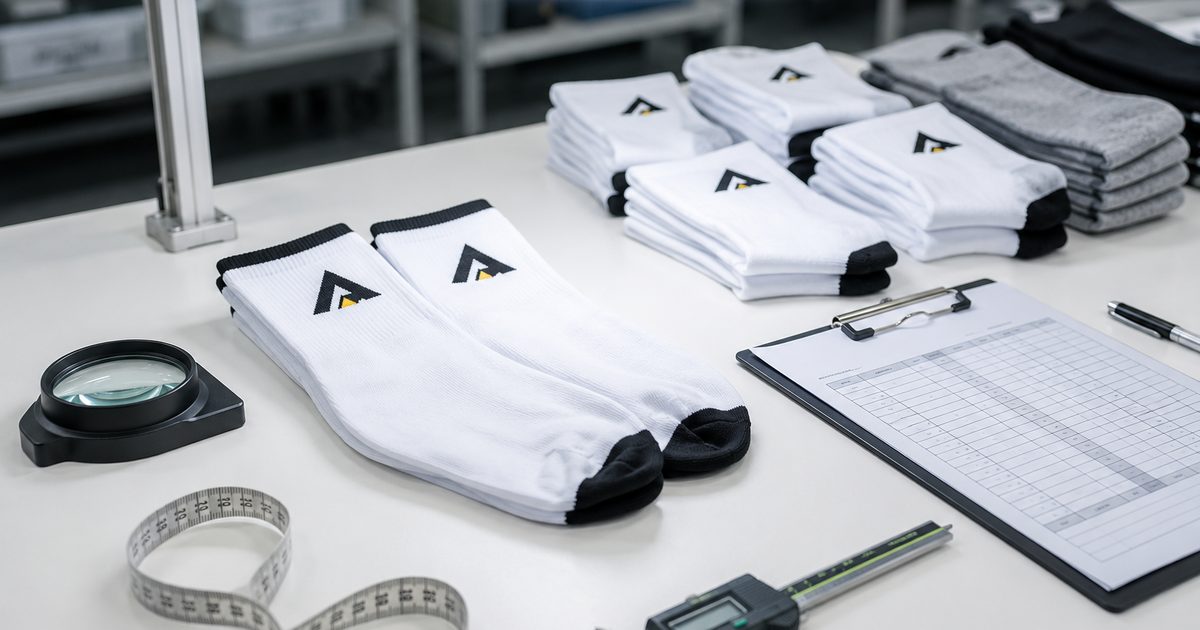
Private Label Sock Specifications: B2B RFQ Checklist for Technical Buyers
A private label sock RFQ should make the product, scope, evidence requirements, and supplier response format clear before pricing begins. Use this buyer-side checklist for sourcing, merchandising, product development, and procurement teams that need comparable supplier quotations.
The factual sourcing notes below are limited to the supplied citations. The checklist fields are RFQ prompts for the buyer to define; they are not claims that a supplier, material, construction, or finished sock will meet a specific performance result.
Evidence Boundary For The RFQ
Set these rules before sending the brief:
- Treat the cited sources as background for sourcing definitions and RFQ planning, not as proof that a specific sock meets a product claim.
- Do not use terms such as premium, sustainable, therapeutic, antibacterial, recycled, compression, moisture-wicking, certified, or performance unless the RFQ names the supporting test method, certificate, standard, buyer manual, approved sample, or pass threshold.
- Separate construction requirements from marketing claims. Define terry zones, mesh zones, support bands, yarn composition, or logo method as product requirements; do not convert them into selling claims unless evidence is supplied.
- Retain the supplied Velon Socks URL only as a background planning citation. Buyer-facing claims still need buyer-held evidence or supplier-provided documents before they are used in product files, packaging, or selling copy Velon Socks.
Start With The Sourcing Model
A supplied Goren Socks B2B guide describes private label within OEM-style sourcing, where socks can be made for a buyer and finished with buyer branding such as labels, hang tags, or packaging Goren Socks. A supplied DeadSoxy comparison describes private label socks as products made to the buyer's specifications and sold under the buyer's brand, while wholesale involves purchasing pre-made products DeadSoxy.
For the RFQ, do not rely on the sourcing label alone. State what is fixed, what may use the supplier's existing base, and what must be developed or matched.
| RFQ scope | Use when | Define in the brief | Supplier must confirm | |---|---|---|---| | Branded standard sock | Buyer can use an existing base construction | Supplier item or base style, color, size range, label or band, pack format, order quantity | Base construction, available options, MOQ, lead time, excluded changes | | Semi-custom private label sock | Buyer needs brand-specific colors, artwork, or packaging | Yarn target, color references, logo method, artwork, packaging, SKU table | Feasibility, color process, artwork limits, cost drivers | | Fully specified OEM-style sock | Buyer controls the full product file | Construction, measurements, tolerances, approved sample, testing, packaging file | Match basis, development steps, documents, inspection basis | | Wholesale resale | Buyer is purchasing an existing product | Supplier item code, available sizes, colors, case pack, lead time | Product availability, substitution policy, packaging included |
State whether the supplier may propose an existing construction, must develop a new style, or must match a buyer-supplied reference sample.
Controlled RFQ Header
Add a control block at the top of the RFQ so every supplier quotes the same request.
| Field | Buyer entry | Supplier response required | |---|---|---| | RFQ ID and revision date | Document number and version | Confirm the quoted revision | | Style or SKU name | Buyer style code and product name | Repeat in quote line | | Sourcing scope | Standard base, semi-custom private label, fully specified OEM-style, or wholesale | Confirm scope quoted | | Target market | Destination country or sales market | Flag market-specific document gaps, if known | | Channel | Retail, marketplace, uniform, gift, wholesale, or other | Confirm packaging and labeling assumptions | | Order quantity | Quantity by style, color, and size | Quote MOQ and price tiers | | Required timing | Quote deadline, sample deadline, delivery window | Confirm sample and bulk lead time | | Price basis | EXW, FOB, CIF, DDP, or buyer-requested basis | Quote on requested basis or state alternative | | Attachments | Artwork, size chart, color references, packaging files, sample photos, compliance manual | List received and missing files |
Minimum Style Specification
Create one product table per style. Add separate rows when colorway, size ratio, packaging, or branding changes by SKU.
| Field | What to provide | Supplier response required | |---|---|---| | Sock type | Dress, casual, athletic, outdoor, workwear, school, baby, medical-style only if supported, promotional, or buyer-defined type | Confirm quoted type and any substitution | | Height | No-show, ankle, quarter, crew, mid-calf, knee-high, or measured height point | Confirm height and measurement basis | | Target wearer and size | Men's, women's, unisex, youth, infant, or buyer size table | Confirm size range and size conversions used | | Size ratio | Units by size per color, carton, or shipment | Confirm ratio quoted | | Material composition target | Required fiber types and percentages, or request supplier options | Confirm composition, yarn assumptions, and alternatives | | Color references | Pantone, TCX, TPX, lab dip target, physical swatch, or approved sample | Confirm matching method and approval step | | Construction | Rib, plain knit, jacquard, terry zones, mesh zones, support bands, welt type, reinforcement, or buyer reference sample | Confirm quoted construction and feasibility notes | | Machine or knit parameters, if required | Needle count, cylinder type, gauge, or buyer-specified production parameter | Confirm if the supplier can quote to the parameter or must quote an alternative | | Toe and heel | Toe seam preference, heel type, reinforcement request, placement notes | Confirm method and limitations | | Measurements and tolerances | Pair length, foot length, leg length, welt width, logo position, tolerance limits | Confirm measurement method and tolerance proposal | | Branding method | Knit-in jacquard, embroidery, print, woven label, hang tag, belly band, header card, sticker, or box | Confirm method, size limits, placement risks, and cost impact | | Packaging | Pair pack, bundle, inner pack, master carton, barcode, carton mark | Confirm included packaging and separately quoted items | | Quality documents | Approved sample, tolerance sheet, inspection plan, test reports, certificates, buyer manual | Confirm documents available or documents required from buyer |
A supplied DeadSoxy manufacturing guide discusses private label sock manufacturing and customization topics that can be converted into RFQ prompts, including materials, construction, branding, packaging, sampling, and quality control DeadSoxy.
Mark Each Requirement By Status
Mark every RFQ line so suppliers know whether the item is mandatory or open for recommendation.
| Status | Use for | Supplier response required | |---|---|---| | Required | The quote must meet this item | Confirm compliance or state no-bid condition | | Preferred | Buyer wants this item but will review alternatives | Quote preferred option and alternative, if any | | Supplier-recommended | Buyer wants the supplier's technical recommendation | Explain recommendation, assumption, and cost or lead-time effect | | To be confirmed | Buyer has not finalized the item | List the missing decision and impact on quote accuracy | | Not included | Item is outside the current quote | State exclusion clearly |
Use the same status system for material, color, logo method, packaging, testing, inspection, and shipment requirements.
Artwork, Color, And Branding Packet
Send production-ready files where available. If files are not final, mark them as quotation references only.
Attach:
- Vector logo files, such as AI, EPS, PDF, or SVG.
- Color references, such as Pantone, TCX, TPX, lab dip target, or physical swatch.
- Logo placement diagram showing side, front, back, cuff, ankle, sole, or package position.
- Maximum logo dimensions and orientation.
- SKU-level colorway table.
- Packaging dielines or reference packaging photos.
- Label content, care symbols, fiber composition format, barcode area, and required legal copy supplied by the buyer.
Ask the supplier to confirm:
- Whether the chosen logo method can reproduce the submitted artwork.
- Whether fine lines, gradients, small lettering, or multiple colors need simplification.
- Whether color matching will use existing yarn, dyed yarn, lab dips, print proof, or visual approval.
- Whether decoration affects the fit review, stretch review, or handfeel review.
- Whether packaging artwork is ready for production or only usable for quotation.
Keep retail presentation separate from logistics. Define pair-level pack, inner pack, master carton, carton label, barcode format, assortment ratio, and routing instructions as separate RFQ lines.
Sampling And Approval Flow
Name the approval steps before bulk production. The supplier quote should include sample cost, sample lead time, revision policy, and the purpose of each sample stage.
| Stage | Buyer purpose | Output to approve | |---|---|---| | Technical review | Resolve feasibility questions before sampling | Supplier comments, assumptions, open issues, revised quote if needed | | Proto sample | Review construction direction, size direction, color direction, logo method, and packaging concept | Sample comments and revision list | | Fit or size review | Review intended size range and use case | Fit notes, size comments, ratio changes, comfort concerns | | Artwork or packaging proof | Review logo, label, band, box, barcode area, and carton mark | Proof approval or correction list | | Pre-production sample | Lock final product, label, pack, and carton information | Written approval record and approved sample reference | | Inline or final inspection | Compare production with the approved sample and tolerance sheet | Inspection report, photos, carton count, defect record | | Shipment release | Confirm shipment documents and packing details | Packing list, carton marks, commercial documents, release approval |
Use the pre-production sample as the production reference when the buyer requires one. If material, color, logo method, label, packaging, or carton details change after approval, record the change and decide whether another approval sample is required.
Quality, Testing, And Claim Control
State quality requirements before production. If the buyer does not have a manual, include a simple inspection plan with measurable checkpoints.
Inspection checkpoints can include:
- Pair length, foot length, leg length, and welt width.
- Size marking and size ratio.
- Welt elasticity review method.
- Toe seam condition.
- Heel alignment.
- Logo position, size, orientation, and color.
- Color consistency against approved sample or color reference.
- Loose threads, holes, stains, odor, and visible defects.
- Fiber composition label and care label accuracy.
- Packaging accuracy and barcode scanability.
- Inner pack, carton quantity, carton marks, and assortment ratio.
Use the following evidence table before allowing claims into the product file, packaging, marketplace content, or sales copy.
| Claim or requirement type | Required support to name in the RFQ | |---|---| | Fiber composition | Composition target, tolerance rule if used, label format, and test report if required | | Recycled, organic, or sustainability claim | Certificate type, scope, transaction document, license, report, or buyer compliance approval | | Compression, therapeutic, or medical-style claim | Pressure range, test method, regulatory review, buyer approval, and allowed wording | | Moisture-wicking, dry, cooling, odor-control, antibacterial, or antimicrobial claim | Test method, lab report, pass threshold, active ingredient disclosure if applicable, and allowed wording | | Restricted substances or safety requirement | Buyer compliance manual, required standard, test report, certificate, or supplier declaration | | Durability, abrasion, shrinkage, or colorfastness requirement | Test method, pass threshold, sample basis, and report requirement | | Certification mark or logo | Valid certificate, license permission, artwork rules, and approved usage scope |
If support is not available, remove the claim from the RFQ, product file, packaging, and selling copy. Use construction-only wording instead, such as terry foot zone, mesh panel, support band, reinforced heel, or buyer-approved fiber blend.
Supplier Brief Checklist
Use this structure when sending the RFQ.
**1. Buyer and program context**
- Buyer company name and billing country.
- Target sales market or destination country.
- Product category and intended channel.
- Required launch date or delivery window.
- First-order quantity by style, color, and size.
- Expected reorder pattern, if known.
**2. Product specification**
- Sock type and height.
- Target wearer and size range.
- Size ratio by SKU or shipment.
- Material composition target or requested options.
- Knit structure, rib, mesh, terry, support band, reinforcement, or buyer-specified construction details.
- Machine or knit parameters, if required.
- Toe seam and heel preference.
- Weight target, if used.
- Colorways by SKU.
- Logo method, placement, and artwork files.
- Reference sample photos or physical sample availability.
**3. Branding and packaging**
- Pair-level packaging type.
- Label, band, hang tag, header card, sticker, or box requirement.
- Barcode and SKU labeling requirement.
- Care label and fiber composition requirement supplied by the buyer.
- Inner pack and master carton requirement.
- Carton mark format.
- Packaging artwork, dielines, and approval process.
**4. Quality and compliance**
- Approved sample requirement.
- Measurement points and tolerance limits.
- Inspection standard or AQL level, if used.
- Defect classification: critical, major, minor.
- Required test reports or certificates, if any.
- Restricted substances or buyer compliance manual, if any.
- Photo approval requirements before shipment.
**5. Commercial and logistics details**
- Requested MOQ by style, color, and size.
- Price basis, such as EXW, FOB, CIF, or DDP.
- Sample cost and sample lead time request.
- Bulk production lead time request.
- Payment terms request.
- Shipping method and destination port, warehouse, or forwarder.
- Required export documents.
- Quotation deadline and quote validity period.
**6. Required supplier response format**
- Unit price by quantity tier.
- MOQ by style, color, and size.
- Material composition confirmation.
- Construction and machine assumptions.
- Logo method and artwork limitations.
- Packaging cost breakdown, if quoted separately.
- Sample timeline and production timeline.
- Testing, certificates, or documents included.
- Assumptions, exclusions, and open questions.
- Feasibility concerns and recommended specification changes.
Quote Comparison Grid
Compare suppliers on the same fields rather than on unit price alone. The supplied DeadSoxy comparison distinguishes private label specification control from wholesale purchasing of pre-made products, so confirm whether each quote covers the same sourcing scope before comparing price DeadSoxy.
| Comparison field | Supplier A | Supplier B | Supplier C | |---|---|---|---| | Sourcing scope quoted | | | | | Product construction quoted | | | | | Material composition | | | | | Size range and ratio | | | | | Color matching method | | | | | Logo method and limitations | | | | | Packaging included | | | | | MOQ by style, color, and size | | | | | Sample cost and lead time | | | | | Bulk production lead time | | | | | Price basis | | | | | Testing or documents included | | | | | Assumptions or exclusions | | | | | Open technical risks | | | |
RFQ Gaps To Remove Before Sending
Check the brief for these gaps:
- Undefined terms such as premium, high quality, comfortable, technical, sustainable, certified, or performance.
- No sourcing scope or quote basis.
- No size chart or size ratio.
- No material target or approved material alternatives.
- No color standard, swatch, or sample approval method.
- Logo artwork that is not production-ready and not marked as reference only.
- Logo method chosen without supplier feasibility confirmation.
- Packaging requested without dielines, carton rules, barcode details, or approval steps.
- Delivery date requested without stating sample approval timing.
- Claims requested without test method, certificate, standard, or buyer document requirements.
- Supplier response format left open.
Final Supplier Brief Format
The final RFQ should be one controlled document plus attachments. Include the RFQ header, product table, artwork links, packaging requirements, quality requirements, claim evidence requirements, commercial terms, logistics requirements, quote deadline, and response template.
Name each attachment clearly: logo file, color reference, packaging dieline, size chart, tolerance sheet, buyer compliance manual, and reference sample photos. Mark every item as required, preferred, supplier-recommended, to be confirmed, or not included.
Conclusion
A private label sock RFQ is easier to compare when each supplier quotes the same controlled scope. Define the sourcing model, product specification, branding method, packaging plan, approval steps, inspection criteria, claim evidence, and quote format before requesting final pricing.
The practical goal is to give suppliers a complete brief, require them to document assumptions, and compare responses against the same technical and commercial fields.