Private Label Socks: MOQ, Pricing Structure, and Landed-Cost Controls for B2B Buyers
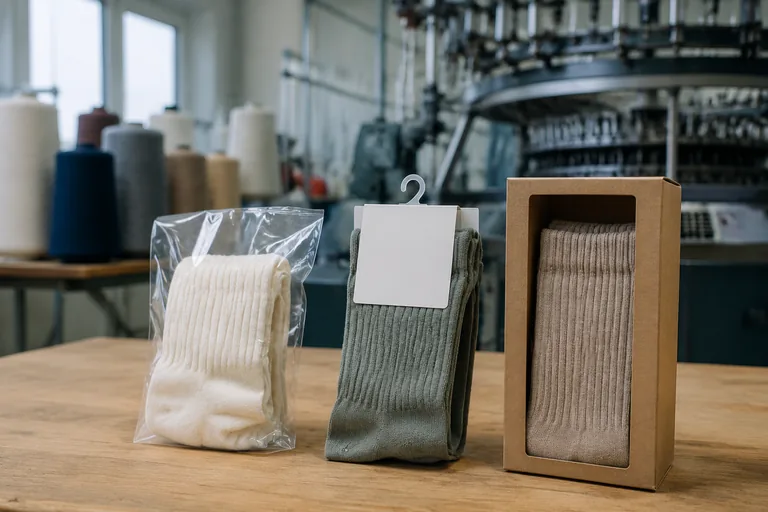
Private Label Socks: MOQ, Pricing Structure, and Landed-Cost Controls for B2B Buyers
**By Vincent Xi, Editorial Author** Author profile
Private label socks sit between ready-made wholesale inventory and fully engineered OEM programs. For procurement, brand, and operations teams, the commercial outcome is rarely decided by unit price alone. Minimum order quantity (MOQ), cost-stack design, sampling risk, freight mode, duty treatment, packaging complexity, and quality acceptance rules usually determine whether a program stays repeatable after the first shipment.
This guide is for B2B buyers who need a practical framework for **private label socks** programs: how MOQs are commonly described in public manufacturer content, what drives factory pricing, and how to control landed cost before an RFQ is issued. It uses publicly available industry guides as reference points only. It does not claim factory-specific pricing, certifications, capacity, installed machinery, or customer results for any single supplier, including ZheSock.
**What this page helps you do**
1. Separate private label, OEM, ODM, and white label scopes before quoting. 2. Read MOQ as a risk tool (colorway, size, yarn, packaging, reorder), not one headline number. 3. Build a landed-cost stack instead of ranking suppliers on unequal FOB quotes. 4. Issue a comparable RFQ with sampling, QC, and residual-material controls.
1) What “private label socks” means in B2B sourcing
Buyers often use “private label,” “OEM,” “ODM,” and “white label” interchangeably. That creates quote errors. A Turkey-focused manufacturer guide distinguishes the models as follows: OEM is production to the buyer’s design and specifications under the buyer’s brand; ODM is manufacturer-designed product rebranded by the buyer; private label is commonly treated as a subset of OEM in which socks are made to a defined specification and finished with the buyer’s labels, hang tags, and packaging; white label is closer to pre-manufactured stock that receives branding later (Goren Socks B2B guide).
A separate private-label comparison guide frames private label socks as custom-manufactured product sold exclusively under the buyer’s brand, with more design control and higher margin potential than wholesale resale of pre-made styles (DeadSoxy private label vs wholesale).
For RFQ clarity, treat private label as a **control decision**:
| Control area | What must be written into the RFQ | | --- | --- | | Brand control | Labels, packaging, hang tags, and exclusivity under your brand | | Specification control | Yarn composition, gauge/needle count, construction, size curve, color standard, finishing | | Commercial control | MOQ by SKU/colorway, sampling path, production lead time, acceptance criteria | | Cost control | FOB/EXW structure plus freight, duty, insurance, packing, QC, inventory carrying cost |
If those four controls are not explicit, suppliers will price different scopes under the same keyword.
2) Buyer decision table: private label vs wholesale / pre-made
Use this table first to choose the commercial model, then quote only the model you intend to buy.
| Decision factor | Private label socks | Wholesale / pre-made socks | What to verify before PO | | --- | --- | --- | --- | | Brand exclusivity | Higher; product is made under buyer brand and specs | Lower; other sellers may carry same or similar goods | Ownership of artwork, labels, and packaging files | | Design control | High if OEM-style private label; medium if semi-custom | Low to medium | Written bill of materials and construction sheet | | Typical MOQ context from one public comparison | Higher in that source’s model; cited about 200–600 pairs | Lower in that source’s model; cited about 12–48 pairs | MOQ by colorway, size, packaging, and reorder | | Lead-time context from the same public comparison | Longer in that source’s model; cited 6–12+ weeks | Faster if stocked | Sample calendar + bulk production calendar | | Margin potential context from the same public comparison | That source cites about 60–75% model margins | That source cites about 30–50% model margins | Full landed cost, returns, and channel fees | | Landed-cost risk | Higher setup and leftover risk if assortment is wide | Lower development risk, higher commoditization risk | Freight mode, duty, carton fill, QC plan | | Best-fit use case | Differentiated brand line, retail continuity, controlled quality story | Speed-to-shelf tests, temporary fills, low-capital trials | Exit criteria for moving from wholesale test to private label |
Numeric contexts in this table are attributable only to DeadSoxy private label vs wholesale and should be treated as that publisher’s model ranges, not audited category averages.
3) MOQ realities for private label socks
MOQ is not a single number. It is a risk allocation tool for yarn dyeing, machine setup, leftover color lots, packaging setup, and working capital. Published B2B guides show wide ranges because programs differ by customization depth.
Industry reference ranges from public pages, not universal factory rules
One private-label comparison page states that private label sock programs commonly require larger minimums, **typically 200–600 pairs**, with lead times of **6–12+ weeks**, while wholesale/pre-made programs may start at **12–48 pairs** (DeadSoxy private label vs wholesale; figures as presented on that page and used here as source-attributed model context only). A wholesale buying guide from another manufacturer publicly advertises **MOQ from 100 pairs** and **samples ready in 15 days** as that supplier’s own commercial offer, which should be read as published supplier terms rather than an industry standard (VelonSocks wholesale buying guide). Related private-label content on another manufacturer site also references **72-pair minimums** in white-label/promotional contexts (DeadSoxy private label hub).
How to interpret MOQ before negotiation
1. **MOQ per colorway vs MOQ per style.** A 300-pair style MOQ split into six colors is not the same commercial risk as 300 pairs in one color. 2. **MOQ per size vs size-run MOQ.** Broad size curves can force higher total pairs even when style MOQ looks moderate. 3. **Yarn-dye and special yarn MOQs.** Custom colors, merino blends, recycled content, or performance yarns often raise the true minimum above the knitting MOQ. 4. **Packaging MOQ.** Custom hang tags, belly bands, polybags, cartons, and barcode labels can create a second minimum independent of sock knitting. 5. **Reorder MOQ.** First-order MOQ and replenishment MOQ should be quoted separately; many programs fail at reorder because only the launch MOQ was negotiated.
Practical MOQ planning method
1. Forecast 90-day sell-through by size and color, not only total pairs. 2. Convert forecast into a first-order cover period (for example, 60–120 days of demand; planning assumption for the buyer’s own demand model). 3. Ask suppliers to quote MOQ at three complexity levels: stock yarn + private label packaging; custom color + standard construction; full custom construction + custom packaging. 4. Request residual-yarn and leftover-packaging liability terms in writing. 5. Separate sample MOQ, pilot MOQ, and production MOQ so cash is not locked into unvalidated SKUs.
**Methodology note:** The ranges above were extracted from publicly visible manufacturer/content pages and are used only as attributable external benchmarks. They are not audited market averages, not ZheSock price cards, and not guarantees of available MOQ for any destination market or fiber program.
4) Pricing structure: build the cost stack before asking for a unit price
Unit price without a cost stack is not a buying decision. Private label sock pricing usually moves with yarn content, knitting complexity, finishing, branding, QC depth, and order structure.
Common price drivers to put in the RFQ
- **Fiber and yarn:** cotton type, polyester, nylon, spandex/elastane percentage, merino, recycled content, and dye method.
- **Construction:** plain knit vs terry, rib density, heel/toe method, compression zones, and pattern complexity.
- **Machine/capability context:** one technical overview linked from a private-label manufacturing hub references needle-count ranges of **96–220 needles** as a knitting capability variable that affects pattern detail and handfeel decisions (DeadSoxy private label manufacturing hub). Treat that range as a technical discussion point for specifications, not as a claim about any one factory’s installed base.
- **Size assortment:** more sizes increase changeovers and inventory complexity.
- **Color count:** each additional colorway can add dye, setup, and leftover risk.
- **Branding pack:** woven labels, printed labels, hang tags, belly bands, insert cards, and retail-ready cartons.
- **QC and testing scope:** in-line inspection, AQL sampling, colorfastness, shrinkage, and dimensional checks.
- **Commercial terms:** EXW, FOB, CIF/CIP, payment terms, and currency.
Margin context from published model comparisons
The same private-label comparison states private label margin potential in the **60–75%** range versus wholesale/resale margins of **30–50%** (DeadSoxy private label vs wholesale). Those figures are model-level illustrations from that source. They are not audited retailer P&Ls, not destination-market averages, and not promises of achievable margin after returns, advertising, freight, or markdowns.
Example cost-build calculation (assumption set to verify in supplier quotes)
The following is an **example calculation only**. Every line must be replaced with supplier, freight forwarder, and customs-broker figures before purchase decisions.
**Assumptions for one illustration SKU (to verify):**
- Order quantity: 1,200 pairs (example order size)
- Quoted FOB unit price: USD 1.85 per pair (example quote input)
- Packaging and labeling already included in FOB (example assumption)
- Ocean freight + destination handling: USD 0.22 per pair (example allocation)
- Duty and brokerage allocation: USD 0.18 per pair (example allocation)
- QC/third-party inspection allocation: USD 0.05 per pair (example allocation)
- Domestic last-mile and warehouse inbound: USD 0.07 per pair (example allocation)
**Example landed cost:** 1.85 + 0.22 + 0.18 + 0.05 + 0.07 = **USD 2.37 per pair** (editorial arithmetic on the assumption set above; not a market survey result)
If sell-in price or DTC contribution margin is planned from the FOB number alone, the program can look profitable and still fail after freight, duty, and QC are added. Always request a quote matrix by quantity break, colorway count, and Incoterm.
5) Landed-cost controls that matter more than headline FOBs
Landed cost is the full cost to place sellable inventory in your warehouse or 3PL. For socks, small per-pair deltas compound quickly because programs often run multi-SKU assortments.
Control levers buyers can enforce
1. **Incoterm discipline.** Compare EXW and FOB only after adding the missing legs. Do not rank suppliers on unequal terms. 2. **Freight mode gates.** Air for samples or emergency top-ups; ocean or rail for bulk. Put a written rule in the PO, such as “air only with written approval above X pairs.” 3. **Carton and pack optimization.** Net pairs per carton, carton strength, and mixed-size packing rules affect freight and warehouse labor. 4. **Assortment rationalization.** Fewer launch colorways usually reduce leftover risk more than a small FOB discount does. 5. **Origin and routing effects.** A Turkey-focused sourcing guide argues that proximity to European markets can improve total landed cost through shorter transit and faster reorder response even when headline unit price is not the lowest (Goren Socks B2B guide). That is a route/geography argument from that source; buyers should validate with current freight quotes, duty treatment, and lead-time data for their own destination. 6. **Quality cost is landed cost.** Rework, returns, and missed launch windows often exceed savings from the lowest FOB bidder. 7. **Payment and cash-cycle cost.** Deposits, balance terms, and inspection release timing affect true program cost of capital.
6) Sampling, QC, and specification controls before scale-up
Private label programs fail most often between approved sample and bulk shipment, not at the first quote. Lock the following before production release:
- **Tech pack:** size grid, yarn composition percentages, target weight or thickness description, stitch/construction notes, heel/toe method, and color references (Pantone or lab dips).
- **Golden sample:** sealed reference for bulk matching.
- **Tolerance sheet:** length, cuff, width, weight, and color shade tolerances.
- **Label and packaging proof:** final dielines, care copy, fiber content, and barcode placement.
- **Inspection plan:** what is checked in-line, what is checked pre-shipment, and who pays for third-party inspection if used.
- **Defect classification:** critical, major, minor; disposition rules for rejects.
Name standards only when they are required by your destination market or buyer policy, and distinguish a standard’s requirement from any supplier’s claimed practice. Do not treat marketing language as proof of current certification; request the current document only when needed.
If a supplier cannot quote against a written construction sheet, the unit price is not comparable to a supplier who can.
7) Practical RFQ checklist for private label socks
Use this checklist as the minimum RFQ package:
1. **Program type:** private label / OEM / ODM / white label, defined in one sentence. 2. **End use:** dress, crew, athletic, compression-style, kids, or corporate gift; include target retail channel. 3. **Annual and first-order volume:** pairs by style, colorway, and size. 4. **Target ship window:** sample date, bulk ready date, and required warehouse arrival date. 5. **Yarn and handfeel targets:** fiber mix, stretch expectation, and any restricted substances policy. 6. **Construction targets:** cuff height, terry or plain, reinforced zones, pattern limits, and any needle-count or gauge preference to be confirmed in sample. 7. **Branding pack:** woven/printed label, hang tag, polybag, belly band, carton mark. 8. **MOQ request format:** ask for MOQ by style, by colorway, by size run, and by packaging component. 9. **Price matrix:** quantity breaks at least at three levels; separate setup or plate/label fees if any. 10. **Incoterm and currency:** EXW/FOB/CIF or equivalent, plus payment terms. 11. **Lead times:** development sample, pre-production sample, bulk production, and reorder. 12. **QC scope:** AQL or equivalent sampling intent, test reports requested, and acceptance of sealed sample. 13. **Landed-cost inputs:** carton dimensions/weight estimate, pairs per carton, port of loading, and preferred freight mode. 14. **Compliance documents requested:** only those required for your market and only if current documents will be provided; do not assume certification from marketing claims. 15. **IP and exclusivity:** who owns designs, whether colorways are exclusive, and for how long. 16. **Residual materials policy:** who owns leftover custom yarn, labels, and packaging after production.
Source contexts and how to use them
This article draws on four public B2B content contexts:
1. A custom-sock manufacturer B2B guide discussing OEM/ODM/private label/white label definitions and Turkey’s position as a major sock export origin with Europe-proximity landed-cost arguments (Goren Socks B2B guide). 2. A private-label manufacturing content hub covering OEM/private label program education and technical topic links such as knitting variables (DeadSoxy private label manufacturing hub). 3. A model comparison of private label versus wholesale socks with published ranges for margins, MOQs, and lead times (DeadSoxy private label vs wholesale). 4. A wholesale sock buying guide that publishes supplier-stated commercial hooks such as MOQ from 100 pairs and sample timing of 15 days (VelonSocks wholesale buying guide).
**How the data was derived:** Exact figures cited above were extracted from the publicly visible page text in those sources and are presented with their original commercial context. Example landed-cost math is an editorial assumption set for process teaching, not a market survey.
Limitations and what to verify
- Public manufacturer blogs are marketing-adjacent education. Their MOQ, margin, and lead-time ranges may reflect that publisher’s offer mix, not your category, fiber, destination, or compliance burden.
- Export-rank or origin-advantage statements about Turkey are presented only as claims from the cited B2B guide and should be re-checked against current trade statistics and live freight/duty quotes if origin strategy depends on them (Goren Socks B2B guide).
- Margin percentages are model illustrations from one comparison page; channel fees, returns, promotions, and markdowns can erase the apparent gap between private label and wholesale.
- Needle-count references are technical discussion points from public educational content, not evidence of any named factory’s machine inventory.
- No certification, test result, factory audit outcome, capacity figure, or customer case study is claimed here for ZheSock or for any cited publisher beyond the wording of their public pages.
- Duty rates, preferential origin treatment, and freight rates change. Re-price landed cost for the actual ship window.
- Always verify current documents, sample approvals, and written commercial terms before deposit.
Closing buyer guidance
Private label socks are a systems purchase. Buyers who control outcomes treat MOQ as an assortment and cash-risk decision, treat pricing as a cost stack rather than a single FOB number, and treat landed cost as a controllable process involving Incoterms, freight gates, packaging density, QC, and reorder design.
**Recommended sequence**
1. Choose private label vs wholesale using the decision table. 2. Build MOQ from size/color sell-through, not from a single style minimum. 3. Quote a cost stack and landed-cost matrix, not only FOB. 4. Lock tech pack, golden sample, tolerances, and residual-material terms before deposit. 5. Replace every example figure in this article with supplier-specific data before approval.
For editorial questions about this guide’s sourcing approach, contact the named author via the ZheSock author page for Vincent Xi, Editorial Author: https://www.zhesock.com/authors/vincent-xi/.