Private Label Socks RFQ Checklist for B2B Buyers
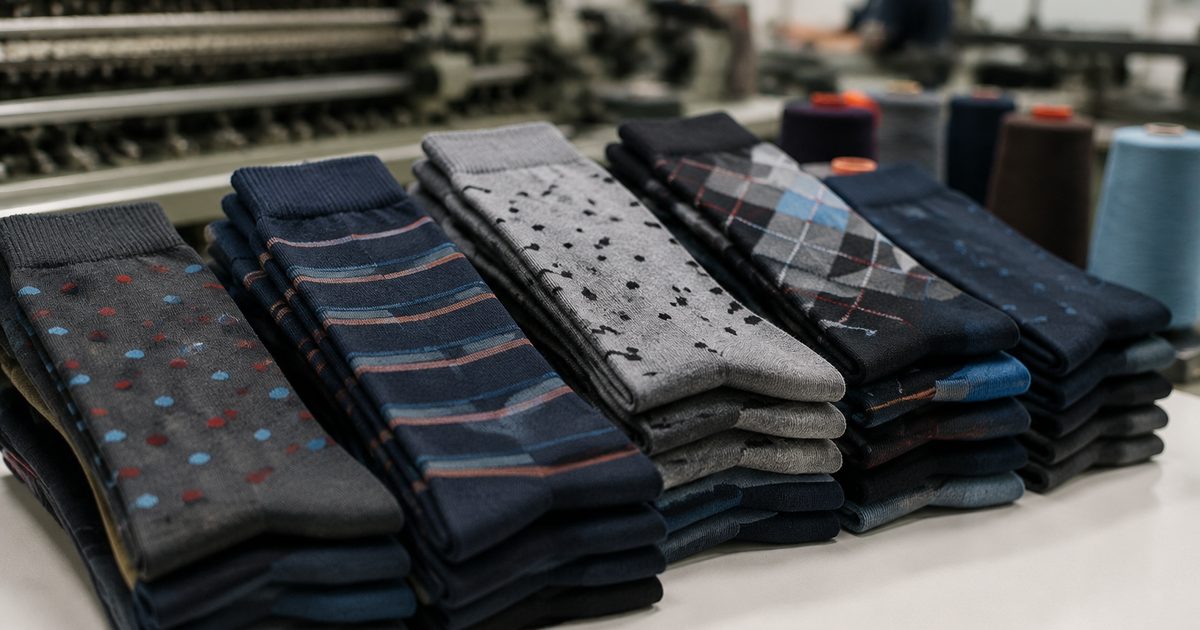
Private Label Socks RFQ Checklist for B2B Buyers
Use this checklist to prepare a private label socks RFQ that suppliers can answer consistently. It is an RFQ planning tool, not proof that any supplier can meet a specific price, MOQ, lead time, compliance requirement, test result, or quality level. Ask suppliers to confirm those items in writing.
Evidence boundary for this article:
- A B2B guide distinguishes OEM, ODM, private label, and white label sourcing models: OEM as buyer-specified production, ODM as a supplier-developed design that can be branded, private label as custom production with buyer branding, and white label as pre-made products with added branding (source).
- A private-label-versus-wholesale guide contrasts private label socks made to buyer specifications with wholesale socks bought as existing products in bulk for resale (source).
- A sock manufacturing guide discusses single and double cylinder machines, jacquard color limits, needle count, terry loop cushioning, and compression zones as sock specification variables (source).
- A wholesale sock buying guide includes MOQ, supplier selection, quality control, pricing, and supplier management as B2B buying topics (source).
1. Confirm the Sourcing Model
Start the RFQ by asking each supplier to quote the same sourcing model. A clear request might be: private label athletic crew sock using an agreed sock construction, buyer-selected yarn colors, buyer logo placement, and custom paper band.
| Model | Source-bounded meaning | RFQ confirmation to request | |---|---|---| | White label | Pre-made product with added branding, as described in the cited B2B guide | Base sock reference, changeable elements, branding method, packaging options, MOQ, and price breaks | | Private label | Buyer branding with agreed specifications; the cited comparison guide contrasts this with wholesale existing goods | Which sock features are custom, which are supplier standard, and which approvals control bulk production | | OEM | Buyer-specified production, as described in the cited B2B guide | Buyer tech pack, construction details, artwork, tolerances, test requirements, and approval stages | | ODM | Supplier-developed design that can be branded, as described in the cited B2B guide | Existing design basis, permitted changes, ownership or reuse limits, and branding options | | Wholesale | Existing products bought in bulk for resale, as contrasted in the cited comparison guide | Current stock item, available sizes and colors, packaging condition, reorder availability, and labeling options |
2. Define the Sock Specification
Ask the supplier to complete the specification sheet with one of three responses for each field: quoted as requested, quoted alternative, or not included. If a field is undecided, ask the supplier to recommend options and explain the effect on unit price, MOQ, sampling, and production lead time.
Core specification fields:
- Product type: dress, casual, running, hiking, grip, compression, liner, sleeve, promotional, or another buyer-defined category.
- Target wearer and size range: men's, women's, unisex, youth, infant, extended sizes, or a named size grid.
- Sock height: no-show, ankle, quarter, crew, mid-calf, over-the-calf, or finished height in centimeters or inches.
- Fit basis: shoe-size conversion, relaxed dimensions, stretched dimensions, and any after-wash measurement condition.
- Yarn composition: fiber percentages for main yarn, plating yarn, elastic yarn, and any specialty yarn.
- Knit construction: rib, mesh, jacquard, terry cushion, arch support, compression zone, grip print, and toe closure.
- Machine basis: supplier-stated single or double cylinder machine when relevant to the quote.
- Needle count: supplier-stated count or recommended range, including how it affects detail, thickness, stretch, and cost.
- Color count: number of yarn colors per design and any supplier-stated knitting limitation.
- Branding method: knit-in logo, embroidery, woven label, printed transfer, grip print, hang tag, belly band, header card, carton mark, or packaging-only branding.
- Packaging: pair fold, hook, paper band, polybag, retail box, multipack, barcode, carton quantity, inner carton, master carton, and pallet requirement.
- Commercial scope: MOQ by design, color, and size; price breaks; sample cost; sample timing; production lead time after approval; and quote validity period.
3. Convert Use Case Into Testable Requirements
Avoid relying on broad approval words such as premium, breathable, strong elastic, durable grip, or retail-ready. If a performance claim will appear on packaging or sales materials, ask the supplier to state the test method, pass/fail criterion, and supporting report or declaration they can provide.
| Use case | Specify in the RFQ | Evidence or approval item to request | |---|---|---| | Daily casual sock | Fiber blend, hand-feel reference, color standard, fit expectation, and care instructions | Approved sample, measurement record, color reference, and care label artwork | | Sport sock | Cushion placement, ventilation zones, arch support area, abrasion concern, and any moisture-management claim | Construction sample, named test method if a performance claim is used, and buyer approval of claim wording | | Grip sock | Grip pattern placement, coverage area, grip material, color, and wash durability expectation | Grip layout proof, technical sample, wash-condition requirement, and grip defect criteria | | Compression sock | Target compression level, measurement method, size grading, and fit profile | Size-set sample, supplier measurement data, and approved sample by size | | Retail packaged sock | Pack format, label content, barcode, size label, country-of-origin marking, carton quantity, and channel-specific label rules | Packaging sample, barcode scan check, carton mark proof, and final packing instruction |
If the product will be sold in a market with labeling, restricted-substance, packaging, or other compliance requirements, list the destination market and ask the supplier which reports, declarations, or label proofs they can provide. Treat the requirement as open until the requested document or approved sample is received.
4. Prepare Artwork and Branding Files
The cited manufacturing guide treats machine choice, needle count, and jacquard limitations as production variables, so sock artwork should remain subject to supplier manufacturability review. Ask the supplier to flag small text, thin strokes, tight curves, gradients, photographic detail, and color-count issues before sampling.
Provide these files and instructions:
- Vector logo file.
- Flat sock artwork with front, side, back, sole, and toe views where relevant.
- Color references using named color standards or approved physical swatches.
- Mockup showing sock height, logo orientation, and logo placement.
- Logo placement by area: cuff, leg, side panel, instep, sole, toe, or packaging only.
- Logo dimensions and minimum acceptable clarity.
- Requested branding method for each logo or mark.
- Packaging dielines if available.
- Barcode, country-of-origin marking, fiber content, care instructions, size label, and retailer label rules if applicable.
State which approved item controls bulk production. If the sock body, logo execution, and packaging are approved separately, list each controlling sample in the purchase order.
5. Set Sampling and Approval Stages
The cited wholesale buying guide includes supplier selection and quality control as B2B buying topics. Use sampling to collect decision evidence before bulk production rather than treating samples as general style previews.
| Stage | Buyer question | Required supplier output | |---|---|---| | Artwork review | Can the requested design be produced with the quoted construction and branding method? | Marked artwork comments, color-count comments, and any requested artwork simplification | | Technical sample | Does the sock match the intended construction, yarn composition, logo placement, and hand feel? | Physical sample, photos, supplier-stated yarn composition, construction notes, and measurements | | Size-set sample | Does fit work across the requested size range? | Samples by size, relaxed and stretched measurements, and size-grade comments | | Packaging sample | Do band, label, barcode, carton mark, and packing method match the RFQ? | Packaging proof, physical or digital sample, barcode confirmation, and carton-mark proof | | Pre-production sample | Is this the approved reference for bulk production? | Signed approval record, retained sample requirement, and change log |
For each stage, state who approves the sample, whether approval is physical or digital, how comments are documented, and whether a revised sample is required after changes.
6. Define Quality Control in Measurable Terms
Replace general quality language with inspection timing, defect classes, measurement points, tolerances, and lot-acceptance rules. If using AQL or another inspection plan, name the standard, inspection level, defect classes, and acceptance limits. If not using AQL, state the buyer's own acceptance rule.
Defect examples to include in the RFQ:
- Wrong yarn composition or unauthorized yarn substitution.
- Wrong color or color outside the approved standard.
- Logo distortion, wrong logo position, or unclear logo detail.
- Loose yarn, dropped stitch, hole, stain, odor, or uneven toe closure.
- Weak elastic recovery or inconsistent stretch against the approved sample.
- Grip print misplacement, missing grip print, or inconsistent grip coverage.
- Packaging damage, wrong barcode, wrong size label, mixed sizes, or wrong carton count.
Measurement points can include welt width, cuff opening, leg length, foot length, total sock length, logo position, grip coverage area, and weight per pair. State whether each measurement is taken relaxed, stretched, after wash, or under another defined sample condition.
7. Control Substitutions and Change Requests
Ask suppliers to document every assumption in the quote. Yarn substitutions, color changes, grip material changes, packaging changes, carton quantity changes, and branding-method changes should require written buyer approval before production or reorder.
Include these change-control fields:
- Change requested.
- Reason for change.
- Effect on price, MOQ, sample timing, production lead time, packaging, labeling, and compliance documents.
- Revised sample or proof required.
- Buyer approver and approval date.
- Updated purchase order or specification revision.
8. RFQ Checklist
Send one complete RFQ package per product group. Use the checklist below when requesting a quote or comparing supplier responses.
- [ ] Buyer company name, contact, billing entity, delivery destination, and target sales market.
- [ ] Sourcing model: white label, private label, ODM, OEM, wholesale, or supplier recommendation requested.
- [ ] Product category and intended use.
- [ ] Target order quantity by design, color, and size.
- [ ] Requested MOQ, price breaks, and sample cost structure.
- [ ] Sock height, size range, shoe-size conversion, and fit expectation.
- [ ] Yarn composition by percentage, or supplier recommendation with alternatives.
- [ ] Knit construction: rib, terry cushion, mesh, jacquard, arch support, compression zone, grip print, and toe closure.
- [ ] Machine type or needle count to be confirmed by supplier when relevant to the quote.
- [ ] Color references and maximum color count per design.
- [ ] Artwork files, logo placement, logo size, and acceptable logo clarity.
- [ ] Branding method by logo or mark.
- [ ] Packaging format, label content, barcode requirements, carton quantity, and retail channel rules.
- [ ] Compliance requirements for fiber labeling, care labeling, restricted substances, packaging, and destination market if applicable.
- [ ] Required reports, declarations, named test methods, and pass/fail criteria if applicable.
- [ ] Sample stages requested: artwork review, technical sample, size set, packaging sample, and pre-production sample.
- [ ] Approval process: who signs off, which sample controls production, and how changes are documented.
- [ ] Production lead time requested after approval and supplier assumptions.
- [ ] Inspection plan: inline checks, final inspection, defect classification, AQL level if used, and measurement tolerance.
- [ ] Shipping terms: Incoterm, freight mode, forwarder, destination address, and required export documents.
- [ ] Payment terms, deposit requirement, balance timing, and bank-details verification process.
- [ ] Reorder expectations and whether yarn, color, packaging, or tooling will be retained for future production.
9. Compare Supplier Responses
Do not compare unit price alone until every supplier is quoting the same product scope. Use a comparison table to separate confirmed details from assumptions.
| Comparison field | Supplier A | Supplier B | Supplier C | |---|---|---|---| | Sourcing model quoted | | | | | Sock body standard or custom | | | | | Yarn composition confirmed | | | | | Knit construction confirmed | | | | | Machine type or needle count stated | | | | | Branding method included | | | | | Packaging included | | | | | MOQ and price breaks | | | | | Sampling cost and timing | | | | | Production lead time assumptions | | | | | Inspection plan included | | | | | Reports or declarations offered | | | | | Freight or Incoterm included | | | | | Substitution approval required | | | | | Open questions | | | |
A private label socks quote is easier to compare when the supplier states both what is included and what is assumed. Treat unspecified yarns, packaging, branding methods, test reports, and freight terms as open items until the supplier confirms them in writing.