Private Label Socks RFQ: USA Sourcing, Specs, and Evidence Checklist
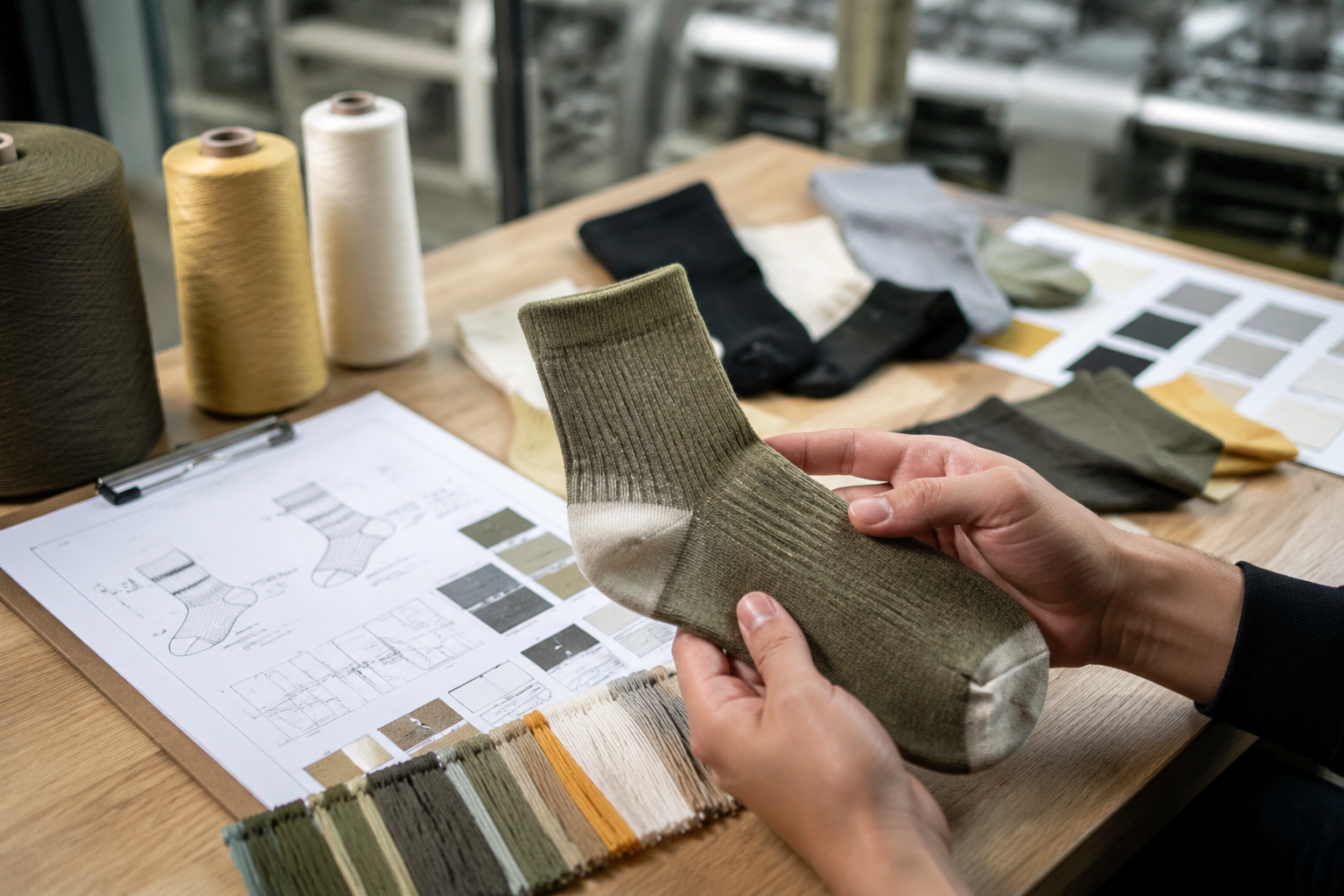
Private Label Socks RFQ: USA Sourcing, Specs, and Evidence Checklist
A buyer searching for a private label socks manufacturer USA should define the project before comparing suppliers. A strong RFQ should explain the sourcing model, product specification, branding and packaging requirements, inspection expectations, evidence requests, quote assumptions, and purchase-order approval steps.
Supplied reference URLs: Goren Socks B2B guide, DeadSoxy USA sourcing directory, Velon Socks knowledge base, and Solos buyer guide. Treat any supplier page, directory, or buyer guide as a starting point only. Production location, origin claims, compliance claims, and technical capability should be confirmed with order-specific documents.
1. Define the Sourcing Model
Private label, OEM, ODM, and white label are related sourcing terms, but they do not always describe the same scope. Use one working definition in the RFQ so each supplier quotes the same type of project.
| Model | Buyer usually provides | RFQ clarification needed | |---|---|---| | OEM | Buyer-owned design, artwork, specifications, and brand requirements | Whether the supplier is producing to an existing specification or also helping develop the construction | | ODM | Supplier-developed base design that the buyer adapts or brands | Which elements can be changed and who controls the final specification | | Private label | Socks made or supplied under the buyer's brand | Whether yarn, construction, color, logo method, labels, and packaging are custom or standard | | White label | Existing or pre-developed socks with buyer branding added | Available sizes, colors, packaging limits, reorder availability, and artwork limits | | Reorder | Previously approved sock specification | Approved sample date, version control, color continuity, and deviation process |
Do not send an RFQ that only says custom socks. State whether the project is a fully custom knit sock, a modified supplier style, an existing stock sock with branded packaging, or a repeat order of an approved specification.
2. Define What USA Means
The phrase private label socks manufacturer USA can mean different things in a sourcing search. It may refer to factory location, business location, sales support, distribution stock, shipment origin, or a domestic-production requirement. The RFQ should define the requirement instead of relying on the search phrase.
Ask each supplier to state:
- Factory location
- Shipment origin
- Business address or service location, if different from the factory
- Whether the quote is for domestic production, offshore production, distribution stock, or another model
- Incoterm or delivery basis
- Sampling lead time
- Bulk production lead time
- Shipment method and estimated transit time, if quoted
- Whether any USA-made, domestic, origin, or locality claim is being made
- What documents support any origin, material, or compliance claim
If an origin-related claim matters for labeling, marketing, procurement policy, or resale, require written support before purchase-order approval.
3. Build a Measurable Sock Specification
A useful RFQ lets suppliers price the same product. Include commercial context, but make the technical requirements measurable.
Product Use
State:
- Sock category: crew, quarter, ankle, no-show, knee-high, dress, athletic, hiking, workwear, diabetic-friendly, compression, grip, or uniform
- Intended use: retail, team sport, industrial work, promotional event, subscription program, wellness, or uniform program
- Target wearer and size range
- Target sales channel
- Launch date and reorder expectation
- Required sample stages
Size and Measurement Table
Request a measurement table for every quoted size. State whether measurements are taken relaxed, stretched, after wash, or by another defined method.
| Measurement | Buyer requirement | Tolerance | Supplier proposal | |---|---:|---:|---| | Foot length | | | | | Leg length from heel | | | | | Overall height | | | | | Cuff or welt width relaxed | | | | | Cuff or welt width stretched | | | | | Foot width relaxed | | | | | Pair weight | | | | | Stretch or recovery requirement | | | | | After-wash shrinkage requirement, if needed | | | |
If the buyer does not know the correct tolerance, ask the supplier to propose one and identify the inspection method.
Construction Fields
Ask suppliers to quote against the same fields:
- Sock height and silhouette
- Needle count or gauge, if specified
- Yarn composition by percentage
- Yarn role: body yarn, plating yarn, elastic yarn, reinforcement yarn, and decoration yarn
- Cushioning: none, sole only, heel and toe, full foot, or full terry
- Rib structure at cuff and leg
- Cuff compression or grip requirement, if any
- Heel construction
- Toe closure method
- Arch support, mesh panels, compression zones, grip application, terry zones, or reinforcement zones
- Logo method: knit-in jacquard, embroidery, print, patch, label, or packaging-only branding
- Color reference: physical standard, lab dip, yarn card, approved sample, or digital reference
- Pairing method and size marking
4. Request Evidence for Materials, Quality, and Claims
Do not rely on sales descriptions for material, performance, origin, or compliance claims. Ask for evidence that identifies the product scope and issuing party.
For each relevant document, request:
- Document name
- Issuer or responsible party
- Facility or supplier name, when applicable
- Product, style, yarn, lot, or order scope
- Issue date
- Expiration date, if relevant
- Standard, method, or internal procedure referenced
- Whether the document applies to the quoted product, a material, a facility, or a prior order
Evidence requests may include:
- Yarn composition declaration
- Sample pair weight by size
- Color approval record
- Wash, shrinkage, colorfastness, or abrasion test method, if required by the buyer
- Inspection checklist for holes, loose yarns, toe seam defects, stains, shading, size issues, packaging errors, and mispairing
- AQL level or internal release standard used for bulk inspection
- Packaging, barcode, carton, and routing requirements
- Required retailer, material, origin, or compliance documentation
For general retail or promotional socks, buyer review may focus on appearance, hand feel, color consistency, shrinkage, packaging accuracy, and reorder consistency. For athletic, workwear, compression, or uniform programs, the RFQ may need tighter detail around fit, elasticity, cushioning placement, durability, and size consistency.
5. Treat Branding and Packaging as Product Requirements
Private label socks are not fully specified until branding and packaging are approved. A sock sample does not confirm barcode placement, carton labeling, hang tag construction, or warehouse receiving format.
Include packaging requirements:
- Packaging type: hang tag, belly band, header card, sewn label, sticker, polybag, carton, or other format
- Artwork dimensions and placement
- Logo placement and size
- Barcode type and placement, if required
- Carton label format
- Inner pack quantity
- Master carton quantity
- Case pack rules
- Polybag or warning text requirements, if applicable
- Pallet, routing, or warehouse receiving rules, if applicable
Ask suppliers to separate pricing for the sock, branding, packaging, carton labeling, and special handling when those items are not final.
Approval files should cover:
- Sock construction sample
- Artwork or branding proof
- Packaging sample or packaging proof
- Carton label proof, if required
6. Quote Comparison Table
| Decision area | RFQ question | Evidence to request | Risk if missing | |---|---|---|---| | Supplier type | Is the quote for domestic production, offshore production, distribution, or service support? | Factory location, shipment origin, delivery terms | Origin, timing, and landed cost may be unclear | | Production model | Is the quote OEM, ODM, private label, white label, or reorder? | Development scope and sample plan | Quotes may include different work | | Materials | What yarn blend and yarn roles are included? | Composition declaration and sample weight | Bulk goods may not match the approved sample | | Construction | What gauge, cushioning, cuff, heel, toe, and fit details are quoted? | Tech sheet and approved sample | Fit, comfort, or appearance may change | | Branding | How will the logo and retail identity be applied? | Artwork proof and pre-production sample | Branding errors may appear late | | Packaging | What retail and carton requirements are included? | Packaging proof, carton label, carton dimensions | Warehouse or retailer receiving issues may occur | | Quality control | What inspection method releases bulk goods? | Inspection checklist, AQL, or internal release method | Defects may be found after delivery | | Logistics | What lead time, Incoterm, carton data, and shipment lane are assumed? | Written quote with carton dimensions and weights | Landed cost may change after PO approval |
7. RFQ Checklist
Use this checklist before contacting shortlisted suppliers:
- [ ] Buyer company, contact, target market, and estimated annual volume
- [ ] Product category, sock height, target wearer, and intended use
- [ ] Required sourcing model: OEM, ODM, private label, white label, or reorder
- [ ] Factory location and shipment origin requirement
- [ ] Size range, fit standard, and measurement tolerances
- [ ] Measurement method for relaxed, stretched, and after-wash dimensions, if needed
- [ ] Artwork files, logo placement, color references, and brand rules
- [ ] Yarn composition target or request for supplier-recommended options
- [ ] Cushioning, rib, mesh, arch support, grip, terry, compression, or reinforcement needs
- [ ] Toe closure, heel construction, cuff structure, and pair weight target, if known
- [ ] Packaging type, barcode, carton label, carton count, and warehouse requirements
- [ ] Required sample stages: development sample, fit sample, pre-production sample, packaging sample
- [ ] Bulk quantity by style, size, and color
- [ ] MOQ by style, color, size, packaging version, and reorder
- [ ] Lead time for artwork proof, sample, pre-production approval, bulk production, and shipment
- [ ] Quote currency, Incoterm, payment terms, setup charges, and packaging charges
- [ ] Inspection criteria, defect categories, AQL or internal release method
- [ ] Required compliance documents, material declarations, origin documents, or retailer documents
- [ ] Shipment method, destination ZIP code or warehouse, carton dimensions, and gross weight estimate
- [ ] Reorder policy, color continuity plan, and process for production deviations
A spreadsheet is usually the cleanest RFQ format for measurable requirements. A short written brief can explain launch timing, target channel, approval process, and non-negotiable requirements.
8. Normalize Quotes Before Selecting a Supplier
Compare quotes only after the assumptions are aligned.
Check whether each quote is based on:
- Pairs, dozens, cartons, or another unit basis
- A specific quantity by style, color, and size
- Included or excluded packaging
- Included or excluded barcode, carton label, and routing work
- Available yarn or custom yarn development
- Existing colors or custom color matching
- Sample charges and setup charges
- Domestic delivery, export shipment, freight collect, or another delivery basis
Separate costs where possible:
- Sample cost
- Setup or tooling cost
- Product cost
- Branding cost
- Packaging cost
- Inspection cost
- Freight or delivery estimate
- Duties, taxes, or brokerage assumptions, if included by the supplier
A supplier response is easier to evaluate when it identifies what is included, what is excluded, what requires confirmation, and what assumptions affect price or lead time.
9. Purchase Order Approval Check
Before issuing a purchase order, confirm that the approved version is documented. The PO or attached production file should reference:
- Final technical specification
- Approved artwork and color references
- Approved sock sample date and version
- Approved branding proof
- Approved packaging proof
- Size and color breakdown
- Inspection standard or release method
- Carton and packing requirements
- Shipment terms and destination
- Required documents at shipment
- Deviation approval process
Pre-PO red flags include vague material descriptions, no written sample stage, refusal to state production location, missing carton data, unclear MOQ rules, and certification or origin claims without supporting documents.
The goal is a repeatable private label sock specification that can be quoted, sampled, inspected, packed, shipped, and reordered with fewer avoidable changes.