Logo Sock Sourcing Sustainability Sourcing Criteria for United States Buyers
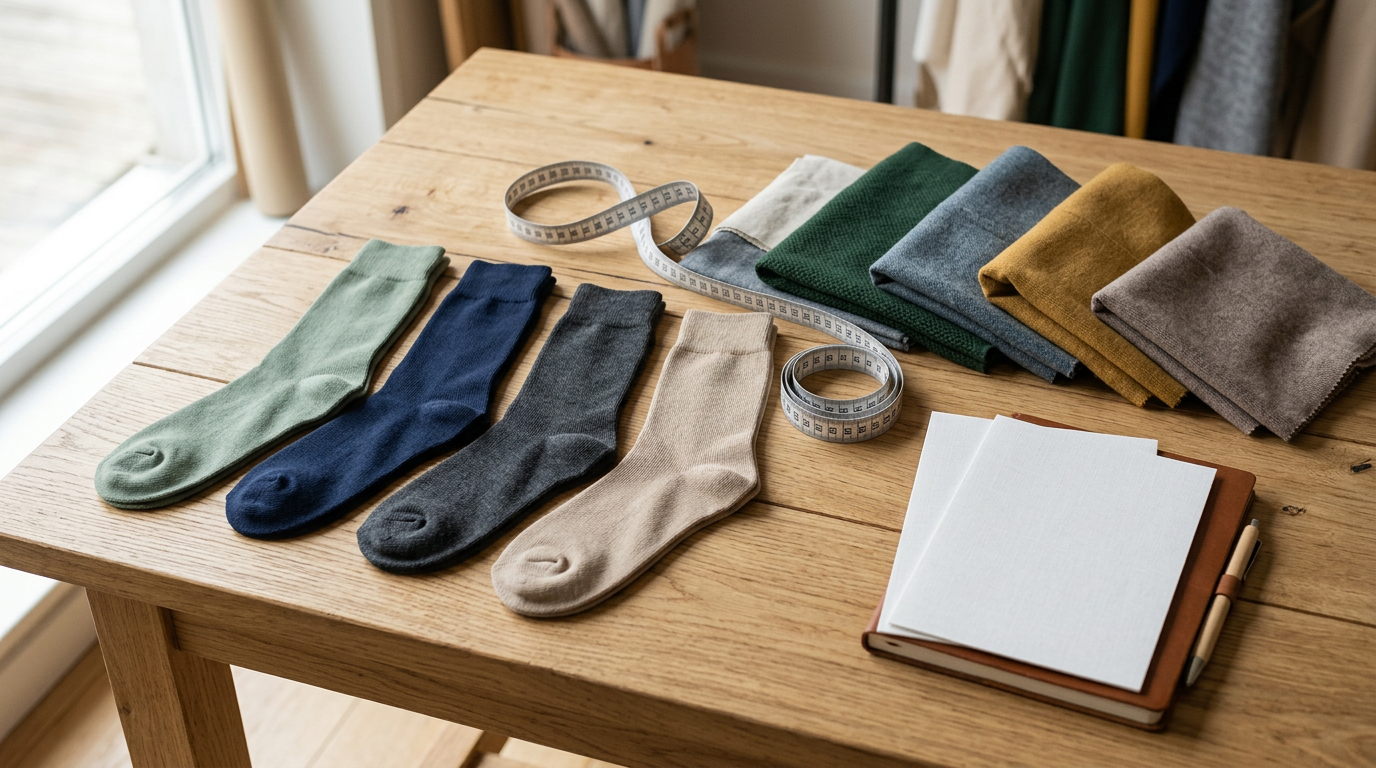
A logo sock order carries a brand mark into everyday wear, so the buying decision reaches beyond colour and fit. For United States buyers, logo sock sourcing sustainability sourcing criteria turn a broad aim into a set of checks that can be written into a specification, compared across suppliers, and confirmed before an order is placed. The criteria below treat sustainability as a procurement discipline: define what matters for the product, ask for documentation that supports each claim, and agree how the finished socks will be checked on arrival.
Promotional socks differ from plain hosiery because the logo, the colour match, and the packaging all form part of the delivered item. A sustainability claim about the yarn means little if the printing, the labelling, or the carton changes the result, so each part of the product deserves its own line in the specification. This article sets out the fields to agree, the comparisons to run between suppliers, and the questions that keep a logo sock programme consistent from sampling through repeat ordering.
Sustainability Sourcing Criteria for United States Promotional Sock Procurement
Start by separating claims about the sock itself from claims about the business that supplies it. A supplier may describe general policies, memberships, or ambitions, while the buyer still needs evidence that relates to the yarn, the knit, the dye, the logo application, and the packaging of the socks on order. Keep the two kinds of information apart in the sourcing record, and judge the product on product evidence rather than on general statements about the supplier.
Yarn and fibre choice sits at the centre of most sustainability discussions, and it is also where vague wording causes the most confusion. Ask the supplier to name the fibre content of the sock body, the heel and toe reinforcement, and any elastic component, and to state which part of the sock each claim covers. A claim that covers only one component should be recorded that way, so the buyer does not read it as a claim about the whole sock. Where a fibre is described as recycled, organic, or otherwise lower impact, ask what documentation supports the description and which stage of supply it covers, and record the answer beside the fibre line in the specification.
Dye and finishing choices deserve the same treatment. Ask how colour is applied, what happens to shade consistency across a production run, and how the supplier handles a shade that falls outside the agreed reference. Agree the reference itself before sampling: a named swatch, a retained sample, or a written colour description that both sides hold. Colour matching for a logo sock also involves the logo, so agree whether the logo colour follows the same reference route as the sock body or a separate one, and record the decision.
Logo application is a product decision as well as a branding one. Embroidery, printing, and woven labels each behave differently in wear and washing, and each places different demands on the sock surface. Ask the supplier to describe the method proposed, the area it covers, and how the finished logo will be checked against the approved artwork. Agree what counts as acceptable variation in position, size, and legibility, and keep the approved artwork version beside the specification so a later revision does not silently replace it.
What to Compare Before Approving a Logo Sock Supplier
Supplier comparison works well when every candidate answers the same questions against the same specification. Send one specification, one artwork version, and one set of sustainability questions to each supplier, and record the replies side by side. Where a supplier answers in general terms, ask for the product-specific version of the answer, and note the gap if it does not arrive. A supplier that answers precisely on the sock itself gives the buyer a firmer basis for comparison than one that answers fluently about sustainability in general.
Documentation is the part of the comparison that most often gets skipped under time pressure. For each sustainability claim the buyer intends to rely on, ask what document supports it, who issued the document, what it covers, and how long it remains current. Record the document reference beside the claim, and agree what happens if a document expires or is withdrawn during the life of an order. A claim without a supporting document is not necessarily wrong, but it should be recorded as unverified in the sourcing file until evidence arrives, so nobody downstream treats it as settled.
Sampling turns written claims into something the buyer can handle. Agree the purpose of each sample before it is made: a material sample shows the yarn and knit, a logo sample shows the artwork at size, and a pre-production sample should show the sock as it will be delivered, including labelling and packaging. Check each sample against the same written specification rather than against memory, and record the result in writing, including any difference the buyer accepts and any difference that requires a new sample. A sample approval that names the specification version it approves prevents later confusion about which version the order follows.
Buyer Decision Table for Logo Sock Sustainability Sourcing
Use the table below as a working checklist during supplier comparison. Each row names one decision, the evidence to request, and the point at which the buyer should agree it, so the sourcing file stays consistent from first enquiry to repeat order.
| Decision area | Evidence to request | Comparison question | Agree before |
|---|---|---|---|
| Fibre and yarn | Fibre content by sock part and supporting documentation | Does the claim cover the whole sock or one component | Specification sign-off |
| Dye and colour | Colour reference and shade consistency approach | How is a shade outside the reference handled | Sampling |
| Logo application | Method, coverage area, and artwork version | How is the finished logo checked against approved artwork | Sample approval |
| Labelling and packaging | Labelling content and packaging materials list | Does the packaging match the agreed sustainability position | Pre-production sample |
| Supplier documentation | Document references, coverage, and currency | What happens if a document expires during the order | Order placement |
| Delivery and acceptance | Packing list, carton contents, and acceptance checks | How are counts and condition confirmed on arrival | Delivery terms agreed |
Work through the table in order and keep the completed version with the order file. A row left blank is a decision still open, and an open decision at order placement tends to resurface as a dispute at delivery. Where two suppliers give different answers to the same row, record both answers and the reason the buyer prefers one, so the choice can be explained later without reconstructing the comparison from memory.
Agreeing Specifications, Labelling, Landed Cost, and Delivery for United States Orders
The specification is the single record that ties the sustainability criteria to the delivered sock. Write it as fields rather than as narrative: fibre content by part, yarn and knit description, colour references, logo method and artwork version, size range, labelling content, and packaging materials. Agree the version in writing and date each revision, so a repeat order can point to the version it follows instead of relying on the previous shipment as an informal reference.
Labelling deserves a separate agreement because it is where a sustainability claim reaches the end user. Agree the exact wording that will appear on the sock label and on any hang tag or carton, and check that each wording matches the evidence held in the sourcing file. Where a claim cannot be supported by documentation, leave it off the label rather than softening the wording and keeping the claim. Agree who approves label artwork and what happens if a wording change is requested after approval, since a late change can affect the whole production run.
Landed cost should be compared on the same basis across suppliers, or the comparison will mislead. Ask each supplier to state what the quoted price includes and excludes, and agree the delivery point, the packaging included in the price, and who bears the cost of any rework or replacement if the delivered socks differ from the agreed specification. Record the answers in the same format for each supplier so the buyer compares like with like rather than comparing a price that includes packaging with one that does not.
Delivery and acceptance close the loop that sampling opened. Agree the packing list format, the carton contents, and the checks the buyer will run on arrival, including count, colour, logo position, and labelling. Agree in advance how a shortfall or a difference from the approved sample will be handled, and record the outcome of the arrival check against the specification version the order followed. A short written acceptance note protects both sides: the buyer has a record of what arrived, and the supplier has a clear statement of what was accepted.
RFQ Checklist
- Ask the supplier to state the fibre content of each sock part and to provide the documentation that supports every sustainability claim attached to the order.
- Require the manufacturer to confirm the colour reference, the logo method, and the artwork version in writing before sampling begins.
- Specify the labelling wording, the packaging materials, and the carton contents as named fields in the specification, and agree who approves label artwork.
- Ask the supplier to state what the quoted price includes and excludes, the delivery point, and the handling of rework or replacement if delivered socks differ from the agreed specification.
- Require the manufacturer to confirm the sampling stages, the acceptance checks on arrival, and the process for recording a difference from the approved sample.
- Specify the specification version that the order follows and agree that any later revision is dated, recorded, and approved before it takes effect.
Discuss Your Requirements
Review our manufacturing capabilities, then share your specifications for a supplier-fit review.