Sock Sourcing Sustainability Sourcing Criteria for Europe Procurement
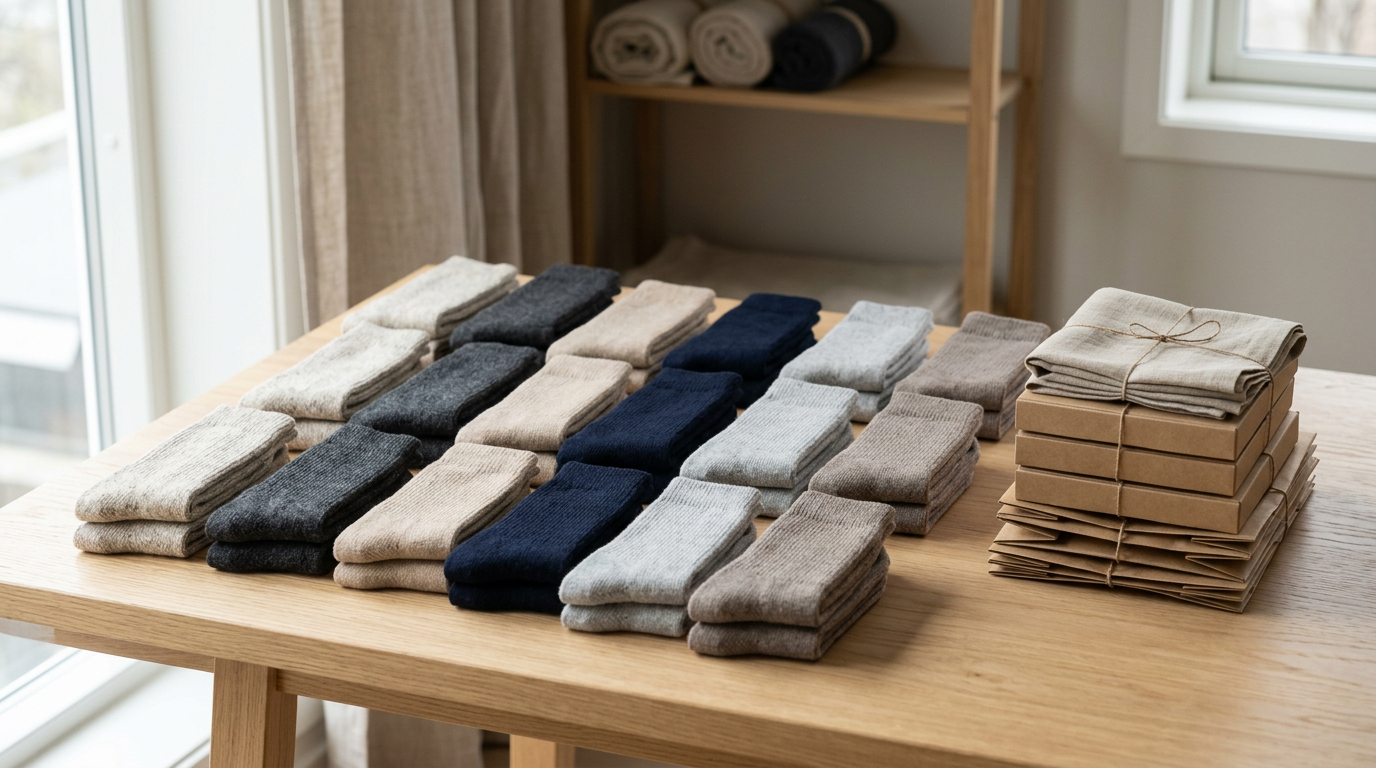
Sock sourcing sustainability sourcing criteria give a Europe buyer a clear way to compare sock offers on the same basis. Instead of starting with a product description alone, the buyer defines what matters for the intended use, what evidence will be requested, and how an offer will be judged before it is accepted. That structure helps the buyer, the supplier, and any internal reviewer work from one agreed scope.
For Europe procurement, the same discipline matters across different buyer organisations and end uses. A sock bought for everyday wear, workwear, sport, or retail sale may need different fibre content, construction, sizing, colour, packaging, and handling. The sustainability sourcing criteria should therefore describe the product, the information to be supplied with it, and the checks that will happen on delivery. When those points are agreed in writing before ordering, later discussion can focus on whether the delivered goods match the agreed description.
The approach in this article is process guidance. It does not describe a particular factory, product range, or market outcome. It sets out questions to ask, fields to agree, and comparison checks that help a buyer keep unlike offers apart. Each buyer should adapt the points to the intended wearer, the sales channel, the order size, and the internal approval route that applies to that purchase.
What Sock Sourcing Sustainability Sourcing Criteria Should Cover in Europe
A useful set of sock sourcing sustainability sourcing criteria starts with a complete product description. The buyer should define the intended wearer and use, the sock style and length, the size range, the fibre content and yarn description, the knit structure, the heel and toe construction, the cuff type, and the colour and colour fastness expectation in words the supplier can confirm. Colour should be agreed with a physical reference or an agreed colour description, and any variation that would be acceptable should be described before production begins.
Material information should be requested as a list of fields, not as a general statement. The buyer can ask for the fibre composition by share of the sock, the origin information the supplier is able to provide for each fibre, the dyeing and finishing information the supplier can describe, and any care information that will be supplied with the product. Where a material is described as recycled, organic, or from another named source, the buyer should ask what documentation the supplier will provide to support that description and how that description will appear on the product or packaging.
Packaging and presentation also belong in the criteria. The buyer should define the individual pack, the inner pack, the outer carton, the labelling fields, and the handling information for storage and transport. If packaging is intended to be reduced, reused, or made from a particular material, that intention should be written as a field to agree, with the material, the construction, and the labelling to be confirmed by the supplier. Vague packaging language creates avoidable differences between offers.
Durability and care are part of the same decision. The buyer should define how the sock will be worn and washed in normal use, what care guidance will be provided, and what condition would count as a defect at acceptance. This does not require a performance claim in the article. It requires an agreed description of the intended use and an agreed way to inspect the delivered goods against that description. A sock that is suitable for one use may not be suitable for another, and the criteria should make that difference visible.
How to Compare Sock Procurement Offers on the Same Basis
Comparison works only when every supplier answers the same questions. A buyer should send the same product description, the same quantity structure, the same delivery location in Europe, the same packaging description, and the same documentation request to each supplier. If one offer uses a different fibre content, a different pack, or a different delivery scope, the buyer should record that difference and ask for a revised offer on the agreed basis before comparing prices or other commercial terms.
The following process keeps the comparison structured and buyer-led:
- Define the sock, the intended use, the size range, the colour reference, and the packaging in a single written specification that every supplier receives.
- List the sustainability sourcing criteria as separate fields, including fibre content, material origin information, dyeing and finishing information, packaging material, and care information.
- Ask each supplier to confirm each field in writing, to state any field it cannot confirm, and to provide the documentation it will supply with the goods.
- Ask each supplier to describe the production and inspection steps it will apply to the order, in its own words, without relying on a general statement about quality.
- Compare the written confirmations field by field, record gaps and differences, and ask follow-up questions only on the fields where the offers differ or where information is missing.
- Agree the acceptance check, the delivery scope, and the handling of goods that do not match the agreed specification before placing the order.
This sequence helps a buyer avoid choosing an offer because it appears complete when a key field was left blank. It also creates a clear record of what was asked, what was confirmed, and what remains open. That record is useful for internal approval and for later discussion if the delivered goods differ from the agreed description.
A buyer should also keep product evidence separate from general business information. Information about a supplier organisation, its facilities, or its general practices may be relevant to supplier selection, but it does not replace evidence about the actual sock, its materials, its construction, and its packaging. The criteria should therefore ask for product-specific information for the exact sock being ordered, rather than accepting a general description that could apply to another product.
Buyer Decision Table for Sock Procurement
The table below turns the criteria into decisions. Each row names a decision area, the point to define, the information to request, and the way to decide. A buyer can use it as a working sheet and keep the completed version with the order record.
| Decision area | What to define before requesting a quote | What to ask the supplier to provide | How to decide |
|---|---|---|---|
| Product scope | Intended use, wearer, style, length, size range, and colour reference | Written confirmation of each product field and any field that cannot be confirmed | Accept only offers that answer every product field on the same basis |
| Fibre and material | Fibre composition, yarn description, and material origin information to be supplied | Material description for the exact sock ordered and documentation the supplier will provide | Compare material descriptions field by field and record any missing information |
| Dyeing and finishing | Colour description, care information, and finishing information to be supplied | Description of dyeing and finishing for the ordered sock and care guidance to be provided | Keep offers apart where colour, care, or finishing information differs |
| Packaging | Individual pack, inner pack, outer carton, labelling fields, and packaging material | Packaging description, labelling fields, and material information for the agreed pack | Choose the packaging description that matches the agreed handling and sales needs |
| Evidence and records | Documentation to be supplied with the goods and the form in which it will be provided | List of documents, the product they relate to, and the timing of delivery | Require the document list to be agreed before ordering, not after delivery |
| Inspection and acceptance | Inspection points, defect description, and acceptance action for goods that do not match | Inspection description, sampling description, and handling of non-matching goods | Agree the acceptance action in writing before the goods are shipped |
| Delivery and handling | Delivery location in Europe, delivery scope, storage guidance, and handling information | Delivery description, carton marking, and storage and handling guidance | Confirm that the delivery scope and handling guidance match the buyer receiving process |
RFQ Checklist
Use this checklist when preparing a request for quotation. Keep the same wording for each supplier so the replies can be compared without rework.
- Ask the supplier to confirm the sock style, length, size range, fibre content, construction, and colour reference in writing.
- Ask the supplier to provide material origin information and dyeing and finishing information for the exact sock ordered.
- Require the supplier to list the documentation it will provide with the goods and the timing for each document.
- Specify the individual pack, inner pack, outer carton, labelling fields, and packaging material to be used.
- Ask the supplier to describe the inspection points, the sampling approach, and the handling of goods that do not match the agreed specification.
- Require the supplier to confirm the delivery location in Europe, the delivery scope, and the carton marking to be used.
- Specify the care information to be supplied with the product and the wording to be used on the pack.
- Ask the supplier to state any product field it cannot confirm and to propose an agreed alternative in writing.
Agreeing Sock Acceptance and Delivery Terms Before Ordering
Acceptance should be agreed before the goods leave the supplier. The buyer should define what will be checked on arrival, who will check it, and what will happen if the goods do not match the agreed specification. Useful checks include a count against the order, a check of size and colour against the agreed reference, a check of construction and finishing, a check of packaging and labelling, and a check that the agreed documentation has arrived with the goods. The buyer should record the result of each check and keep a sample from the delivery where that is part of the internal process.
Delivery terms should also be written in the same order record. The buyer should agree the delivery location in Europe, the delivery scope, the carton marking, and the storage and handling guidance. If the goods will be stored before sale or distribution, the buyer should ask for storage guidance that matches the receiving and warehouse process. Clear delivery and handling terms reduce the chance that a sound product is damaged or misidentified after arrival.
Finally, the buyer should keep the specification, the supplier confirmations, the agreed document list, and the acceptance record together. That file supports internal review, repeat ordering, and any later discussion about whether the delivered sock matched the agreed description. When the next order is prepared, the buyer can reuse the same criteria, update only the fields that have changed, and send the same structured request to each supplier. That reuse keeps sock procurement consistent, comparable, and focused on the product actually ordered.
A disciplined set of sock sourcing sustainability sourcing criteria does not promise a particular outcome. It gives a Europe buyer a repeatable way to define the sock, request product-specific information, compare offers on the same basis, and agree acceptance before ordering.
Discuss Your Requirements
Review our manufacturing capabilities, then share your specifications for a supplier-fit review.