Socks Manufacturer Sourcing Guide: MOQ, Quote Structure, and Landed-Cost Checks
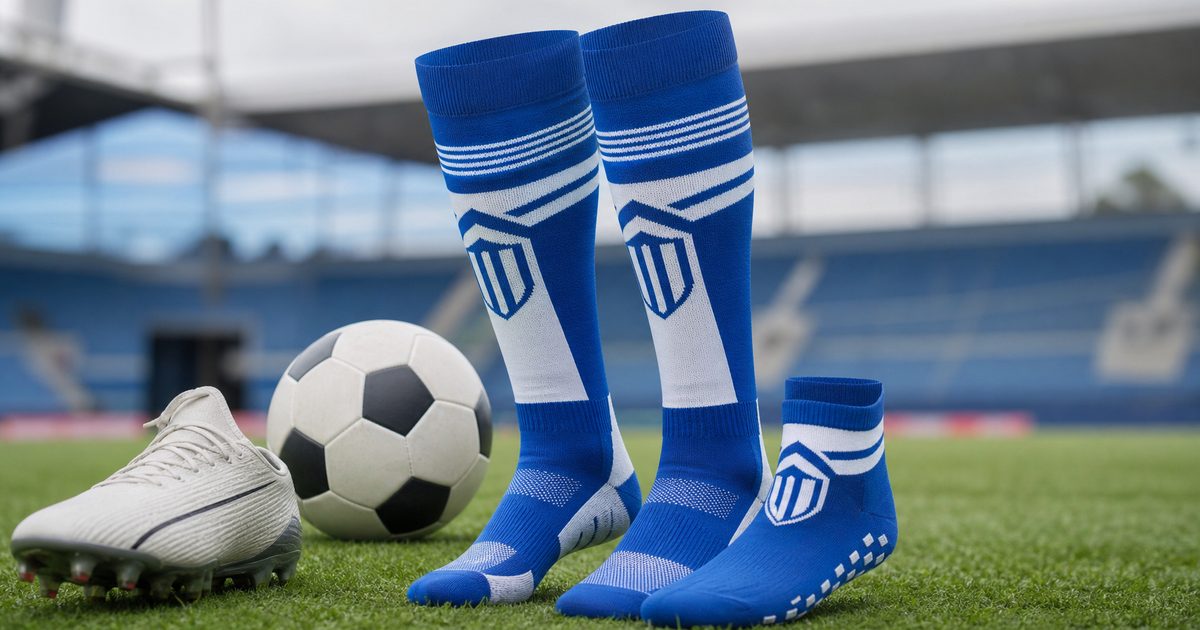
Socks Manufacturer Sourcing Guide: MOQ, Quote Structure, and Landed-Cost Checks
By Vincent Xi, Editorial Author
<script type="application/ld+json"> { "@context": "https://schema.org", "@type": "BlogPosting", "headline": "Socks Manufacturer Sourcing Guide: MOQ, Quote Structure, and Landed-Cost Checks", "author": { "@type": "Person", "name": "Vincent Xi", "jobTitle": "Editorial Author", "url": "https://www.zhesock.com/authors/vincent-xi/" }, "publisher": { "@type": "Organization", "name": "ZheSock", "url": "https://www.zhesock.com/" } } </script>
Choosing a socks manufacturer is mainly a comparability task. Each supplier should quote against the same sock specification, MOQ scope, packaging requirement, sample approval process, quality-control expectation, export term, and destination assumption. Without that structure, a low unit price can be offset by separate charges for color splits, trims, cartons, inspection, freight, customs brokerage, or rework.
This guide gives B2B buyers a sourcing framework for comparing socks manufacturers: define the product, confirm the MOQ basis, request an itemized quote, approve samples before bulk production, and normalize supplier offers into one landed-cost model.
Define the Supply Model Before Comparing Quotes
A Goren Socks B2B guide describes common supply models as OEM, ODM, private label, and white label. In that source context, OEM means the buyer provides the design and specification, ODM means the supplier provides a design for buyer branding, private label usually adapts a standard product with buyer branding, and white label starts from pre-manufactured stock with branding added https://www.gorensocks.com/b2b-guide/.
That distinction matters because each model changes what the buyer must verify. A custom OEM sock normally requires a clearer technical file, sample approval record, yarn and color confirmation, packaging specification, and inspection checklist. A white-label or private-label program may reduce development work, but the buyer still needs written confirmation of branding, packaging, documents, and delivery terms.
Before requesting a final quote, define these items:
- Product type: crew, ankle, no-show, dress, sport, thermal, kids, compression-style, or another defined category.
- Construction: cuff, leg height, heel, toe seam, cushioning, arch support, mesh zones, and any special knit structure.
- Material request: fiber blend target, color references, performance needs, and restricted-substance requirements if relevant.
- Branding method: jacquard logo, embroidery, print, woven label, hang tag, belly band, box, or other retail presentation.
- Size and color plan: quantity by size, quantity by colorway, and whether size ratios may change after sample approval.
- Destination and trade terms: Incoterm, origin point, destination port or warehouse, freight scope, and customs responsibility.
Read MOQ by Scope, Not Just by Number
MOQ should be read with its scope attached. It may apply per design, per colorway, per size, per SKU, per yarn color, per packaging type, or per total purchase order. A buyer who only asks for the headline MOQ may miss the commercial effect of splitting a program across sizes and colors.
EGE SOCKS states in its cited sourcing guide that an MOQ from **1,200 pairs per design** can be a workable entry point in its own manufacturing context. Scope: supplier-stated socks MOQ example. Date context: no publication date is supplied on the cited page context used here. Source: EGE SOCKS https://egesocks.com/sourcing-guide/sock-manufacturing-for-brands. This is a supplier-stated example, not an industry-wide rule and not a claim about any other manufacturer.
Use this MOQ check before accepting a quote:
| MOQ question | What to require in writing | Why it matters | |---|---|---| | Minimum unit | Pair, dozen, carton, SKU, or purchase order | Prevents confusion between production quantity and selling unit. | | Scope | Per design, colorway, size, SKU, yarn color, packaging type, or order | Shows whether adding colors or sizes increases the real minimum. | | Split rules | Allowed size ratio and color split | Confirms whether a trial order can match the buyer's sales plan. | | Price effect | Unit price by MOQ level and by larger reorder level | Shows whether a small trial order carries setup or material inefficiency. | | Reorder rule | Minimum reorder quantity and lead-time assumption | Helps prevent a first order that cannot be repeated economically. |
Example calculation to verify in the supplier quote: if a supplier applies MOQ per colorway and a buyer requests **4 colorways** as an assumed color-plan input, each at **1,200 pairs per colorway** as an assumed MOQ input, the practical minimum would be **4,800 pairs for that design-color plan**. This is only an arithmetic example for quote review; it is not a supplier commitment or an industry benchmark.
Build a Quote That Separates Cost Drivers
A useful socks quote should be tied to the approved specification, not to a loose category name such as "sports sock" or "crew sock." Ask each supplier to separate the commercial lines that affect landed cost:
| Quote line | Buyer check | |---|---| | Sample charge | Does the cost include the first sample only, revisions, and shipping? | | Bulk unit price | Is it tied to a specific yarn blend, construction, size range, color count, and logo method? | | Packaging and trims | Are labels, hang tags, barcodes, polybags, boxes, and carton marks included or separate? | | Carton packing | Are carton quantity, carton dimensions, gross weight, and packing method specified? | | Inspection | Is in-process or final inspection included, optional, or handled by a third party? | | Export documents | Are commercial invoice, packing list, certificate of origin, or route-specific documents included? | | Freight and insurance | Which Incoterm, route, port, warehouse, currency, and quote validity period apply? | | Payment charges | Which currency, deposit, balance trigger, and bank charges apply? |
A DeadSoxy manufacturer-selection guide recommends evaluating machine capability, yarn sourcing, sample quality, minimum order quantities, lead-time reliability, communication responsiveness, and quality-control processes, then checking supplier performance with a small test order before scaling https://deadsoxy.com/blogs/private-label-socks-manufacturing/how-to-choose-custom-sock-manufacturer. For buyer use, that means the quote should be read alongside sample quality, response discipline, and inspection evidence, not in isolation.
For price comparison, request volume breaks that match the buying plan. Example comparison tiers to verify in a supplier quote could be **1,200 pairs per design**, **3,000 pairs per design**, and **10,000 pairs per design**. These are example quote-comparison assumptions only; actual quantities should reflect the buyer's program, supplier MOQ, yarn availability, and sales forecast.
Approve Samples Before Bulk Risk Starts
The sample stage is the lowest-risk point to find problems in fit, logo execution, color, construction, or packaging. EGE SOCKS states in its cited sourcing guide that pre-production samples are usually ready in **5 to 7 business days** in its own context. Scope: supplier-stated pre-production sample timing for socks. Date context: no publication date is supplied on the cited page context used here. Source: EGE SOCKS https://egesocks.com/sourcing-guide/sock-manufacturing-for-brands. Buyers should verify when that timing starts, because suppliers may count from artwork approval, yarn availability, payment, or receipt of a complete technical file.
A sample approval record should identify:
- Sample version and approval date.
- Approved yarn blend or material specification.
- Color reference or lab-dip status.
- Measurements by size.
- Logo method and logo placement.
- Cushioning, cuff tension, toe seam, heel shape, and stretch comments.
- Packaging version, label placement, barcode readability if applicable, and carton packing logic.
- Approved deviations, if any, and whether bulk production may proceed.
If the buyer changes yarn, color, logo method, construction, size ratio, or packaging after sample approval, the supplier should refresh the quote and timeline before bulk production starts.
Normalize Landed Cost Before Selecting a Supplier
Landed cost is the cost of getting sellable goods into the buyer's warehouse or selling market. It may include unit price, packaging, cartons, inspection, freight, insurance, duties, customs brokerage, warehousing, financing, and exchange-rate effects. The sourcing task is to make each supplier offer comparable under the same assumptions.
EGE SOCKS states in its cited sourcing guide that bulk production typically takes **3 to 4 weeks after approval plus transit** in its own context. Scope: supplier-stated bulk production timing for socks after approval. Date context: no publication date is supplied on the cited page context used here. Source: EGE SOCKS https://egesocks.com/sourcing-guide/sock-manufacturing-for-brands. That is not a universal lead-time standard. Buyers should confirm current factory capacity, material availability, holiday periods, order queue, inspection timing, and freight schedule.
The same EGE SOCKS page lists commercial invoice, packing list, certificate of origin, and EUR.1 among customs paperwork for EU shipments in its cited context https://egesocks.com/sourcing-guide/sock-manufacturing-for-brands. Required documents vary by origin, destination, trade route, product classification, and buyer requirements, so buyers should confirm the applicable document set with the supplier, freight forwarder, or customs broker.
A Goren Socks sourcing guide argues that Turkey's proximity to Europe can reduce shipping time compared with East Asia and may affect total landed cost when freight, response time, and reorders are considered https://www.gorensocks.com/b2b-guide/. This is sourcing context from that guide, not proof that a specific supplier, route, or order will be cheaper. Buyers should request route-specific freight estimates and compare them against the same destination warehouse and delivery deadline.
Use One Supplier Comparison Sheet
| Decision factor | What to ask | Evidence to request | |---|---|---| | MOQ basis | Is MOQ per design, colorway, size, SKU, packaging type, or total order? | Written quote showing MOQ scope and size-color split. | | Specification | Which yarn blend, construction, cushioning, length, logo method, and packaging are quoted? | Tech pack, bill of materials, sample notes, and packaging specification. | | Sampling | What is the sample cost, lead time, revision rule, and approval trigger? | Pre-production sample, approval record, and revision history. | | Pricing | Which costs are included in the unit price and which are separate? | Itemized quotation with volume breaks and validity period. | | Quality control | Which inspections happen during knitting, finishing, packing, and final shipment? | Inspection checklist, defect classification, and AQL plan if used. | | Compliance | Which standards or documents are required for the destination market? | Current certificates, test reports, declarations, and labeling documents where relevant. | | Export terms | Which Incoterm, origin point, destination, freight scope, and documents are assumed? | Proforma invoice, freight estimate, packing list format, and document list. | | Reorder control | How are yarn lot, color standard, approved sample, and packaging version retained? | Retained sample policy, color tolerance, and reorder lead-time quote. |
Standards and Compliance: Ask for Current Documents
Standards should be named only when they are relevant to the product and destination market. A baby sock, sports sock, promotional cotton sock, and compression-style sock can require different documentation and testing decisions.
EGE SOCKS states in its cited sourcing guide that it knits with OEKO-TEX certified yarns, runs an ISO 9001:2015 quality system, and references EU textile rules including REACH and azo-free dyes in its own production context https://egesocks.com/sourcing-guide/sock-manufacturing-for-brands. Those are company-specific statements from that source. They should not be read as claims about ZheSock or any other socks manufacturer. ISO 9001:2015 is a quality-management-system standard; it is not, by itself, proof that a specific sock style, yarn lot, dye, or shipment meets the buyer's product requirements.
Buyers should distinguish between a standard's requirement and a supplier's own practice. If the order requires OEKO-TEX documentation, REACH-related declarations, azo dye testing, fiber composition labeling, country-of-origin documents, or another compliance item, include the requirement in the RFQ and request current documents before production approval. Do not assume certification without a current certificate or test report that applies to the product, material, supplier, and date in question.
Methodology, Source Context, and Limits
This article was structured from the cited sourcing pages and organized around a B2B buyer workflow: product definition, MOQ scope, quote comparison, sample approval, quality checks, export terms, and landed-cost normalization. Source contexts include manufacturer-selection criteria from DeadSoxy, supply-model and Turkey sourcing context from Goren Socks, supplier-stated MOQ, sample timing, production timing, document, and compliance examples from EGE SOCKS, and socks-topic reference context from Velon Socks https://deadsoxy.com/blogs/private-label-socks-manufacturing/how-to-choose-custom-sock-manufacturer, https://www.gorensocks.com/b2b-guide/, https://egesocks.com/sourcing-guide/sock-manufacturing-for-brands, https://www.velonsocks.com/socks-blog.
How the data was derived: the article uses only the cited pages as source contexts and separates supplier-stated examples from buyer-side checks and example calculations. Concrete data points used here are limited to cited source contexts or explicitly labeled assumptions for quote verification: **1,200 pairs per design** is a supplier-stated MOQ example from EGE SOCKS for socks, with no publication date supplied on the cited page context used here; **5 to 7 business days** is a supplier-stated pre-production sample timing example from EGE SOCKS for socks, with no publication date supplied on the cited page context used here; **3 to 4 weeks after approval plus transit** is a supplier-stated bulk production timing example from EGE SOCKS for socks, with no publication date supplied on the cited page context used here; **4 colorways**, **1,200 pairs per colorway**, and **4,800 pairs for that design-color plan** are example calculation inputs and output to verify in the supplier quote, not source-reported industry figures.
Limitations: this article does not verify any current ZheSock certification, production capacity, price, customer outcome, test result, factory visit, or factory process. It should be used as an RFQ and supplier-comparison framework. Buyers should request current documents, dated quotes, approved samples, route-specific freight estimates, and written inspection criteria before committing to bulk production.
Author attribution: Vincent Xi is listed as an Editorial Author on the ZheSock author profile https://www.zhesock.com/authors/vincent-xi/.